
Last updated November 16, 2026
 AC repair
 Furnace & heating
 Heat pumps
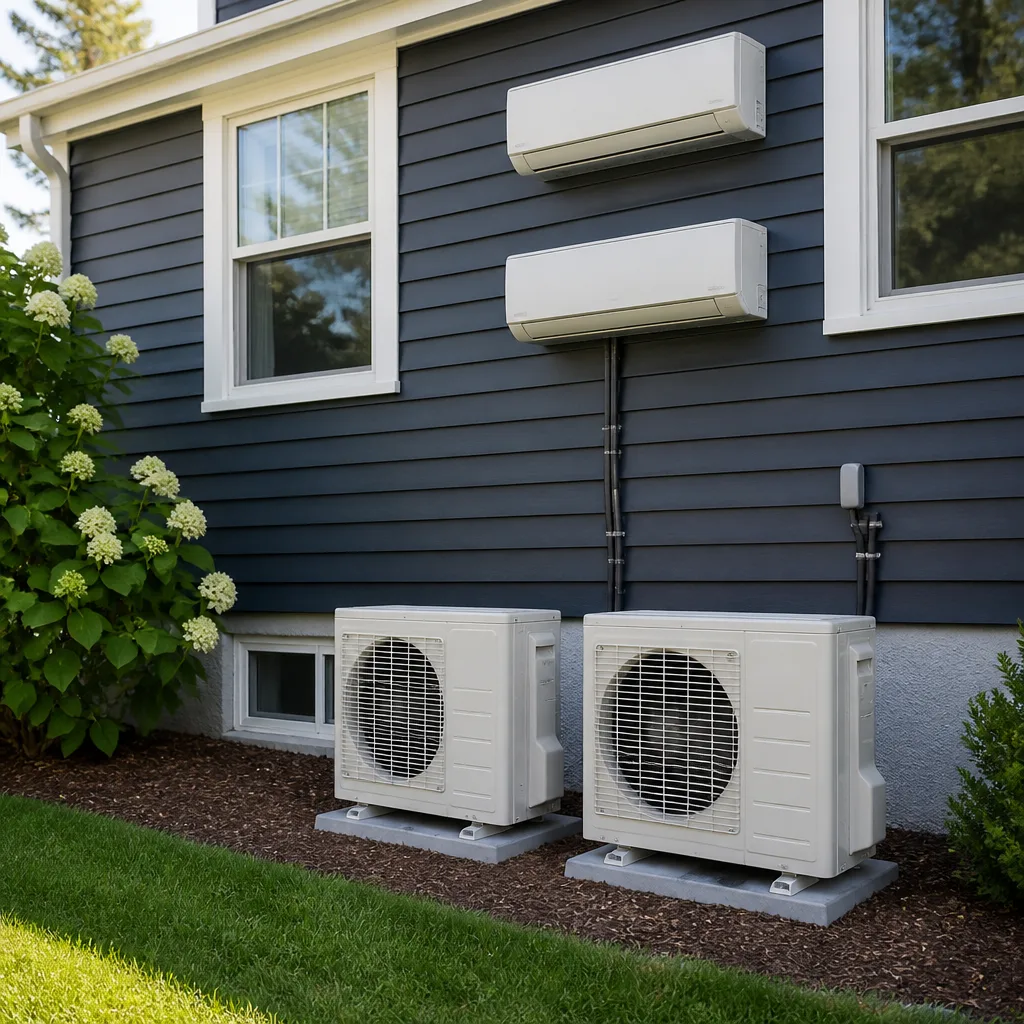 Ductless mini splits
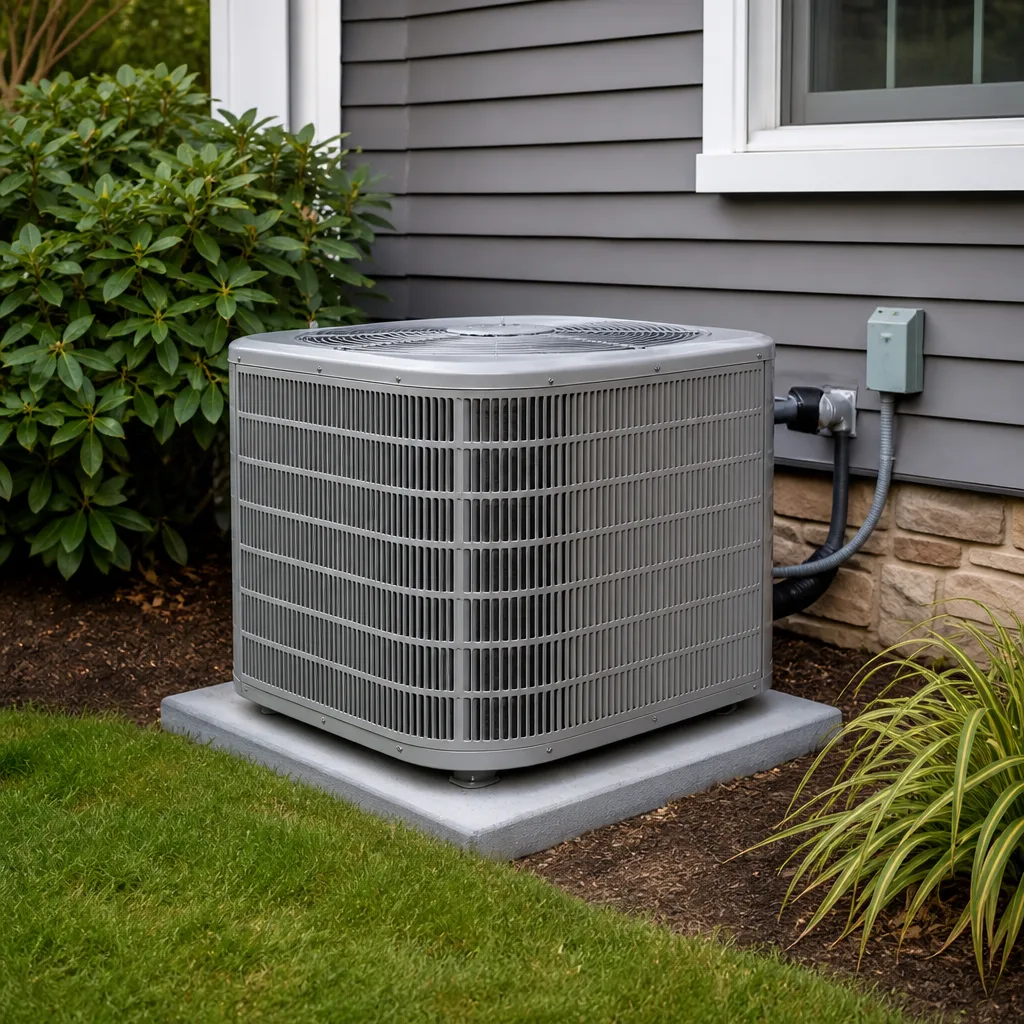 Carrier
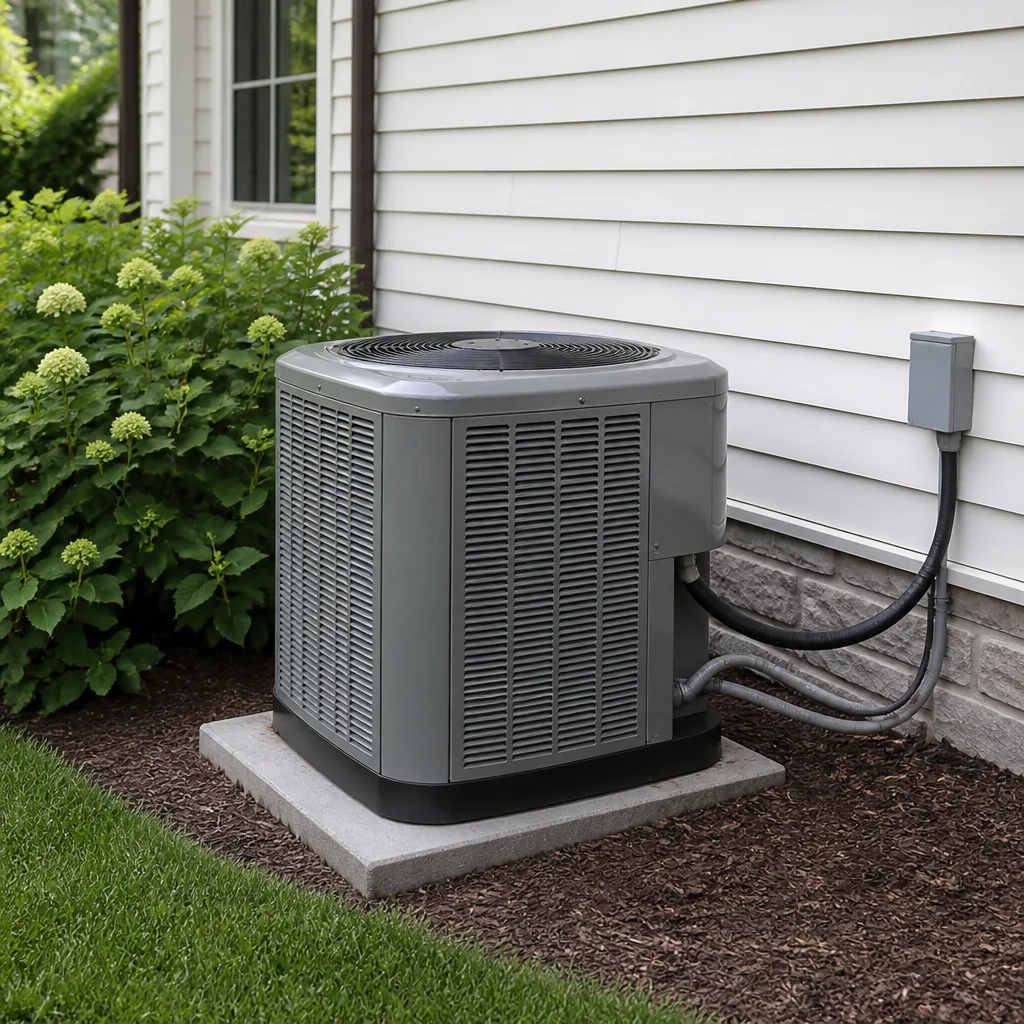 Trane
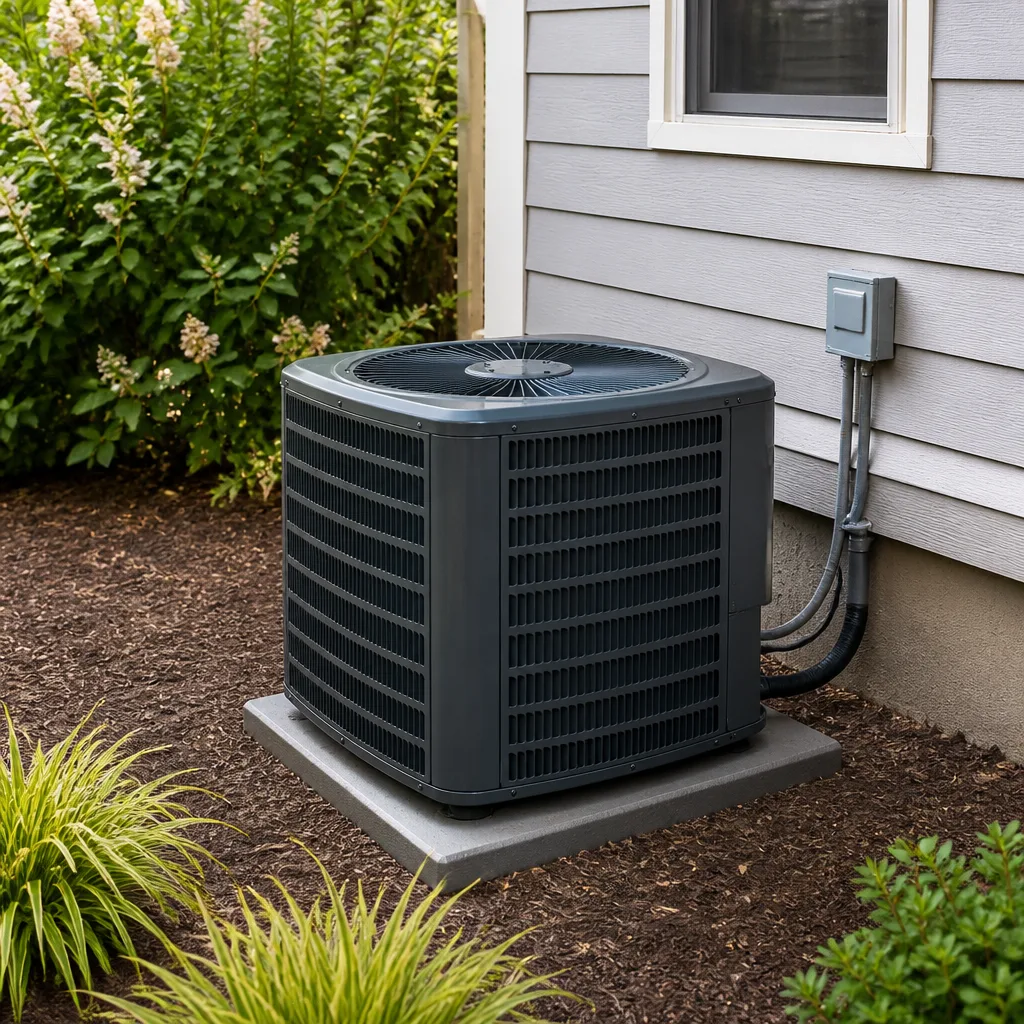 Goodman
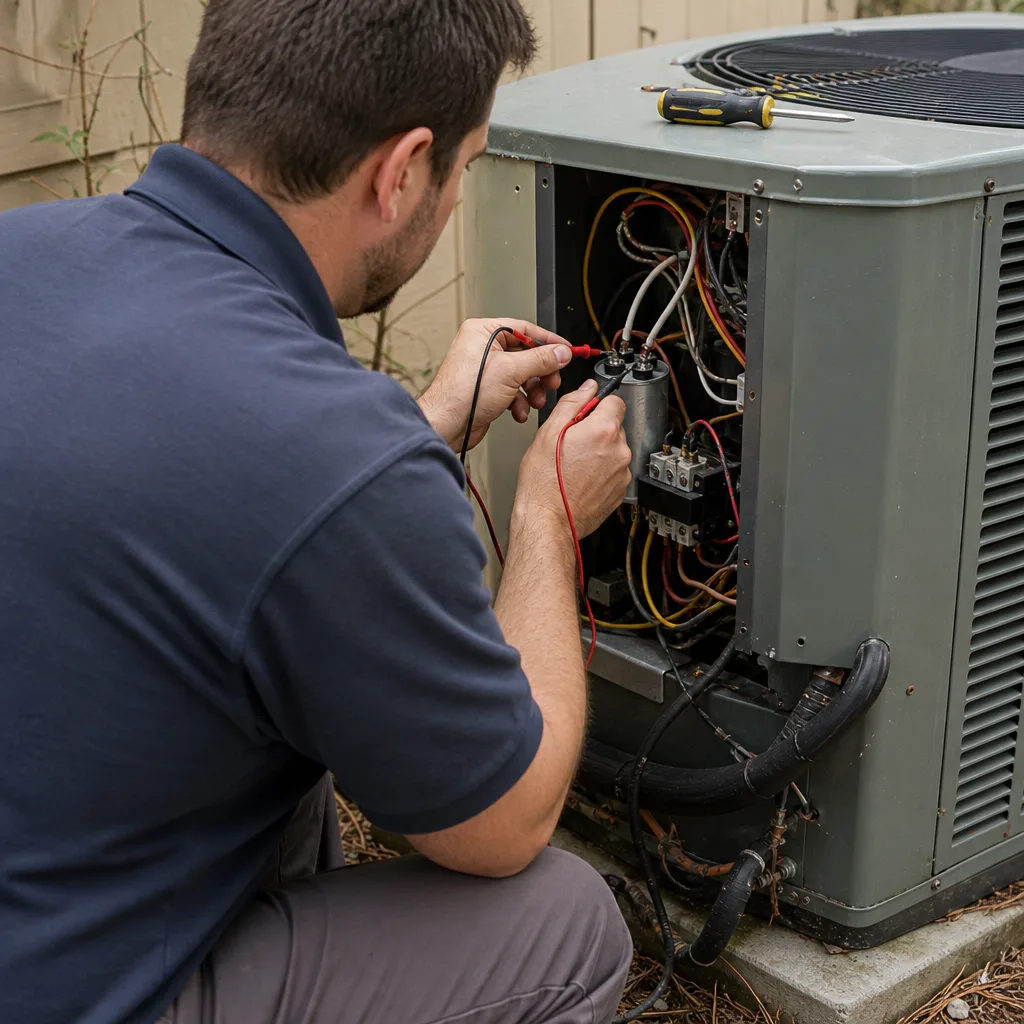
Seasonal tune-up and full diagnostic on your Carrier, Trane, or Goodman system - readings shown to you before any repair is proposed
Diagnosis first, numbers second - you approve the repair price before a single part goes in.
Get your free estimateThe Complete AC Installation Guide for Tallahassee Homeowners
Most air conditioners in Tallahassee aren’t failing because they’re the wrong brand. They’re failing because they were sized for the heat and not for the humidity – and that single miscalculation runs up your power bill every summer while the house still feels clammy at 74 degrees. We see it constantly: a system that’s technically “working” and still can’t pull the moisture out of the air. This guide walks you through every decision that actually determines how your next system performs: the load calculation, the ductwork nobody inspects, the split-versus-heat-pump math, Leon County permits, and the checkout steps you should watch before you sign anything. By the end, you’ll know exactly what to ask a contractor in Tallahassee before the first bolt gets turned.
Quick Answer
A successful AC installation in Tallahassee starts with a room-by-room Manual J load calculation sized for mixed-humid conditions, not just peak temperature. The contractor should inspect and seal your ductwork, pull the required Leon County permit, and verify airflow, refrigerant charge, and thermostat calibration before you sign off. Skip any of those steps and you can end up with an oversized system that cools fast, runs short cycles, and leaves your house sticky all summer.
Styles & brands we work with
- AC repair
- Furnace & heating
- Heat pumps
- Ductless mini splits
- Carrier
- Trane
- Goodman
Table of Contents
- Why Load Calculation Matters More Here Than Anywhere
- The Ductwork Inspection Most Installers Skip
- Split System vs. Heat Pump: The Tallahassee Math
- How to Choose a Contractor in Tallahassee
- Leon County Permits and Why They Protect You
- Your Post-Installation Checklist
- Brands, Equipment, and What Actually Matters
- When to Replace vs. Repair
Why Load Calculation Matters More Here Than Anywhere
In a dry climate like Phoenix, sizing an AC is mostly about heat. In Tallahassee, it’s about heat and moisture at the same time, and those two things pull the equipment in opposite directions. Get it wrong and the system cools the room just fine while the relative humidity stays up near 60 percent, which feels cold and damp and encourages mold in closets and on window frames. That’s not a failing unit. That’s a sizing decision made badly before the unit was ever installed.
The tool that gets this right is called a Manual J load calculation. It goes room by room, measuring window area, insulation, ceiling height, roof color, and orientation, then adds up how much sensible heat (temperature) and latent heat (moisture) the house actually handles. Tallahassee’s mixed-humid summers mean the latent load is unusually high, and a contractor who skips the calculation is essentially guessing at the two numbers that matter most.
A properly sized system in Tallahassee runs longer cycles at part load, which is exactly what pulls moisture out of the air. An oversized unit cools in short bursts, never runs long enough to dehumidify, and the house stays clammy. That’s why the old rule of thumb – “one ton per 500 square feet” – is a poor fit here. It ignores orientation, window quality, and the fact that a west-facing home under an unshaded roof gains far more heat than its neighbor across the street.
How to Verify Your Contractor Actually Ran One
- Ask to see the Manual J report before you sign. It should be a printed or PDF document with room-by-room numbers, not a scrap of paper with a tonnage scrawled on it.
- Confirm the report includes a separate latent load figure. If you only see one big number for the whole house, it wasn’t done properly.
- Ask specifically which windows and which rooms generate the biggest gain. A contractor who ran the calculation can answer that in detail; one who guessed cannot.
- Ask whether the calc was run using the equipment you’re actually buying, or a generic placeholder. The right system matches the report.
- Watch for anyone who recommends the same size your old unit was without checking whether the old unit was right in the first place.
We’ve watched homeowners in neighborhoods across Tallahassee replace a correctly sized 3-ton system with a “bigger is better” 4-ton because the first summer felt warm. That decision buys short-cycling, higher humidity, and a bigger power bill – not more comfort. If a proposal arrives without a load calculation, treat it as a warning sign, not a quote.
The Ductwork Inspection Most Installers Skip
Every summer, we find duct systems in Tallahassee attics that leak 20 to 30 percent of the air they’re supposed to deliver before it ever reaches a register. A new high-efficiency compressor pushing air through that ductwork is like new tires on a bent axle – the equipment can be perfect and the house still won’t cool. The unit doesn’t know where its air is going; it just knows how hard it’s working to push it.
Tallahassee’s attic spaces get brutally hot, and flex duct runs that cross an uninsulated deck pick up heat on the way to the room. Add in undersized return plenums and disconnected boots at the ceiling, and you can lose a third of your cooling capacity in the attic. Most of the fix isn’t the compressor. It’s the duct.
What a Real Duct Inspection Looks Like
- A physical crawl or walk of the attic, not a glance from the hatch.
- A leak check at every boot, takeoff, and trunk joint, using a smoke pencil, a hand-held gauge, or a blower door test if available.
- A static pressure measurement at the air handler, which reveals whether the return duct is starving the unit.
- A check that the duct is properly supported, sealed with mastic or approved tape, and insulated to a spec that holds up to attic temperatures.
- A walkthrough of the rooms with the contractor to check airflow at every register while the system runs.
If the duct system needs sealing, retrofit, or partial replacement, do that before sizing the new condensing unit. A slightly smaller compressor on good ductwork will outperform a slightly larger compressor on a leaking system every single time. It’s worth asking your contractor directly: “will you run static pressure before quoting me a new unit?”
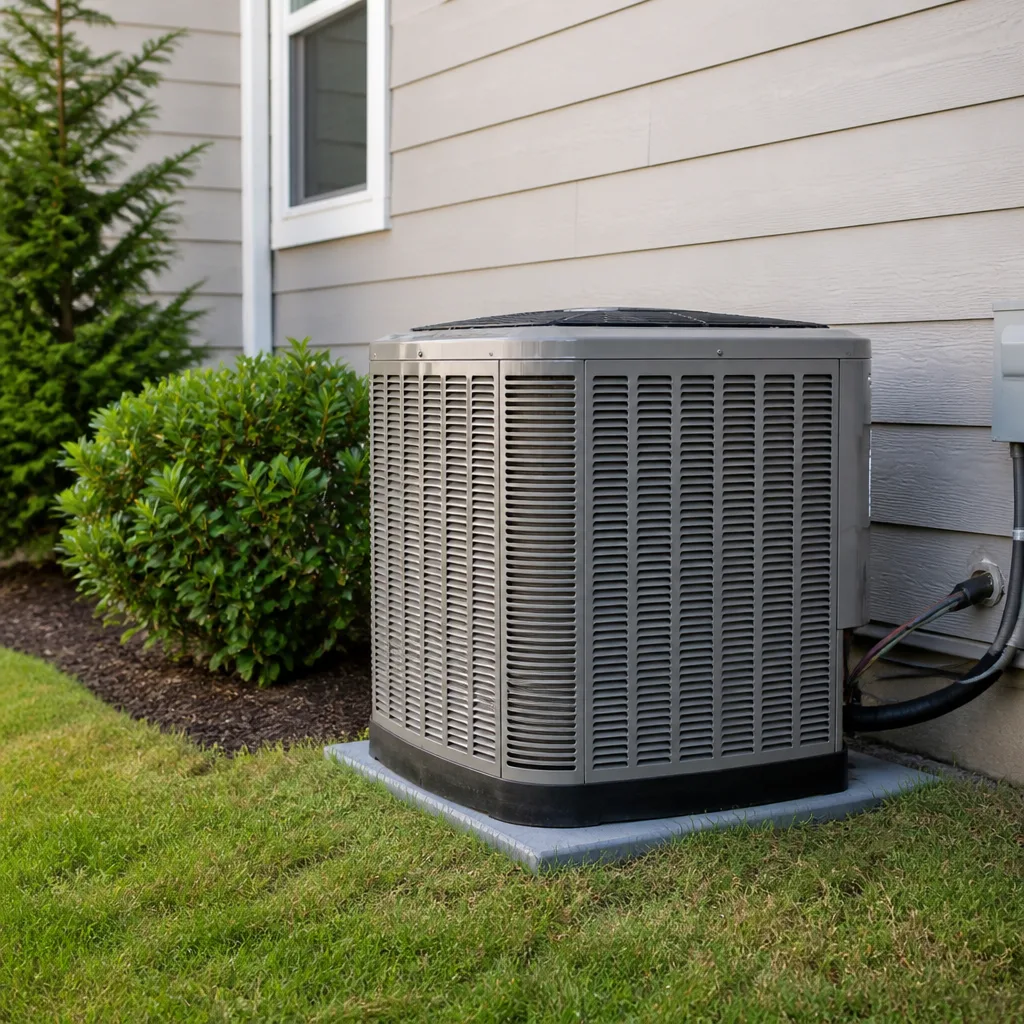
If your existing system is limping along and you’re weighing a fix versus a full swap, our ac installation team can walk the attic with you and show you what the ductwork is doing before you commit to new equipment.
Split System vs. Heat Pump: The Tallahassee Math
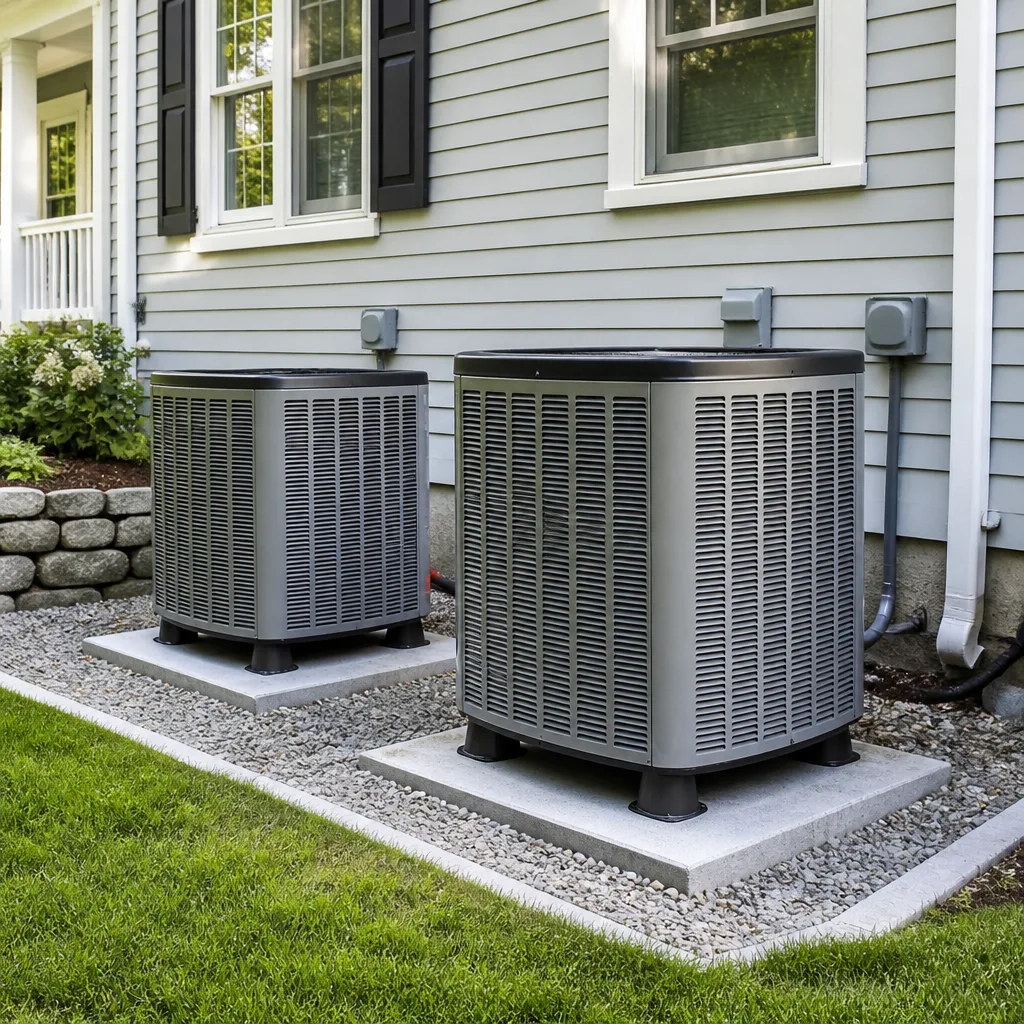
Tallahassee’s winters are mild enough that a standard split system with electric strip heat will keep the house comfortable through the coldest weeks. A heat pump delivers the same cooling in summer, then reverses to heat in winter without needing the strip backup as often. So which one is the better buy? It depends on how much of the year you actually spend heating.
Most guides skip the break-even math because it varies by house. Here’s the framework we use to talk it through with homeowners:
- Standard split system: lower upfront cost, and cooling performance that matches Tallahassee’s summer load. Runs electric resistance heat on cold mornings, which is the least efficient way to heat a home, but that only matters on the handful of cold mornings each winter.
- Heat pump: higher upfront cost, and it heats the home by moving heat rather than making it, so it uses less electricity in winter. The difference shows up on your utility bill from roughly December through February in Tallahassee, and again on mild heat-season days when the heat pump is running efficiently instead of staging on electric strips.
The break-even point is generally the number of heating days you actually run per year. If your household keeps the thermostat warm in winter and cold snaps in Tallahassee are brief, a standard split may be the more sensible spend. If you’re the type who wants the house at 70 all winter, a heat pump will earn its premium back over time through lower winter utility bills.
What Else to Weigh
- Ask your contractor for both options priced side by side, with the exact model numbers, so you can compare efficiency ratings apples-to-apples.
- Include the strip heat question in the comparison. A heat pump with oversized strip backup loses much of its efficiency advantage.
- Factor in lifespan. Modern heat pumps and split condensers both run 12 to 18 years with regular service in our climate.
- Check whether your electrical service supports the equipment you’re considering; a heat pump with electric backup may require a service upgrade, which changes the math.
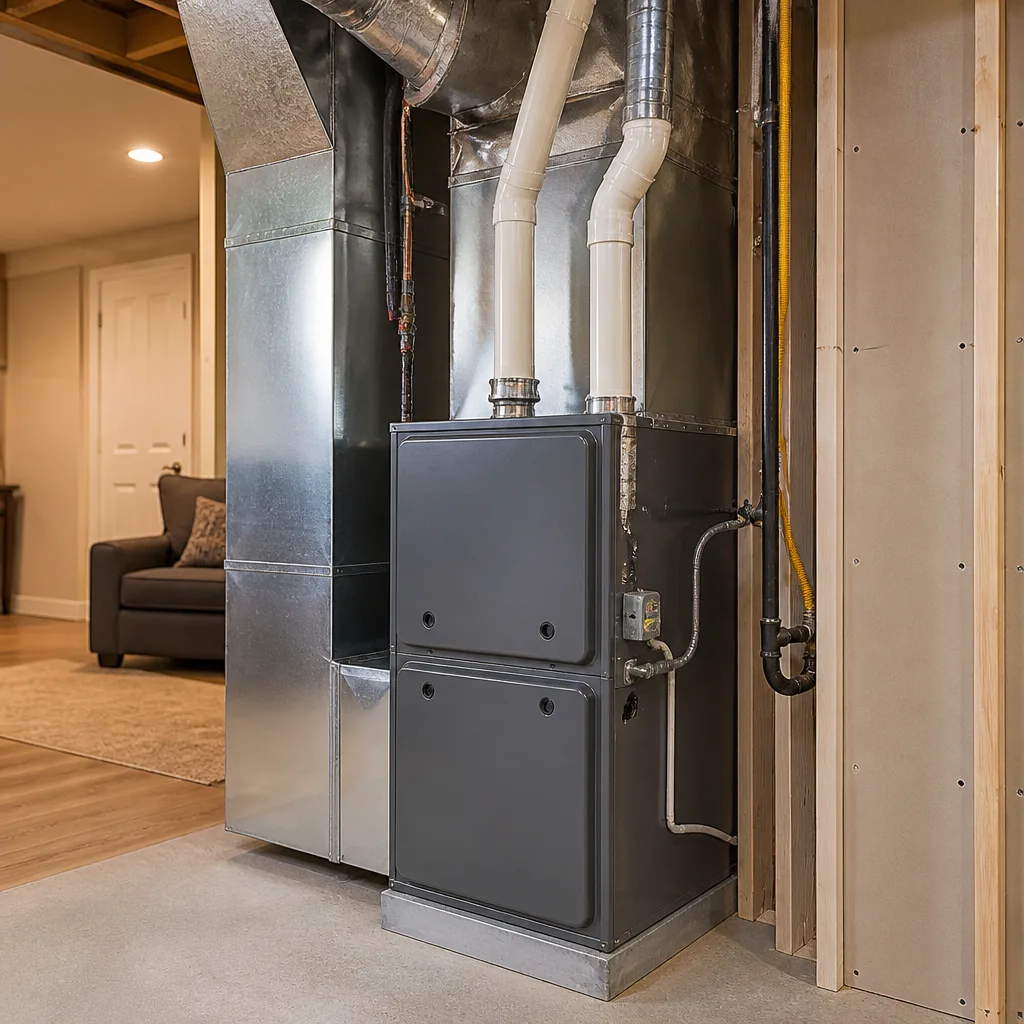
One call, both seasons: our team handles cooling and heating under one roof, so you can compare a split and a heat pump without managing two contractors. Ridgeway AC Repair works on the system you already have and recommends equipment based on your home, not on a dealership incentive.
How to Choose a Contractor in Tallahassee
The most important decision in a Tallahassee AC installation is the contractor, not the warranty or the brand. The right installer runs the load calculation, inspects the ductwork, pulls the permit, and verifies the final charge. The wrong one drops a box on a pad and drives off. Here’s the checklist we’d use if we were hiring someone else.
Contractor Vetting Checklist
- Ask for the license number and verify it against the state database. In Florida, HVAC contracting is a licensed trade; you can look this up before you hire.
- Confirm the company carries liability insurance and workers’ compensation coverage. Ask for the certificate, not a verbal yes.
- Ask whether they will run a Manual J load calculation. The answer should be immediate and unhedged.
- Ask who pulls the permit. If they say “you don’t need one,” that’s an answer worth ending the conversation over.
- Ask for the written scope: exact model numbers, capacities, SEER2 ratings, and the parts and labor warranty in writing.
- Ask what happens if the system underperforms after the install. A good contractor will state the diagnostic and correction process in writing.
- Read the proposal for how they plan the install day. Vague language about “install crew will arrive” isn’t a plan.
If a contractor won’t put their load calculation, permit plan, and warranty in writing, the low bid is the most expensive bid you’ll receive. Our technicians have up to experience, and we’re happy to sit with you on the estimate and walk the report line by line. You can see what a proper install looks like across the Tallahassee service pages, then decide for yourself.
Leon County Permits and Why They Protect You
A mechanical permit is required for a residential AC replacement in Leon County, and pulling one is your best protection as a homeowner. It triggers an inspection of the install, it’s a record for the county, and it’s the piece of paper your insurance company and future buyer will look for if there’s ever a claim or a sale.
Skipping the permit doesn’t save money. It shifts risk to you. If a system is installed without a permit and it fails, your insurer can decline the claim. If you sell the home, a pre-listing inspection that finds unpermitted HVAC work sits in the negotiation file ready to be used against you. And confusingly, an unpermitted system can be perfectly functional, so no home inspector can spot it from the outside – the record is the proof.
What the Permit Process Looks Like
- Your contractor submits the permit application with the equipment model, capacities, and installation details.
- An inspector from the Leon County Building Department reviews the install after it’s complete, checking the mechanical work and safety items.
- The permit closes, and you get a record of the inspection on file.
- The permit number should appear on your final invoice and warranty paperwork for safekeeping.
If your contractor says a permit isn’t needed, ask whether they’ve read the Leon County rule for your scope of work. If they can’t produce it in writing, call someone who can. Our team pulls permits on every install and walks you through the process so there’s no surprise in the paperwork.
Your Post-Installation Checklist
The install isn’t finished when the compressor hums to life. A properly commissioned system in Tallahassee gets measured, tuned, and confirmed before the contractor leaves. Signing off on an install you haven’t seen tested is the single biggest mistake we see homeowners make.
Watch For These Five Steps Before You Sign
- Airflow balancing: the contractor should measure airflow at each register, then adjust dampers so every room gets the amount the load calculation called for. Stand in the rooms with the system running and check for weak spots.
- Refrigerant charge verification: ask to see the subcooling or superheat reading logged on the invoice. A system undercharged or overcharged from the factory is short-cycling or inefficient from day one.
- Thermostat calibration: the new thermostat should be checked against a reference thermometer, and the stage settings should match the equipment.
- Temperature split: the contractor should measure the temperature difference between return and supply air while the system is running. A healthy split confirms the system is working as intended.
- Permit inspection scheduled: the inspector visit should already be on the calendar before the crew leaves the driveway.
Ask your contractor to write each of those five items on the final invoice with the measured values. Any contractor who balks at putting those numbers in writing is telling you something. This checklist is exactly what we run on every install – it’s the difference between a system that lasts and a system that limps.
Brands, Equipment, and What Actually Matters
The brand war between Carrier, Trane, Lennox, and the value-tier names isn’t what determines how happy you’ll be with the install. Every nameplate you’ll see on a Tallahassee job is capable of a good install, and every one of them is capable of a bad one in the wrong hands. What matters is whether the equipment matches the load calculation, whether the ductwork delivers that capacity, and whether the installer commissioned it correctly.
That said, brand does affect parts availability, warranty terms, and technician familiarity. Ridgeway AC Repair is brand-agnostic by design; we’re certified to install and repair Carrier, Trane, Lennox, Goodman, Rheem, York, Daikin, Bryant, and American Standard. That matters for one practical reason: when your equipment needs service in year eight, we already know its quirks. No guesswork, no “we’ve never seen that one” phone call from your kitchen. Nine brands, zero guesswork.
What to Actually Compare Between Proposals
- Capacity in tons, matched to the Manual J result.
- SEER2 and EER2 ratings on the exact model, not the family name.
- Parts and labor warranty length, and who honors them.
- Whether the proposal includes duct sealing, permit, and commissioning.
- Whether the thermostat is included and what it costs if it fails.
Two proposals with identical equipment can produce very different outcomes. Look at the scope, not the brand badge. If you want help comparing, our Ridgeway AC Repair team will walk through your options line by line. We also handle furnace repair when the season flips and your heating needs attention, so one call covers both.
When to Replace vs. Repair
The right time to replace an AC system in Tallahassee is when the cost of staying with the current system crosses the cost of a new install. That’s rarely a single dramatic failure; it’s usually a pattern of small repairs plus rising bills. Here’s a simple framework.
- Leaning toward repair: the system is under 12 years old, the failure is a single component (capacitor, contactor, blower motor, thermostat), and the rest of the system tested healthy on the last visit.
- Leaning toward replace: the compressor or coil has failed on an aging system, or you’re seeing the same repair twice within two seasons.
- Definitely replace: the system uses R-22 refrigerant, which is being phased out nationally and increasingly hard to source; or your ductwork is leaking so badly that even a healthy unit can’t keep up.
We’ve walked homeowners through the repair-vs-replace decision in neighborhoods all over Tallahassee, from the older homes near Cascades Park to the newer builds out Killearn way. The honest answer depends on the system you already own, not on the biggest system we can sell you. That’s the right fix, not the easiest upsell.
If you want a real read on the repair-vs-replace question, our team will test the system and give you a straight answer. We have full replacement capability for furnaces and cooling systems alike, so if the answer is “replace,” you’re not passed to a second contractor when the season changes.
Common Mistakes to Avoid
- Buying tonnage instead of a load calculation. A “one-ton-per-500-square-feet” guess is a slow route to high humidity and short-cycling in Tallahassee. Insist on a Manual J for any replacement.
- Installing new equipment on old ductwork. The unit will run fine on day one and fall short within a summer. Ask for the duct inspection before you sign.
- Skipping the permit. An unpermitted install can void an insurance claim and stall a home sale. Ask your contractor for the permit number before work starts.
- Choosing the lowest bid without checking scope. A low bid often excludes the load calculation, the permit, or the ductwork, which means you pay for those separately later.
- Not watching the commissioning. Airflow balancing, charge verification, and thermostat calibration should all happen in front of you. Sign only after the numbers are recorded on the invoice.
- Sizing for peak heat only. Tallahassee’s cooling load is dominated by humidity as much as temperature. A system sized purely for the hottest afternoon is oversized for the rest of the summer.
- Ignoring the heating side of the system. A heat pump or split with strip heat is a year-round system. If the contractor only talks about summer, ask how the winter is actually staged.
See the difference
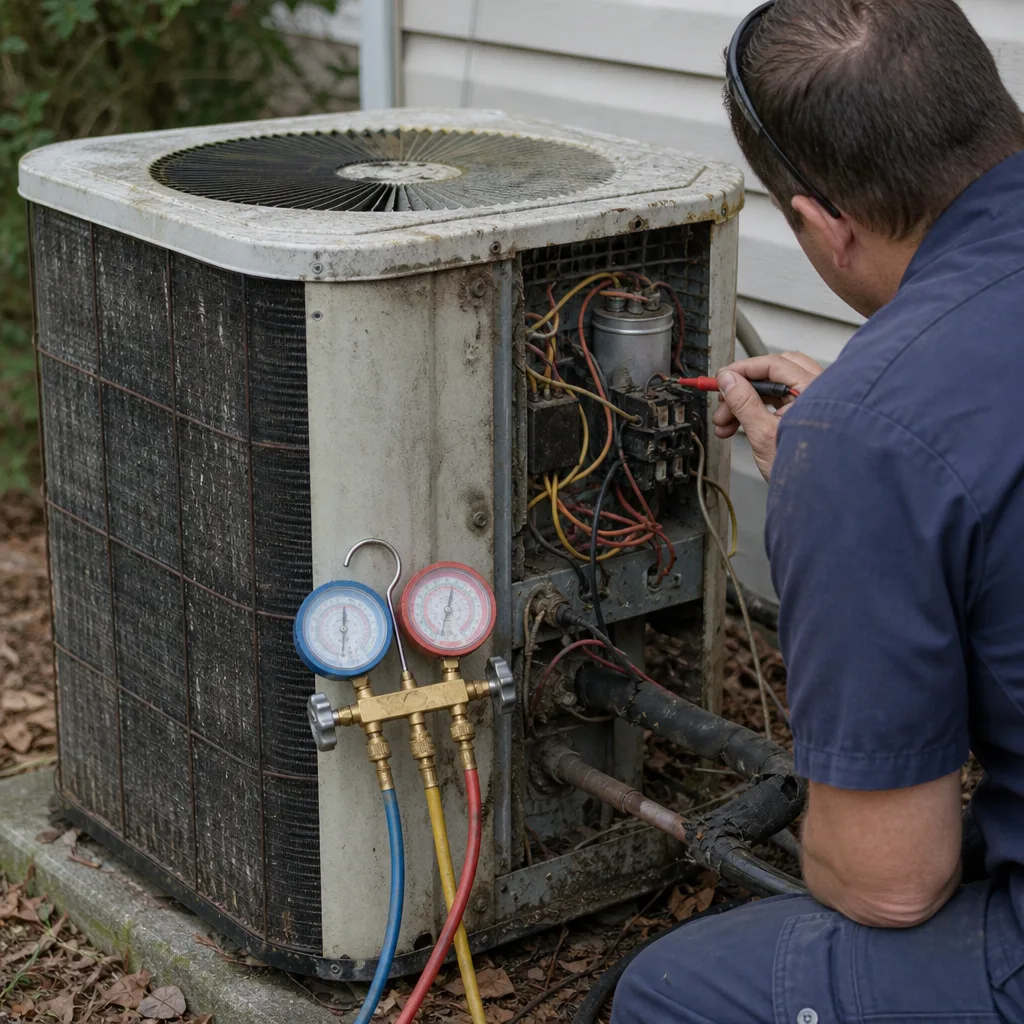 Before
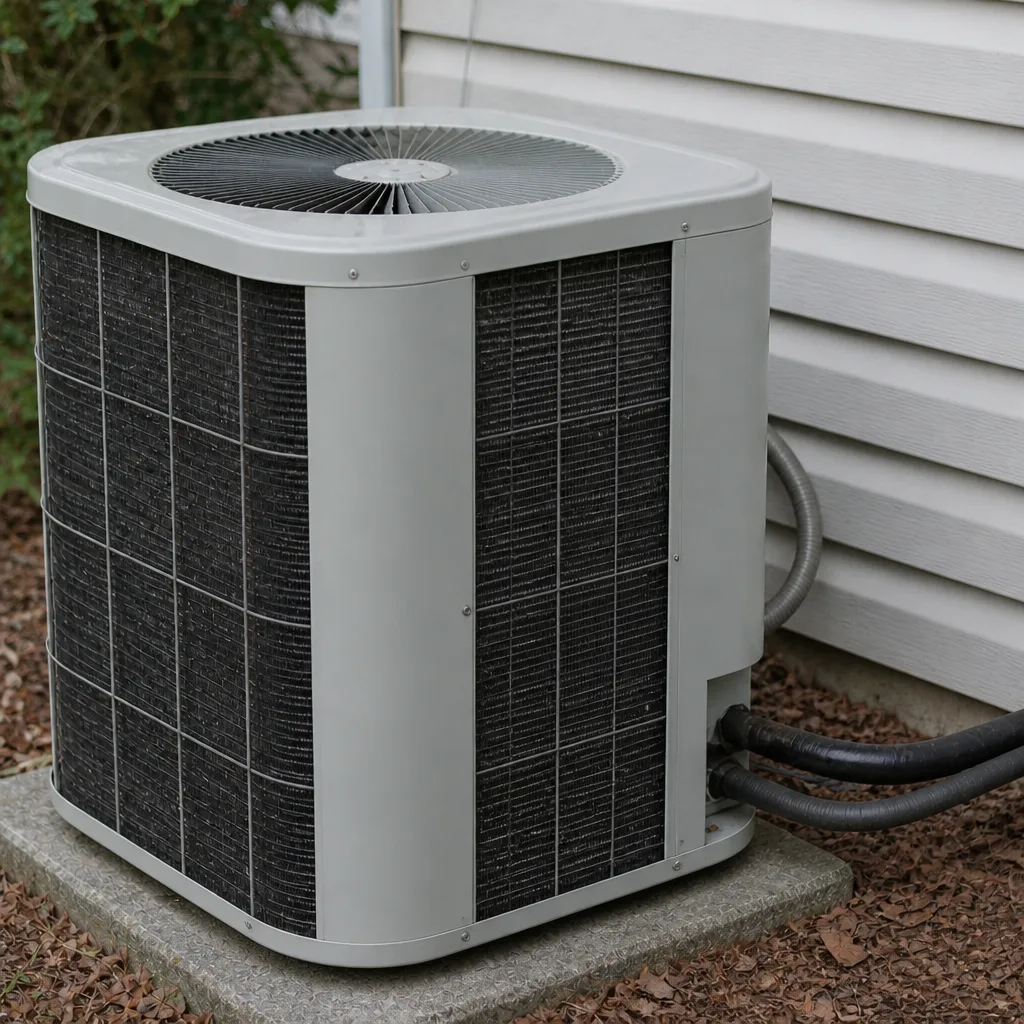 After
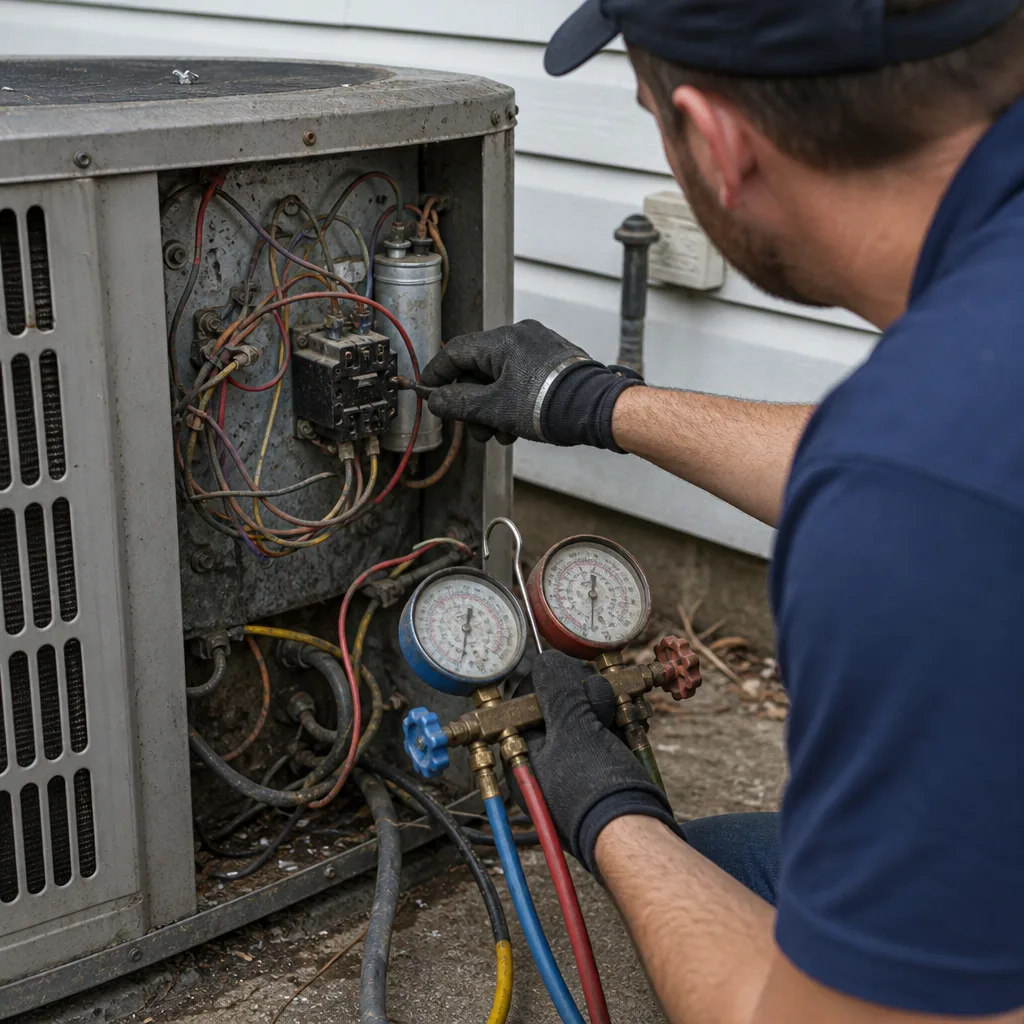 Before
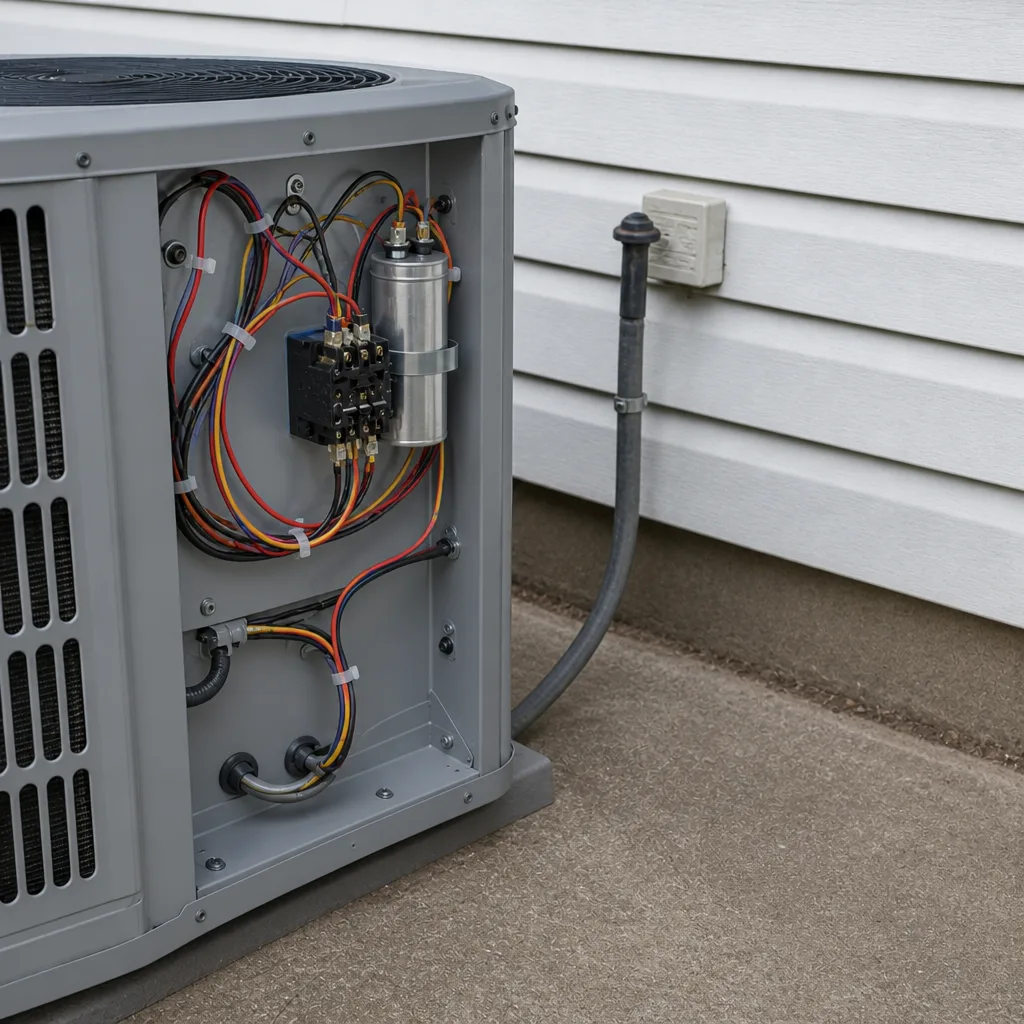 After
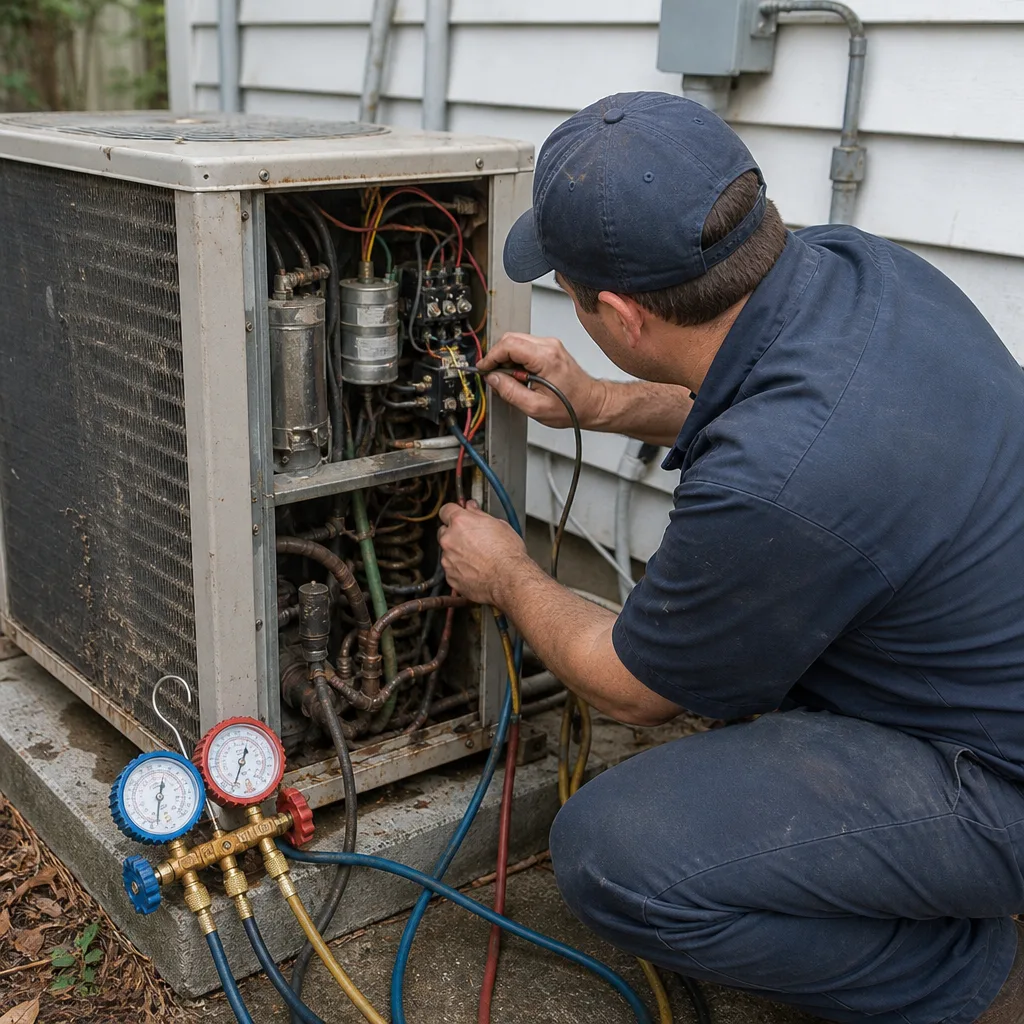 Before
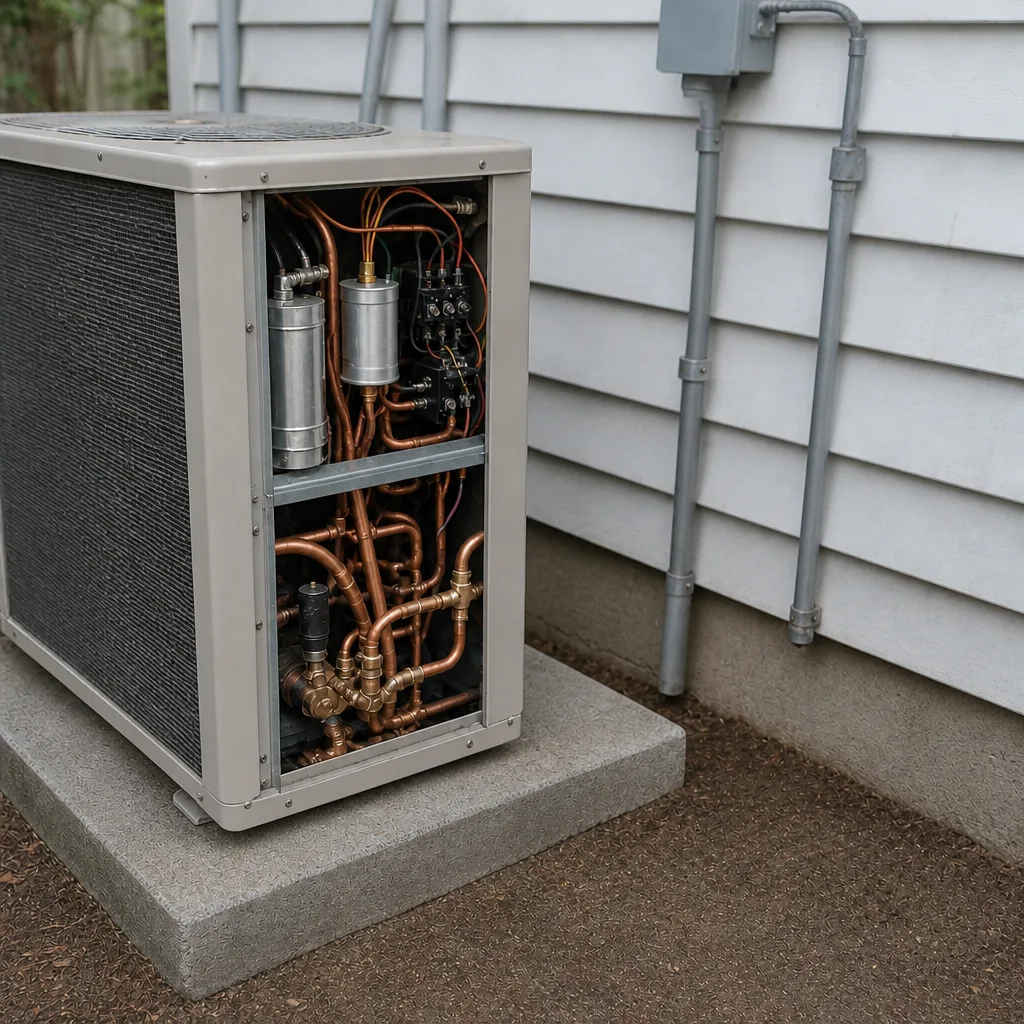 After
When to Call a Professional
We don’t recommend that homeowners pull a permit, size their own system, or try to recharge refrigerant in Tallahassee. Refrigerant handling is regulated, the electrical and mechanical work requires licensing, and the load calculation is only useful if it’s run correctly. But the decision to call a professional starts earlier than most people realize – when you’re comparing proposals, not when the old system has already died.
Call a professional if you’re getting three quotes and don’t know how to compare them, if you’ve received a proposal without a load calculation or a permit line, if your house feels cold and clammy at the same time, or if you want a straight read on whether to repair or replace the system you already own. Ridgeway AC Repair offers free estimates in Tallahassee – call (844) 834-0157. We answer 24/7. Fast dispatch from 7am to 7pm, Sunday through Friday. Our technicians have up to experience and work on the system you already have.
Frequently Asked Questions
The final price depends on the equipment matched to your load calculation, the state of your ductwork, and whether a permit or electrical upgrade is needed, so the written estimate sets the final number. We don’t bundle pricing behind a fake “flat rate” – we walk the house, run the calculation, inspect the ducts, and quote the job properly. Call (844) 834-0157 for a free estimate on the system that fits your home.
Yes, a residential AC replacement in Leon County requires a mechanical permit, and pulling one protects you because the inspection creates a record your insurance company and future buyer can rely on. Skipping the permit shifts risk from the contractor to you, even though the system may run fine on the surface. If a contractor tells you a permit isn’t needed, call our team at (844) 834-0157 and we’ll walk you through what your scope actually requires.
You’ll know because the contractor produces a Manual J load calculation with room-by-room numbers and a separate latent load figure. Any proposal that arrives without one, or that recommends the same size as your old unit without checking, should be treated as a guess. Call (844) 834-0157 to have our team run the calculation before you sign.
A heat pump earns its higher upfront cost if you keep the house warm through winter and want lower utility bills on mild heating days; a standard split with electric strip heat is the sensible spend if winter heating is brief and light for you. The right answer depends on your actual heating habits and your electrical service, not on the brand. Call (844) 834-0157 and our team will price both side by side and walk the break-even math with you.
Yes – we answer 24/7, with fast dispatch from 7am to 7pm, Sunday through Friday. Call (844) 834-0157 for a free estimate. A call outside dispatch hours is booked into the next opening, Sunday through Friday, 7am to 7pm. We’re closed on Saturday.
You should watch for five things: airflow balanced at each register, refrigerant charge verified with the subcooling or superheat logged, thermostat calibrated, the return-to-supply temperature split measured, and the Leon County permit inspection scheduled. Get the numbers written on the final invoice – a contractor who balks at that is telling you something. Call (844) 834-0157 to have our team walk you through the checklist on your next install.
The Bottom Line
A good AC installation in Tallahassee comes down to five decisions: a Manual J load calculation that accounts for humidity, a duct inspection before the equipment goes in, a real split-versus-heat-pump comparison, a Leon County permit that protects you, and a commissioning checklist with the numbers written on the invoice. Get those right and the brand on the box matters far less than you’d think. Get them wrong and the biggest nameplate in the industry won’t save you from short cycles and a sticky house. If you’re ready to compare options with a contractor who runs the calculation, inspects the ducts, and puts the scope in writing, call Ridgeway AC Repair at (844) 834-0157 for a free estimate. We answer 24/7. Fast dispatch from 7am to 7pm, Sunday through Friday.
Written by the team at Ridgeway AC Repair.