
Last updated November 16, 2026
 AC repair
 Furnace & heating
 Heat pumps
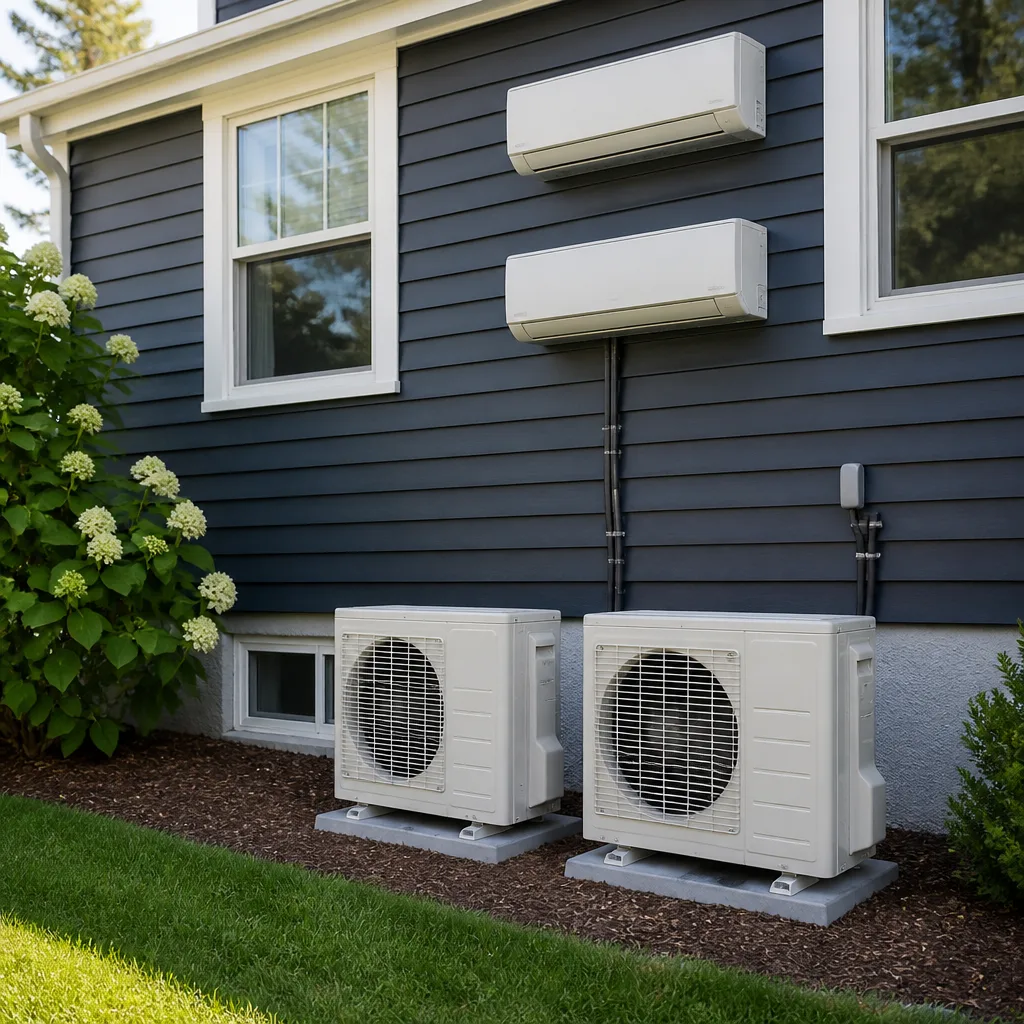 Ductless mini splits
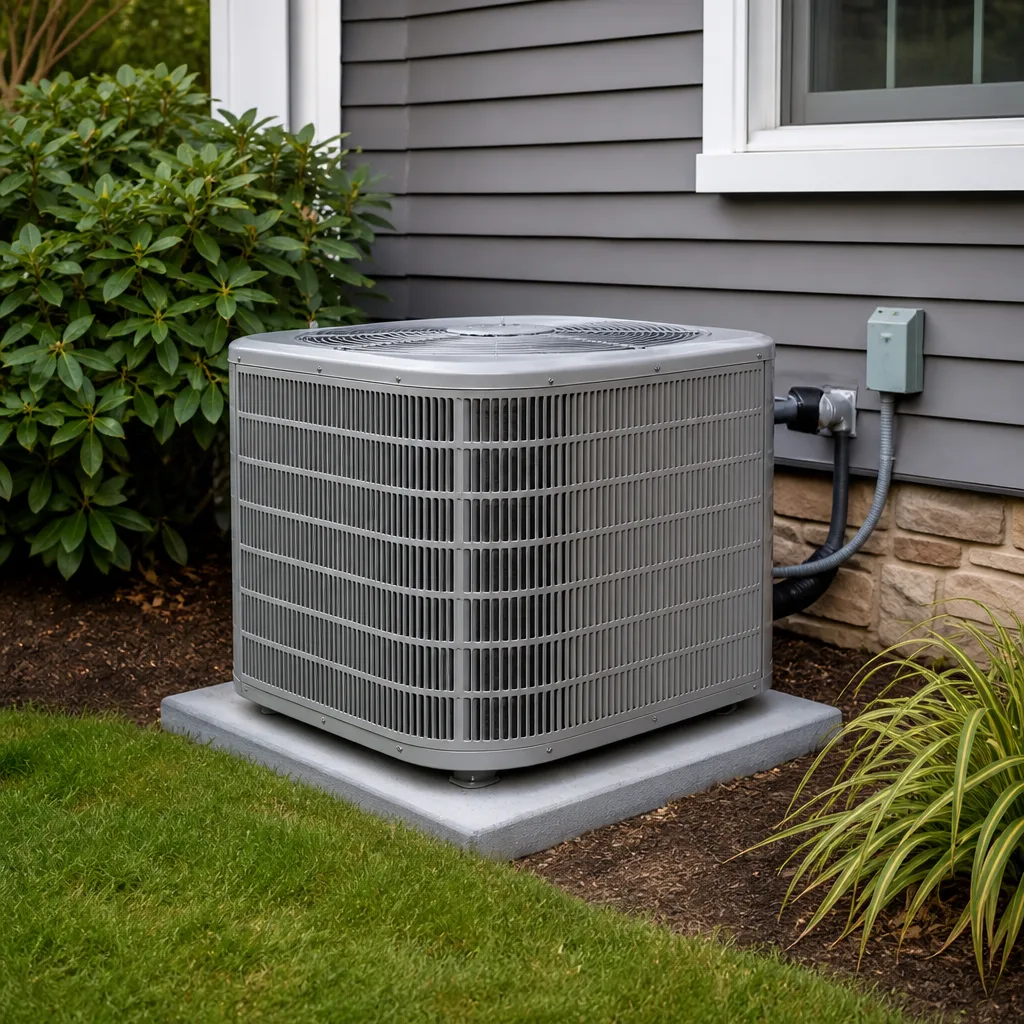 Carrier
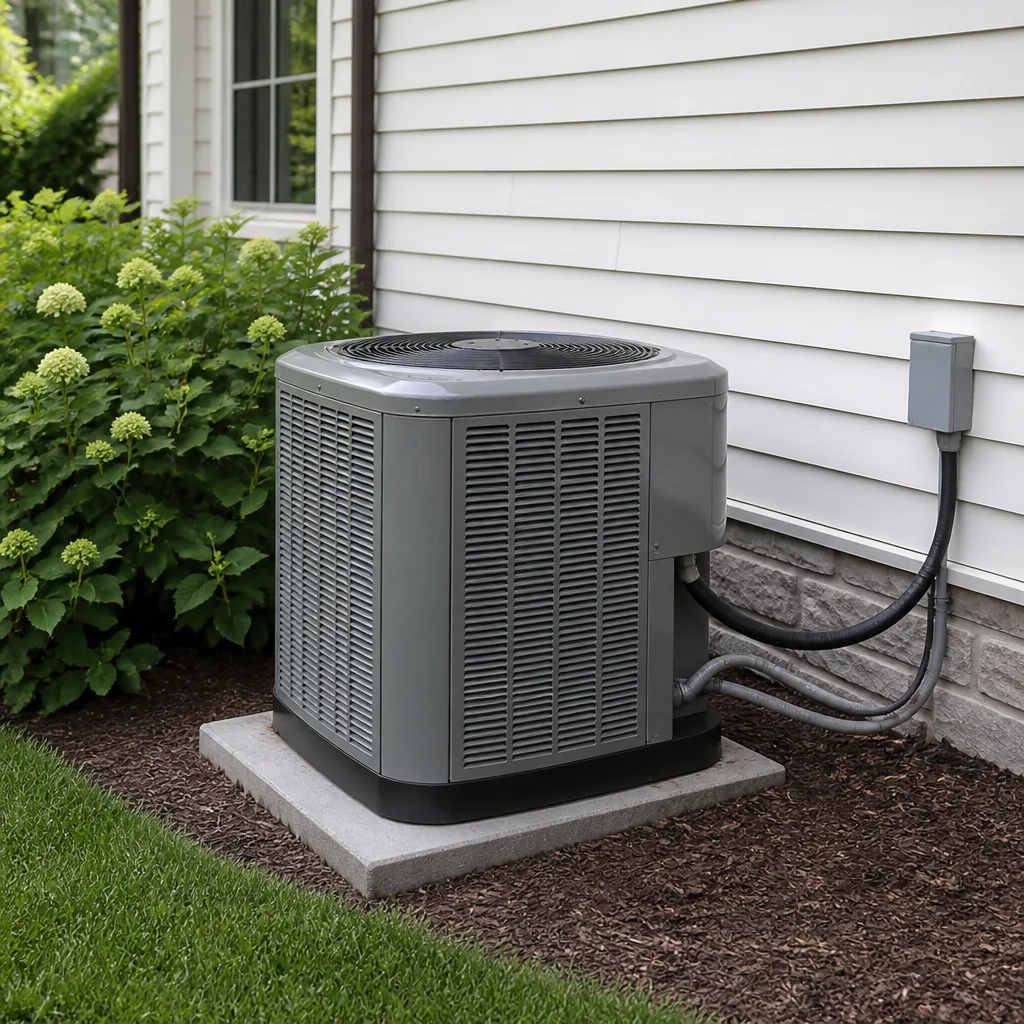 Trane
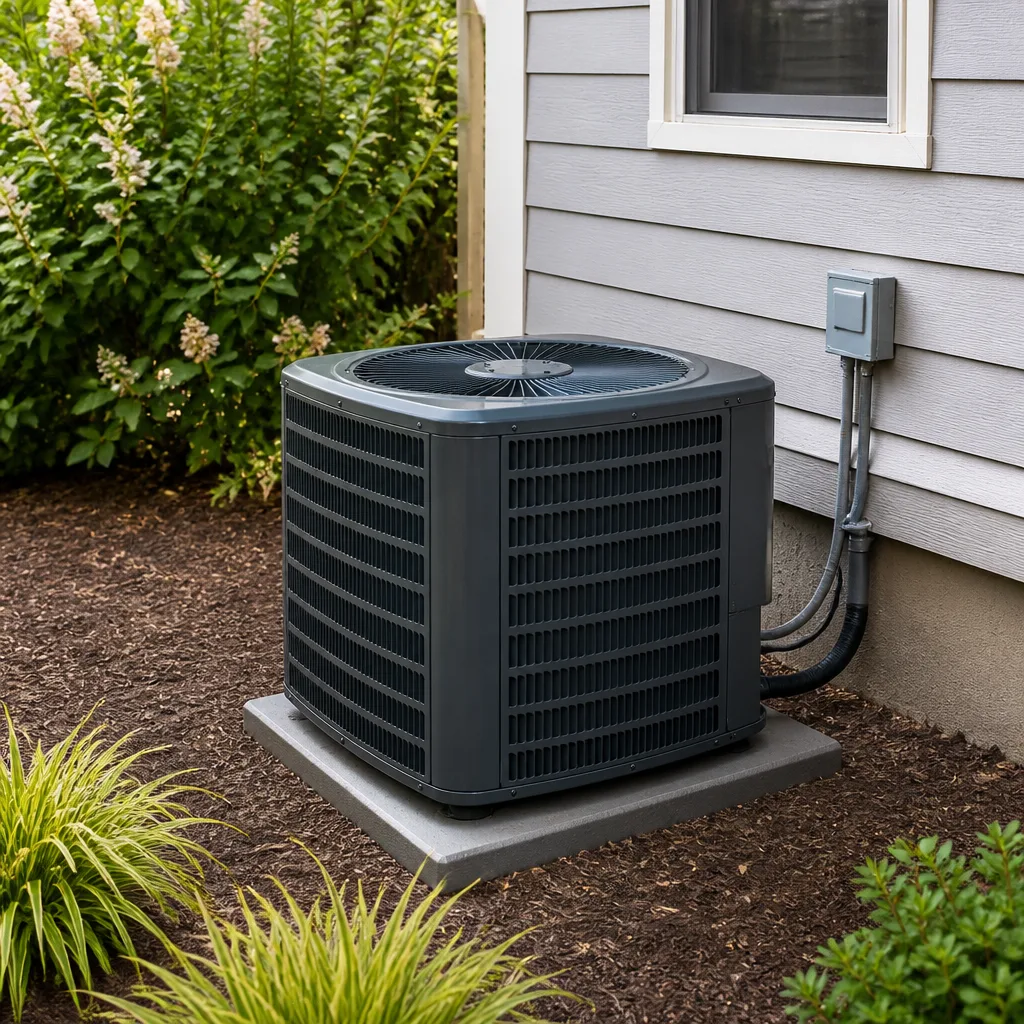 Goodman
Seasonal tune-up and full diagnostic on your Carrier, Trane, or Goodman system - readings shown to you before any repair is proposed
Diagnosis first, numbers second - you approve the repair price before a single part goes in.
Get your free estimateAC Installation Troubleshooting in Tallahassee: Common Problems and How to Fix Them
A brand-new AC unit that won’t cool a Tallahassee home below 78°F on a July afternoon isn’t broken – it’s almost certainly either charged wrong with refrigerant or pushing against ductwork that was never built to move enough air. That’s the counterintuitive part: the equipment is usually fine. The problem lives in the installation. Most homeowners assume a failing new system means a bad compressor or a lemon unit from the factory, so they brace for a replacement fight. In reality, the first thirty days after installation are when the real culprits surface, and nearly all of them trace back to a handful of avoidable install errors. This guide walks you through what to check, what each symptom means, and how to tell a warranty issue from a contractor error from a problem on your side of the meter.
Quick Answer
If your new AC isn’t cooling properly in Tallahassee, the cause is almost always one of four things: an improper refrigerant charge, a sizing mistake that makes the unit short-cycle, ductwork that can’t handle the airflow, or a condensate drain pitched wrong for our humidity. Start by measuring the temperature difference between your supply and return vents – a healthy system runs roughly 15 to 20 degrees cooler at the register. If it’s within that range but the house still feels warm, the problem is airflow or the building envelope, not the refrigerant. If it’s outside that range, call the installer for a warranty diagnostic before anything else.
Styles & brands we work with
- AC repair
- Furnace & heating
- Heat pumps
- Ductless mini splits
- Carrier
- Trane
- Goodman
Table of Contents
- Why Problems Show Up in the First 30 Days
- Refrigerant Charge Problem vs. Oversized Unit
- Reading Your Thermostat’s Temperature Differential
- Condensate Drain Problems in Tallahassee Humidity
- Electrical Symptoms: Wiring Error vs. Power Quality
- How to Document and Escalate Installation Issues
- Common Mistakes to Avoid
- Frequently Asked Questions
Why Problems Show Up in the First 30 Days
The first month after a new install is the diagnostic window, and it matters because that’s when your leverage with the installing contractor is strongest. A system that runs badly from day one is telling you something specific. A system that runs fine and then fails at month fourteen is a different story – that’s a part failure, and it falls under the manufacturer’s warranty rather than the installer’s workmanship.
Here’s the pattern we see in Tallahassee. The weather during installation week is often mild, so the system gets a soft test. Then July arrives, the unit runs continuously for the first time, and every small installation flaw gets exposed at once. A charge that was slightly off on a 78°F day becomes a comfort failure at 95°F. A drain line with barely enough pitch holds up fine until the humidity climbs and the coil starts producing condensate faster than it can drain away. Nothing “broke” – the load just finally showed up.
That’s why the timing of your complaint matters. If you call your installer while the install is still fresh, you’re describing a workmanship concern. If you wait six months, the conversation shifts toward a warranty claim on parts, and the labor to fix an installation error can end up in a gray zone nobody wants to own. The AC installation process should include a full commissioning check on a hot day, but if yours didn’t, the symptoms below will tell you where to look.
Refrigerant Charge Problem vs. Oversized Unit
These two problems feel identical from the couch and are completely different to fix. One is an installer error covered under warranty. The other is a sizing mistake that may mean the equipment itself is wrong for your house. Knowing which one you have saves you from arguing the wrong case with your contractor.
Signs of a refrigerant charge problem
- The system runs constantly but the air from the vents is only mildly cool, never cold.
- Supply and return temperatures differ by less than 15 degrees.
- The outdoor unit’s copper lines feel warm on the small line, and there’s no condensation on the large suction line.
- You hear a faint hissing or gurgling near the indoor coil.
- Cooling improves slightly in the evening and collapses in the afternoon heat.
An undercharge during installation usually means the technician didn’t weigh in the refrigerant against the actual line length, or skipped a proper evacuation before charging. It’s fixable, it’s the installer’s responsibility, and it should be corrected at no cost to you.
Signs of an oversized unit
- The system cools the house quickly, then shuts off before it can pull out the humidity.
- You feel clammy even with the thermostat set low.
- Short run cycles – five to ten minutes on, then off – repeating all afternoon.
- The unit cools fine in mild weather and poorly in peak heat, because it’s cycling so much it never really dehumidifies.
Oversizing is a load-calculation failure. A unit that’s too big for the house will short-cycle, which means it never runs long enough to remove moisture. In Tallahassee’s humid summers, that leaves a home that’s technically at temperature but feels sticky and uncomfortable. Fixing oversizing can mean replacing the equipment, which is why a proper load calculation before install matters so much. If you’re still choosing a system, our guide to Ridgeway AC Repair covers how we approach brand-agnostic sizing across Carrier, Trane, Lennox, Goodman, and five more manufacturers.
Reading Your Thermostat’s Temperature Differential
Your thermostat can tell you more about your system than most homeowners realize, and you can read it without any tools. The measurement is called the temperature differential, or delta T, and it’s the difference between the air going into your return and the air coming out of your supply registers.
Here’s how to check it, step by step:
- Let the system run for at least fifteen minutes so it settles into a steady state.
- Hold a thermometer (or a digital probe) in the return-air grille for two full minutes. Note the reading.
- Move to the nearest supply register and hold the same thermometer there for two full minutes. Note that reading too.
- Subtract the supply reading from the return reading.
A result between 15 and 20 degrees is normal. That range tells you the system is actually moving refrigerant and conditioning air. If you measure less than 15 degrees, the system is running but not conditioning much – charge, compressor, or coil trouble. If you measure more than 22 degrees, the airflow is likely too low, which points to duct problems or a blower set wrong.
Here’s the piece most homeowners miss. If the delta T is normal but the house never reaches the thermostat setpoint, your system is working correctly and your house is losing the cool air before it reaches you. That’s the clue that sends you to the ducts, the attic insulation, or the windows – not to the equipment. In Tallahassee’s older neighborhoods, where attic ducts run through spaces that bake all afternoon, this is the most common comfort complaint we hear, and it has nothing to do with the brand-new unit on the pad.
Condensate Drain Problems in Tallahassee Humidity
Your AC removes more water from the air than most people realize, and in a Tallahassee summer that drain line is working hard. An improperly pitched or clogged condensate drain is one of the most common installation problems, and it’s also one of the most destructive if it goes unnoticed. Water that pools near the indoor air handler can damage ceiling drywall, insulation, and flooring before you ever notice a cooling problem.
What a failing drain looks like
- Water stains on the ceiling or wall directly below the indoor unit.
- A musty or damp smell coming from the supply vents.
- The system shuts off on its own, then restarts after a while – that’s the float switch doing its job.
- A visible drip or puddle in the drain pan, which you can check by looking at the unit’s base.
Proper installation means the drain line pitches continuously downhill, with no low spots to trap water and a trap installed correctly on the right side of the unit. A drain that’s flat, uphill in one section, or missing its trap will work for a while and then back up. When it does, the float switch shuts the system down to protect your home – which feels like a system failure but is really a drain failure.
If you see water, turn the system off at the thermostat and call for service rather than continuing to run it. A trained technician can clear the line, check the pitch, and confirm the float switch is working. This is one of the few first-month issues where a skilled homeowner can at least identify the problem early, but the fix belongs to a professional. Our furnace repair team also handles the heating side of the same system, so we’re the same call when seasons change.
Electrical Symptoms: Wiring Error vs. Power Quality
Electrical problems after a new install are the ones that scare homeowners most, and rightly so. They’re also the ones where the distinction between a wiring error and a utility issue changes who pays for the fix. Here’s how to read the symptoms.
Breakers tripping after install
A breaker that trips within the first few days of a new installation usually points to a wiring error: an undersized conductor, a loose connection that’s heating up, or the wrong breaker size for the new equipment. A breaker that’s been fine for years and starts tripping later in the season is more likely a failing capacitor or a compressor drawing too much current. Note whether the trip happens at startup or mid-run – startup trips lean wiring, mid-run trips lean equipment.
Capacitor hum and repeated starts
A humming outdoor unit that won’t stay running, or one that starts and stops repeatedly, often signals a weak capacitor or a wiring issue at the contactor. Capacitors are a common early failure, but if yours fails within the first month, ask the installer whether the startup voltage was checked during commissioning.
Compressor delays
If the thermostat calls for cooling and the outdoor unit sits silent for thirty seconds or more before kicking in, you may have a time-delay feature working correctly – or you may have a control wiring problem. Ask the installer which one it should be for your model. In our experience with three of the most widely installed brands in Tallahassee – Carrier, Trane, and Goodman – the startup delay varies by model, so the answer comes from the installation manual, not from a rule of thumb.
Electrical work at the panel or the disconnect is genuinely dangerous. Don’t open the unit or reset a tripped breaker more than once. Call a licensed technician. For anything involving the breaker panel or new circuit work, always use a trained professional.
How to Document and Escalate Installation Issues
The tone you take with your installer, and the paper trail you build, determine whether a first-month problem gets fixed quickly under warranty or turns into a months-long argument. Here’s the process that preserves your leverage.
- Write down every symptom with a date and time. Note the outdoor temperature, the thermostat setting, the actual room temperature, and what the system was doing. A pattern across several days is more convincing than one frustrated phone call.
- Measure the temperature differential yourself and record it. If it’s 12 degrees on a 95-degree afternoon, write that down. It’s a data point the contractor can verify, not an opinion.
- Call in writing first, then follow up by phone. Email or text the symptom list so there’s a record. Then call. Keep both channels open.
- Ask specifically: is this a workmanship issue or a parts warranty issue? The answer determines who’s responsible for the labor, and getting it in writing early prevents a later dispute.
- Ask for a written diagnosis after the visit. What was measured, what was found, what was corrected. If the technician can’t produce this, ask again.
- Escalate only after a documented attempt. If the installer won’t respond, contact the manufacturer’s local distributor and ask what their process is for workmanship complaints on a recently installed system.
In our experience, most installation issues get resolved at step three. The problems that drag on are usually the ones where the homeowner called once, got a vague answer, and dropped it. Documentation turns a “we’ll look at it” into a scheduled service visit with a defined scope. And if you need a second opinion on whether the problem is an install error, a warranty item, or a home-side airflow issue, we work on virtually every system in Tallahassee, regardless of who installed it.
Common Mistakes to Avoid
- Assuming a new unit means a good install. The equipment can be flawless and the installation poor. A new system is only as good as the commissioning behind it – check the temperature differential yourself before you trust the job.
- Running the system while water is pooling. A dripping indoor unit can soak insulation and drywall in an afternoon. Turn it off and call for service.
- Resetting a tripped breaker more than once. The second trip is a signal, not a nuisance. Repeated resets can damage the compressor and turn a wiring fix into a replacement.
- Waiting until the end of summer to report a problem. Your leverage with the installer is strongest in the first thirty days. Delay, and the conversation shifts from workmanship to warranty, where the labor coverage is far less clear.
- Confusing “cool” with “conditioned.” A house at 74°F that feels clammy in Tallahassee’s humidity has an airflow or sizing problem, not a refrigerant problem. Treating it as a charge issue wastes everyone’s time.
- Skipping a load calculation. If your installer sized the unit by square footage alone, oversizing is likely. A proper load calculation accounts for your home’s orientation, insulation, and window count – all of which matter in Tallahassee’s climate.
- Talking to the installer in generalities. “It doesn’t work right” gets a shrug. “The delta T is 12 degrees on three consecutive afternoons at 3pm” gets a service visit.
See the difference
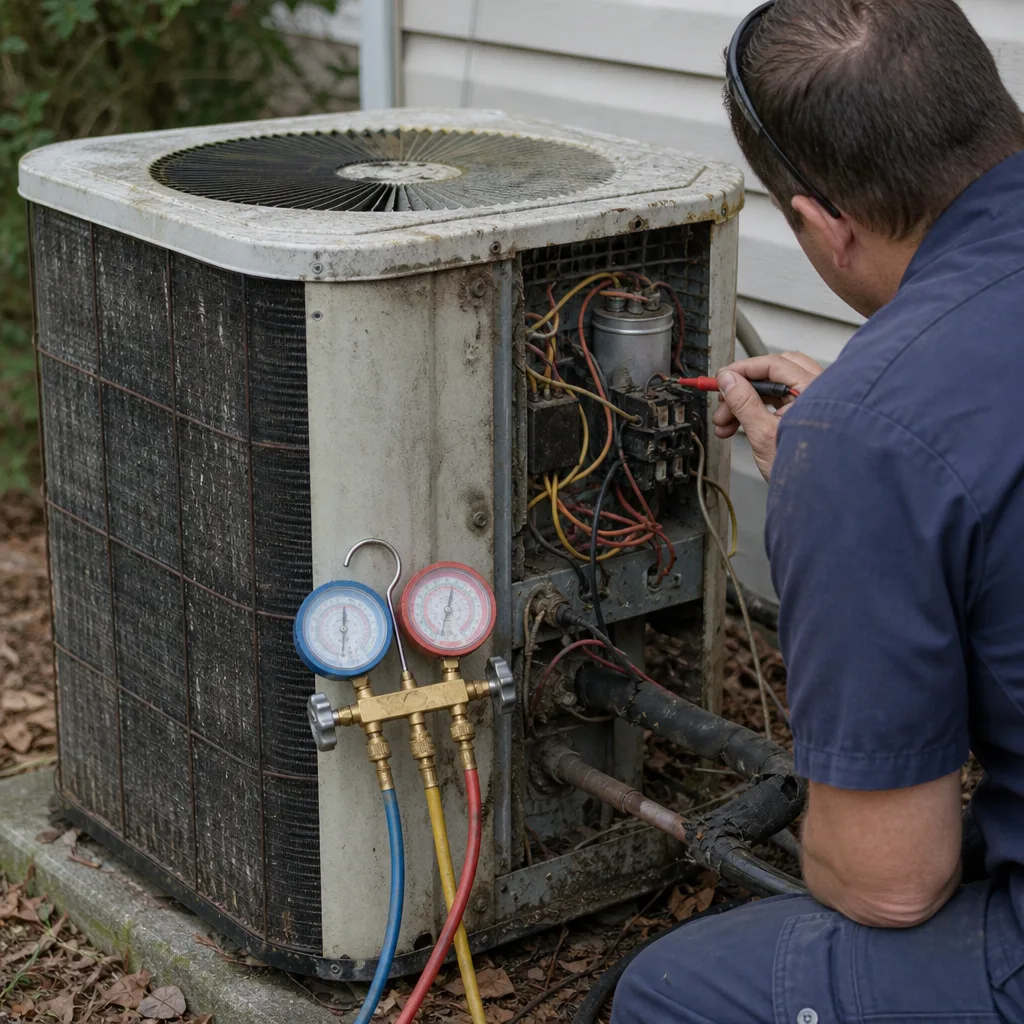 Before
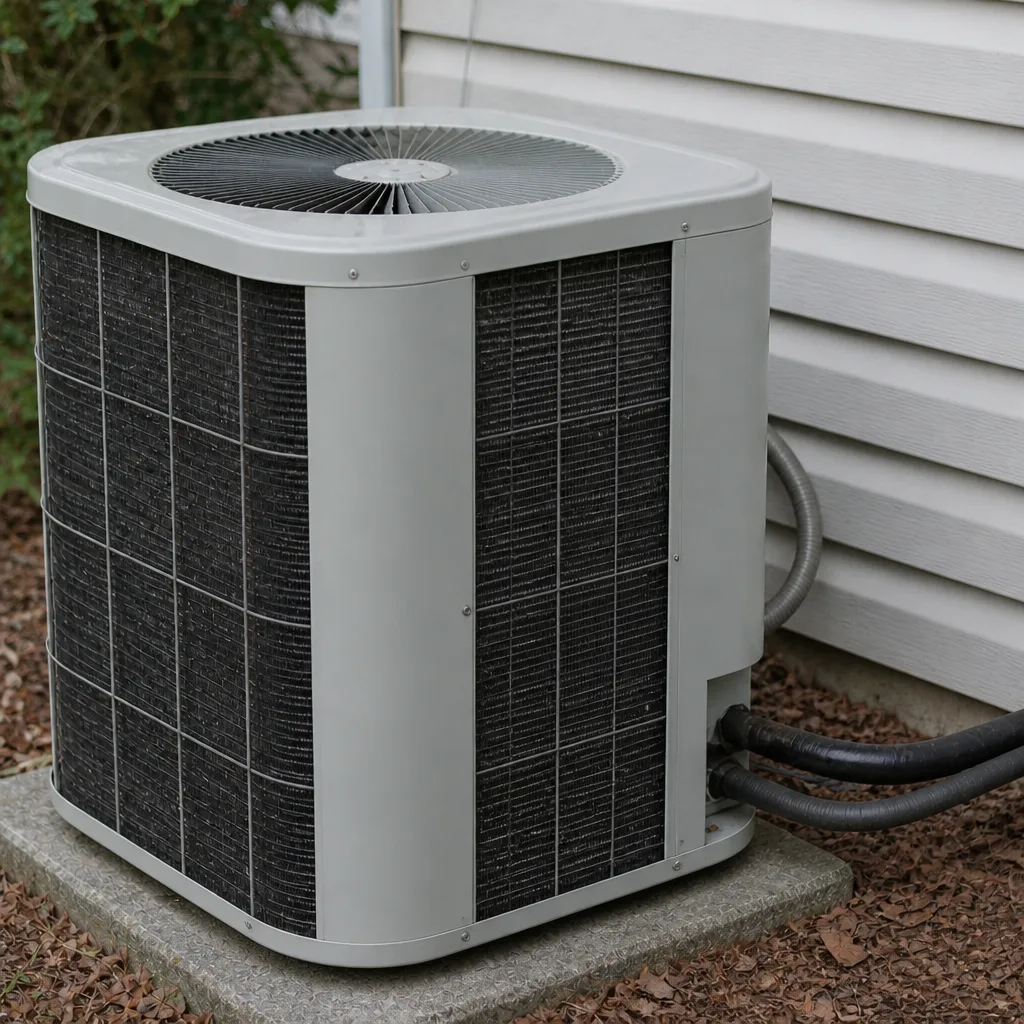 After
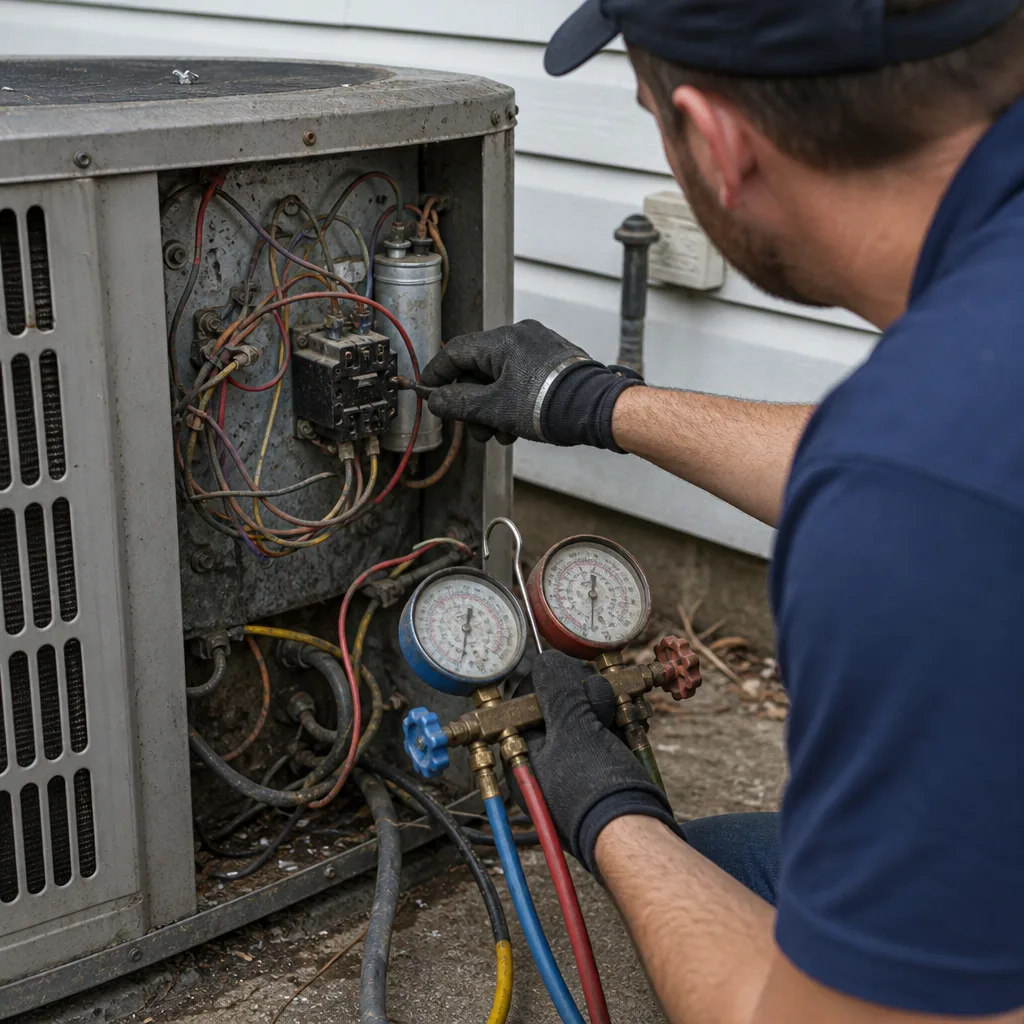 Before
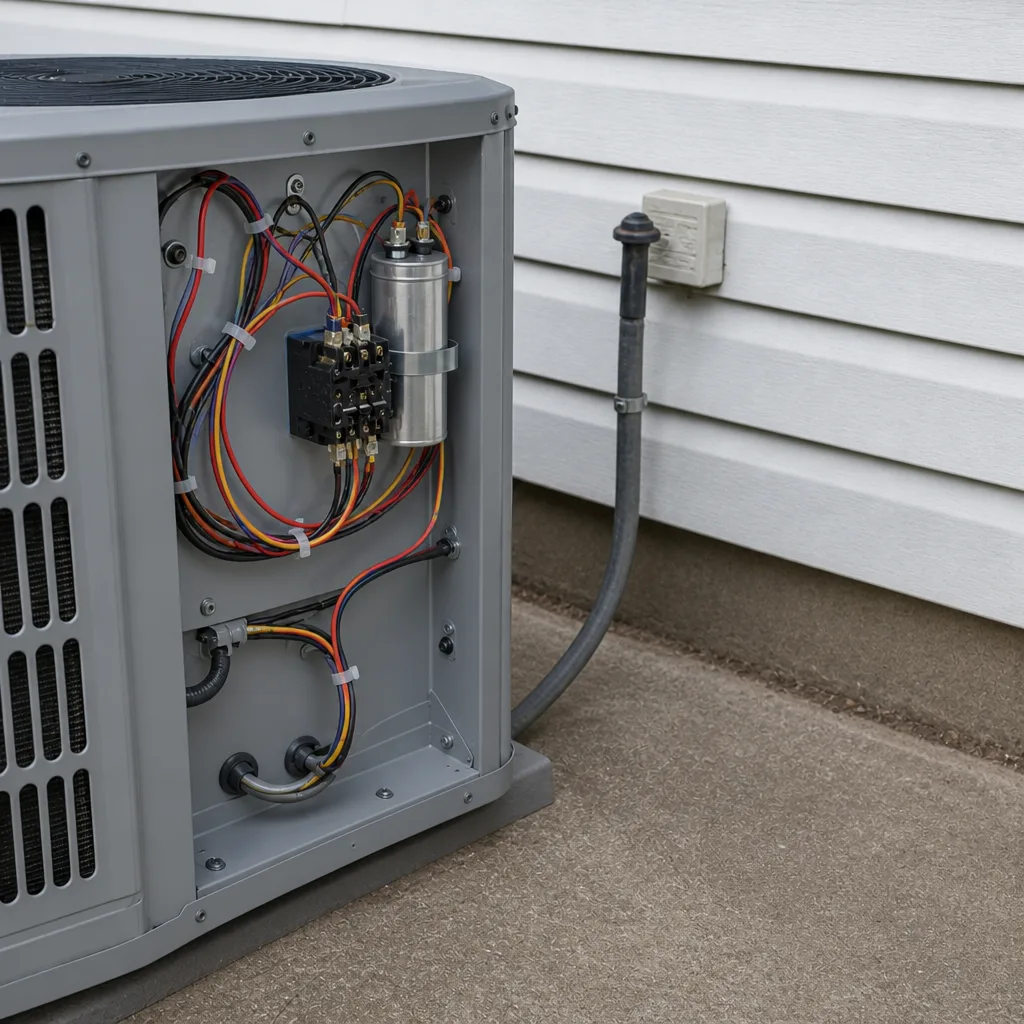 After
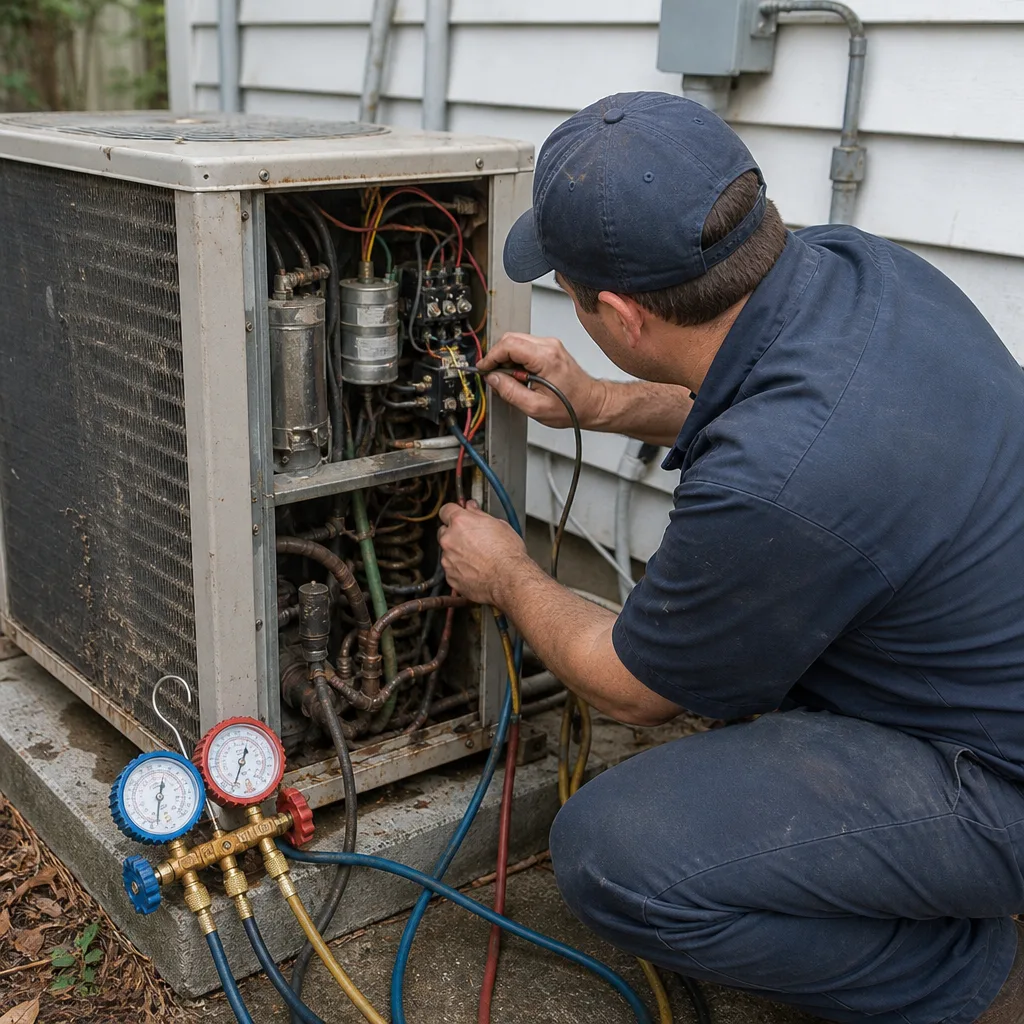 Before
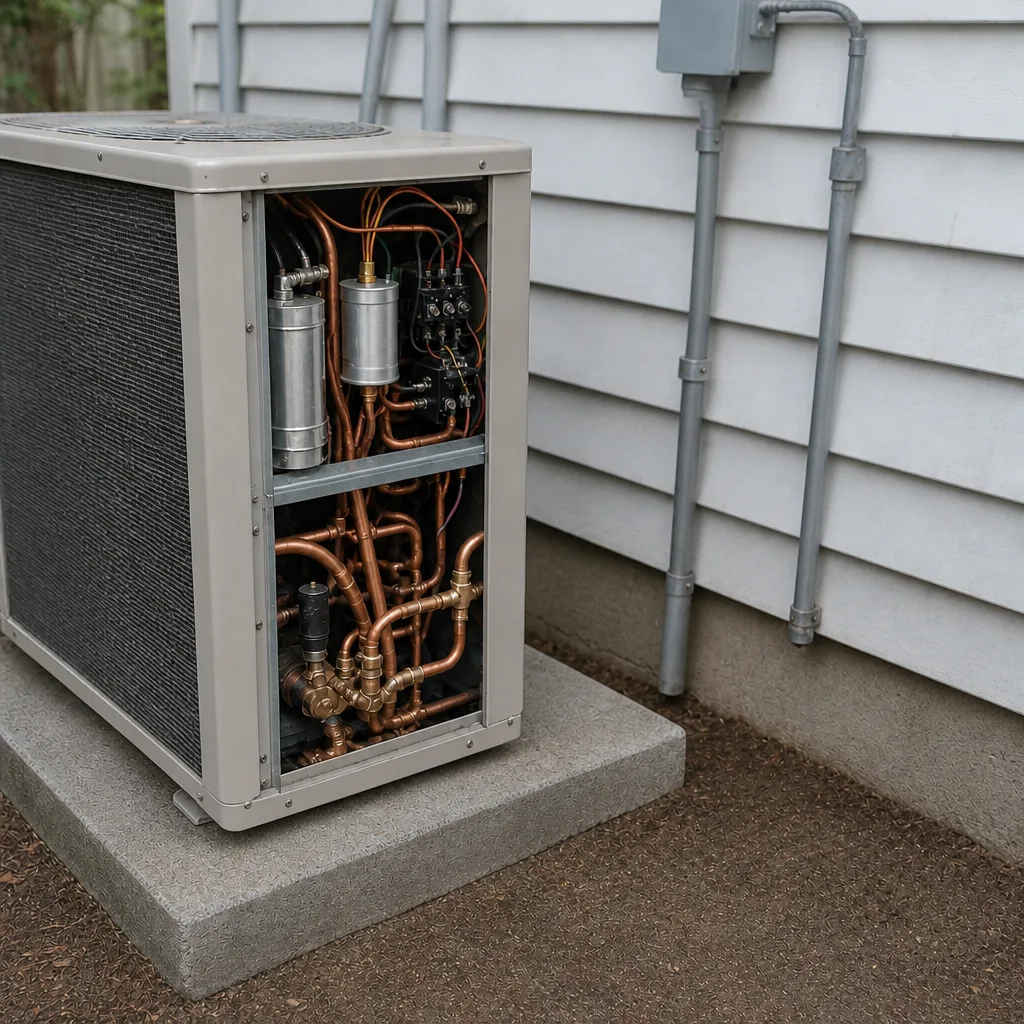 After
When to Call a Professional
Some first-month problems clear up on their own as the system breaks in. Most don’t. Call a professional if any of these is true: your temperature differential is outside the 15 to 20 degree range, you see water near the indoor unit, a breaker has tripped more than once, the outdoor unit hums without starting, or the house never reaches the thermostat setpoint even though the system runs constantly. Those symptoms point to refrigerant, wiring, or drain problems that need a trained technician with gauges and a meter. Ridgeway AC Repair offers free estimates in Tallahassee – call (844) 834-0157. We work on the system you already have, whether it’s Carrier, Trane, Lennox, or a value-tier brand, and we’ll tell you plainly whether you’re looking at a warranty issue, a contractor error, or a home-side problem.
Frequently Asked Questions
The most likely cause is an improper refrigerant charge or insufficient airflow through undersized or poorly connected ductwork. Start by measuring the temperature differential between your return and supply vents. If it’s under 15 degrees, the charge is suspect. If it’s normal but the house stays warm, the ductwork or the building envelope is the issue. Call your installer for a commissioning check while the install is fresh, or call us at (844) 834-0157 for a second opinion.
Yes, and it happens more often than homeowners expect when the unit was sized by square footage instead of a proper load calculation. An oversized unit cools the air quickly and then shuts off, which means it never runs long enough to remove the humidity that Tallahassee summers throw at it. The tell is a house that reaches the thermostat setting but still feels sticky, with the system cycling on and off every few minutes.
A leaking indoor unit almost always means the condensate drain is clogged, inadequately pitched, or missing a proper trap. Tallahassee’s humidity produces a lot of condensate, so a drain that’s only marginally pitched will back up faster here than in a drier climate. Turn the system off at the thermostat and call for service before the water damages drywall or insulation.
In the first month after installation, a tripping breaker usually points to a wiring error rather than a failing unit – an undersized conductor, a loose connection, or the wrong breaker size. Don’t reset it more than once. Repeated resets can damage the compressor, and the diagnosis requires a licensed technician with a meter. Electrical work at the panel is genuinely dangerous, so leave it to a trained professional.
Workmanship errors – improper charge, bad drain pitch, wiring mistakes – are typically the installer’s responsibility to correct, independent of the manufacturer’s parts warranty. Parts failures fall under the manufacturer’s warranty. The distinction matters, so ask your installer directly whether the issue is workmanship or parts, and get the answer in writing. Documenting the symptoms first makes that conversation much easier.
A properly sized and charged system should cool a Tallahassee home by several degrees within an hour of startup, and reach the setpoint within two to four hours on a normal summer afternoon. If your home hasn’t reached the setpoint by the end of the first day of operation, that’s not a break-in period – that’s a symptom worth investigating. If you want a professional read on the situation, call (844) 834-0157 for a free estimate.
The Bottom Line
First-month AC problems in Tallahassee are rarely random. They trace back to refrigerant charge, sizing, airflow, drain pitch, or electrical work – all decisions made during installation, not defects in the equipment. Measure your temperature differential before you call anyone; it tells you which category you’re in and gives your contractor something concrete to work with. Document every symptom with dates and numbers, report problems in the first thirty days while your workmanship leverage is strongest, and turn the system off if water is present. If you’re not sure whether you have a warranty issue or a contractor error, a second opinion is worth the call. Ridgeway AC Repair works on virtually any system a homeowner already owns, cooling and heating under one roof, with no brand loyalty steering the answer. Read more about our service area on our Tallahassee page, or reach out for a free estimate when you’re ready.
Contact Us
If your new AC isn’t cooling the way it should, we can help you sort out whether it’s a warranty item, an installer error, or a home-side issue. We work on Carrier, Trane, Lennox, Goodman, and many other systems, and our technicians have up to experience. Call (844) 834-0157 for a free estimate. We answer 24/7. Fast dispatch from 7am to 7pm, Sunday through Friday.
Written by the team at Ridgeway AC Repair.