
Last updated November 16, 2026
 AC repair
 Furnace & heating
 Heat pumps
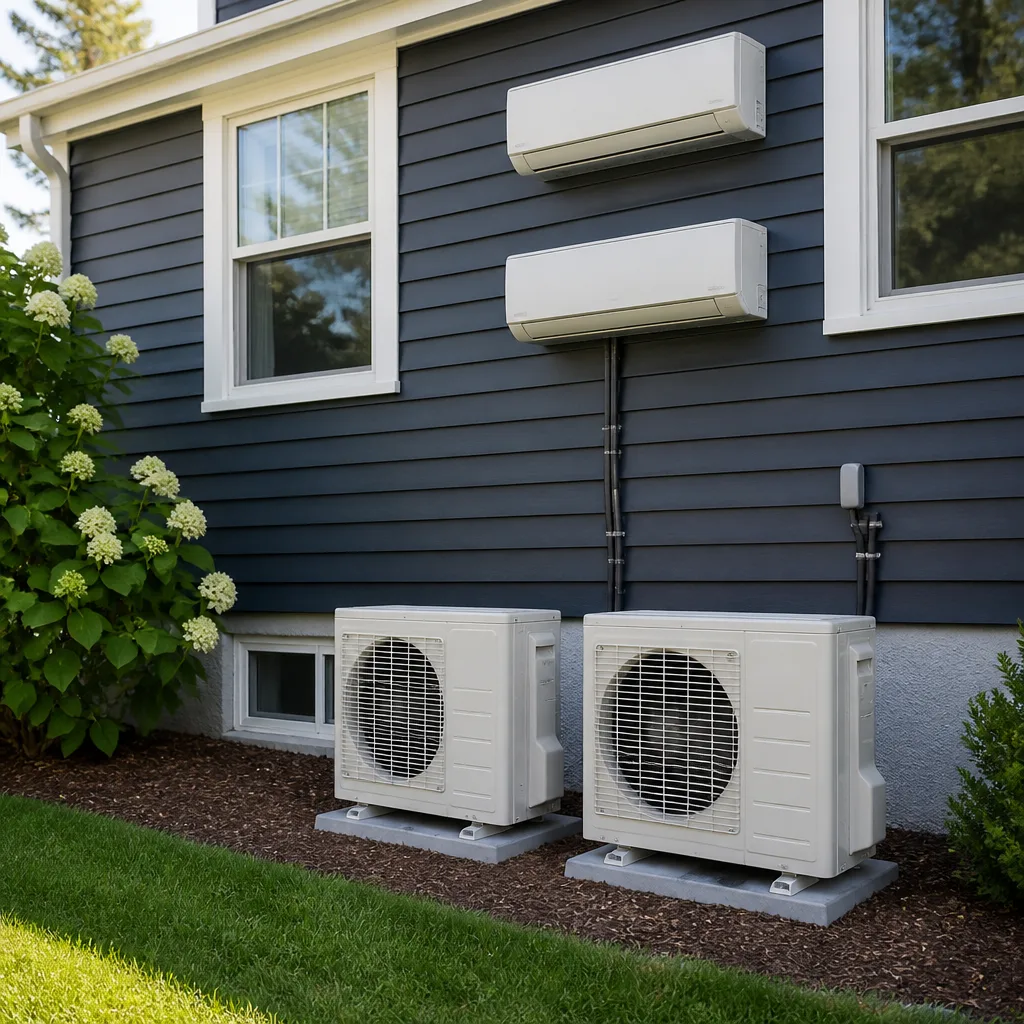 Ductless mini splits
 Carrier
 Trane
 Goodman
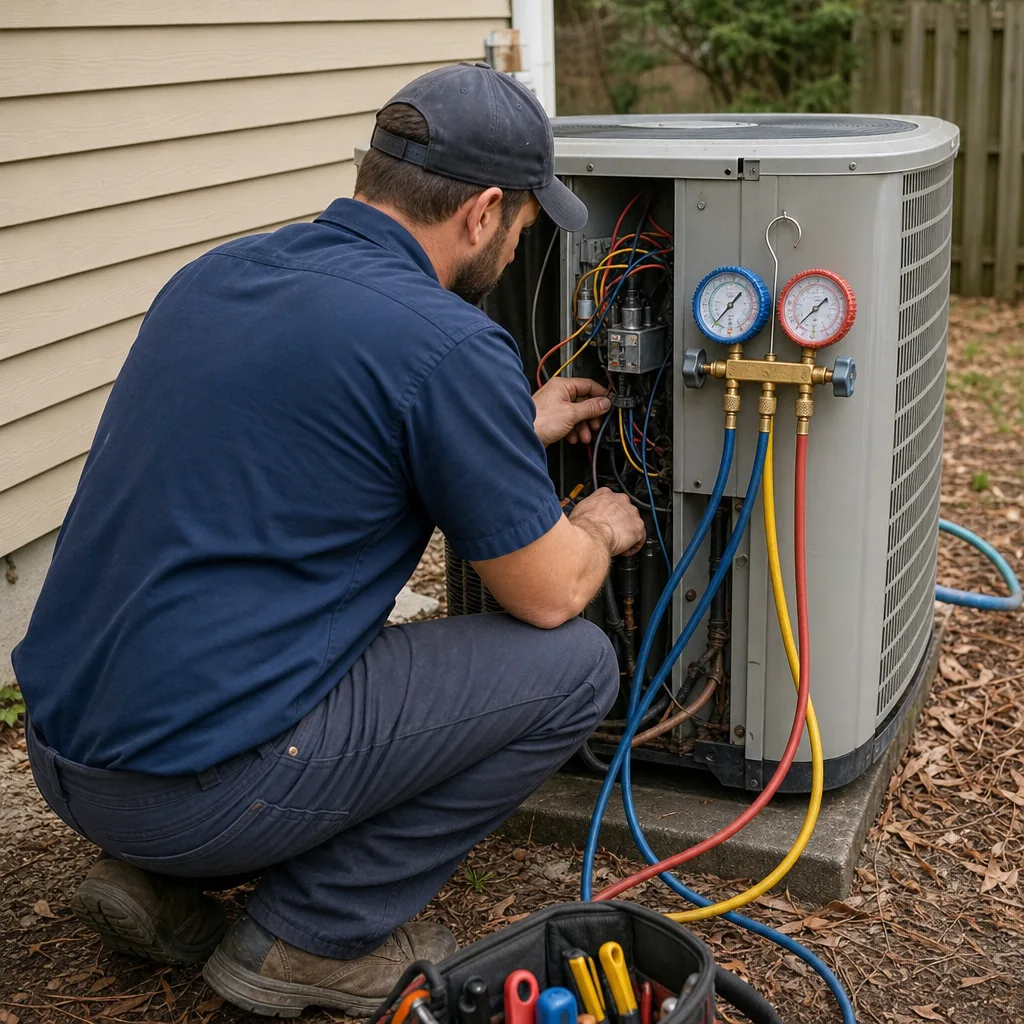
Seasonal tune-up and full diagnostic on your Carrier, Trane, or Goodman system - readings shown to you before any repair is proposed
Diagnosis first, numbers second - you approve the repair price before a single part goes in.
Get your free estimateSeasonal HVAC Care for Tallahassee: Year-Round Homeowner’s Guide
Most HVAC maintenance advice is written for a place with four clean seasons. Tallahassee doesn’t have those. Here, the air conditioner can run on Thanksgiving and the heat can kick on in March, sometimes in the same week. The “tune up in spring, winterize in fall” schedule that fills most guides was built for cooler climates with hard seasonal breaks. Follow it here and you’ll miss the shoulder months that actually put the most strain on a system. This guide replaces that generic advice with a month-by-month calendar built around how Tallahassee weather really behaves, from the spring rain season to the June-through-October storm window. You’ll learn what to check, when to check it, and when to put the tools down and call someone.
Quick Answer
In Tallahassee, HVAC care should follow the weather rather than the calendar: expect long cooling seasons that stretch into fall, short but real heating demand in winter, and high humidity in spring even when the temperature is mild. The practical routine is an AC check in spring before the heavy cooling load, an outdoor-unit inspection in June ahead of storm season, heater and heat-pump prep in late fall, and a filter-and-coil habit all year. The single most important fact: September, not July, is when cooling failures most often surface, because a system worn down by summer tends to quit during the late-season strain.
Styles & brands we work with
- AC repair
- Furnace & heating
- Heat pumps
- Ductless mini splits
- Carrier
- Trane
- Goodman
Table of Contents
- The Tallahassee Month-by-Month HVAC Calendar
- Why September, Not Summer, Is When AC Failures Surface
- Winter Prep for a Heat Pump vs. a Gas Furnace
- Managing Humidity in the Spring Rain Season
- Storm-Season Prep for Outdoor Units (June – October)
- Filters, Coils, and the Habits That Matter All Year
- Repair or Replace? How to Read Your System’s Signals
The Tallahassee Month-by-Month HVAC Calendar
Here’s the working calendar we recommend to homeowners across Tallahassee. It’s grouped by the seasons as this city actually experiences them, not the textbook version.
January – February (mild winter): This is heating season but a gentle one. Run your heat a few times even on mild weeks so the system doesn’t sit idle for months. Replace filters. Listen for unusual noises on startup.
March – April (warm-up and rain): Cooling demand begins. Change the filter before the first real hot stretch. Watch indoor humidity closely, since this is the rainy stretch when your AC may not run long enough to pull moisture out of the air. A spring AC check now catches small problems before summer.
May – August (peak cooling): The AC is working its hardest. Filters every month. Keep the outdoor unit clear of debris and shaded if possible. Watch for rising energy bills or rooms that stop cooling evenly.
September – October (shoulder strain and storms): The toughest test for a worn system, and peak tropical-weather risk. Inspect the outdoor unit and clear it before any storm. This is when you’ll often first notice a problem.
November – December (cooling and heating overlap): You may switch back and forth between AC and heat in the same week. Test the heat now, before you need it, and schedule any heating work early.
If you’d rather not keep this calendar yourself, anAC installation and service professional can build a schedule around it.
Why September, Not Summer, Is When AC Failures Surface
Ask most people when air conditioners fail and they’ll say the hottest week of summer. In our experience across Tallahassee, the failures cluster in September and early October instead. That surprises homeowners, but the logic is simple: by September, the system has run almost continuously for four or five months. Parts are worn, coils carry a summer’s worth of buildup, and the machine is tired. Then a late-season heat wave pushes demand right back up, and a system that limped through July finally gives out.
September also brings more than heat. It’s a storm-heavy month, and the same weather that darkens the sky can stress a unit that’s already worn. A brief power interruption, a surge, or debris blown against the outdoor unit can be the final straw.
So what should you do in August to prevent a September breakdown?
- Replace the filter one last time before the final stretch of cooling season.
- Hose off the outdoor coil gently and clear leaves, grass clippings, and anything piled against the unit.
- Watch for new symptoms: short cycling, weak airflow, a musty smell, or a bill that climbs without a change in weather.
- Book a late-summer check rather than waiting for a failure on the hottest day.
A system that gets attention in August tends to make it through September. One that doesn’t becomes a same-day call. When that happens, we answer 24/7, and fast dispatch from 7am to 7pm gets a technician to you quickly.
Winter Prep for a Heat Pump vs. a Gas Furnace
Tallahassee homes run a mix of equipment: some have gas furnaces, many have heat pumps that handle both heating and cooling, and some have a heat pump with a gas backup. The winter prep differs by type, and lumping them together is a common mistake.
Heat pump winter prep
A heat pump heats by moving heat rather than burning fuel, so its winter needs are about airflow and drainage. Before the first cold snap:
- Clear the outdoor unit of leaves and debris so it can pull air freely.
- Check that the condensate drain is clear so it doesn’t back up in cool weather.
- Make sure the unit sits level and the area around it drains.
- Run the system in heat mode once on a mild day to confirm it switches and warms properly.
If your heat pump also serves as your summer cooling, an equipment-fluent service visit helps. We work on the system you already have, including widely installed brands like Goodman, Rheem, and York, so there’s zero guesswork when the technician arrives.
Gas furnace winter prep
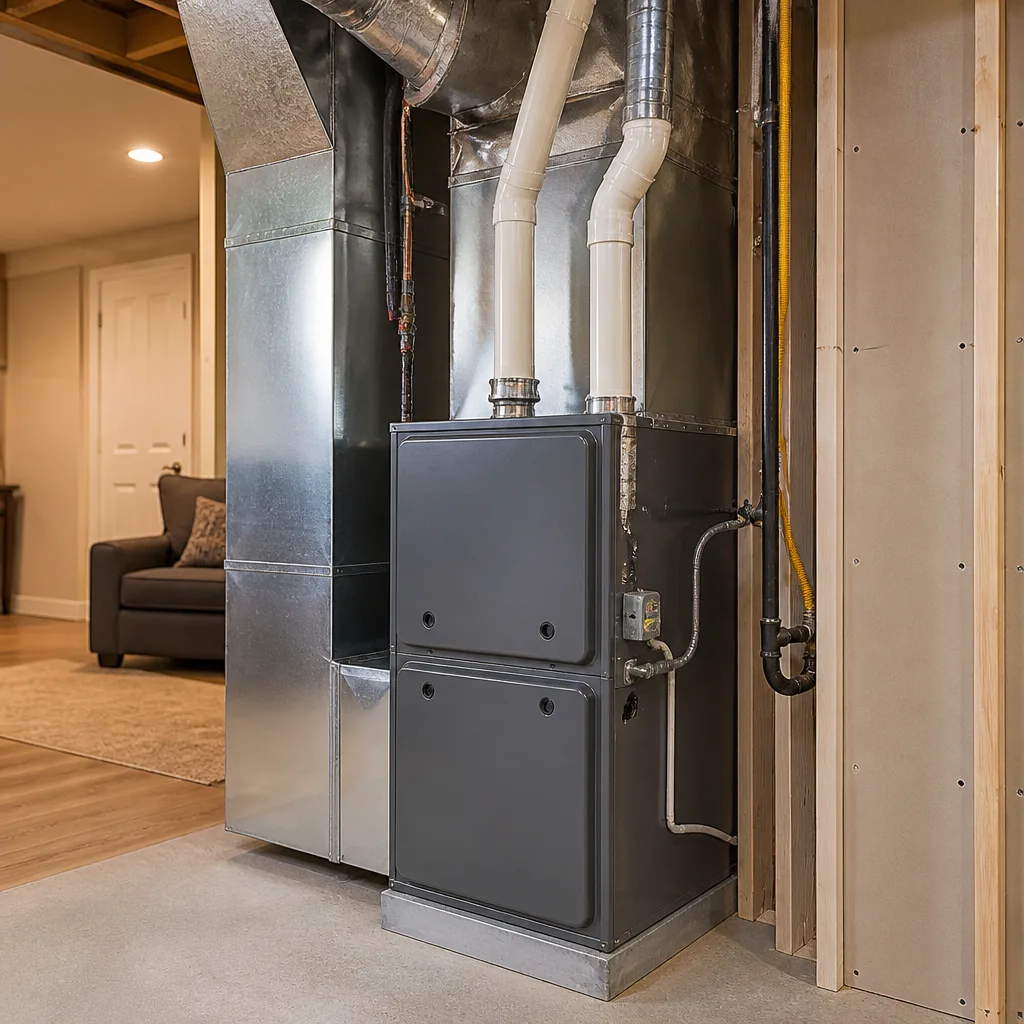
A gas furnace needs different checks, and some of them are safety checks that belong to a trained technician, not a homeowner. Fuel connections, the heat exchanger, and combustion venting are not do-it-yourself territory. What you can do: replace the filter, keep the area around the furnace clear, and listen for new noises or a change in the flame color if you can see it safely. Anything involving gas lines or the heat exchanger should go to a professional. Our technicians have up to experience, and afurnace repair visit before winter beats an emergency in January.
Managing Humidity in the Spring Rain Season
Here’s the counterintuitive part of a Tallahassee spring. During the rainy stretch, the temperature can be mild while the air is soggy. Your air conditioner cools the house and, as a side effect, removes moisture. But when it’s only mildly warm, the AC doesn’t run long enough to pull that moisture out. The result is a house that feels clammy and sticky at 78 degrees even though the thermostat says it should feel fine.
Running the fan continuously doesn’t fix this. It can actually make it worse, because a fan that keeps moving air over a damp coil can push moisture back into the house. What helps:
- Let the system run in cooling mode a little longer rather than short-cycling on and off.
- Keep filters clean so airflow stays strong and the coil does its job.
- Check that the condensate drain is clear, since a spring rain season is exactly when a clogged drain shows up.
- If humidity stays high even when the AC runs, a technician can look at whether the system is sized and set up to remove moisture properly.
Humidity control is where the spring months quietly stress a system, and it’s one of the reasons a spring check matters here more than the generic “tune up before summer” line suggests.
Storm-Season Prep for Outdoor Units (June – October)
June through October brings the tropical weather window, and your outdoor condenser sits exposed to all of it. A few steps before and after a storm protect both the equipment and your safety.
Before a tropical system
- Clear the area around the outdoor unit: loose branches, lawn furniture, anything the wind can throw.
- Secure or store items that could become projectiles and strike the unit.
- Turn the system off at the thermostat before the worst of the weather arrives, so it isn’t running when power flickers.
- If flooding is possible, don’t try to protect the unit by covering it in a way that traps water.
After a storm
- Don’t restart anything until you’ve looked at the unit from a safe distance and confirmed it isn’t damaged, tilted, or sitting in standing water.
- If there’s standing water at the unit or obvious damage, leave the power off and call a professional.
- Once it’s clear, clear debris from around the unit and restore power at the thermostat.
- If the system doesn’t start, makes a new noise, or trips a breaker, stop and call.
Electrical components and storm damage aren’t a do-it-yourself repair. If your system takes a hit, our technicians can assess it, and because we handle both cooling and heating, storm-season problems with either system land with one company. We handle Tallahassee and the surrounding area, and we work on the widely installed brands, from Daikin to the premium tiers.
Filters, Coils, and the Habits That Matter All Year
No calendar replaces the basic habits. These are the tasks that matter every month, regardless of season.
- Filters: Check monthly during heavy cooling season and replace when dirty. A clogged filter strains the system, weakens airflow, and drives up energy use.
- Outdoor coil: Keep the condenser clear of leaves, grass, and debris. A gentle rinse helps; a pressure washer can damage the fins.
- Condensate drain: A clear drain prevents water backups. Check it before the rainy season and again before heavy summer use.
- Thermostat: Confirm it’s set correctly for the season and that the batteries (if it uses them) are fresh.
- Airflow: Keep vents and returns unblocked by furniture or rugs.
These habits don’t replace a technician’s inspection of the parts you can’t safely reach, but they keep the system in a position to benefit from one. Nine brands, zero guesswork means when a technician does arrive, they already know the quirks of your particular system.
Repair or Replace? How to Read Your System’s Signals
Sooner or later, every homeowner faces the question: fix it or swap it? The honest answer depends on the age of the system, the cost of the repair, and how the rest of the equipment is holding up. A few signals point toward replacement:
- Repeated repairs on the same component within a short window.
- A repair bill that approaches a meaningful fraction of a new system’s cost.
- Rising energy bills with no change in how you use the system.
- Uneven cooling or heating that no adjustment fixes.
A single failed part on an otherwise healthy system is usually a repair. The right fix, not the easiest upsell, is the principle we work by. Because we service nine competing manufacturers and have no single-brand dealership incentive, a recommendation is based on what fits your home and budget, not on what we’re pushed to sell. If replacement is the smarter long-term spend, we handle full-system replacement, includingfurnace repair and swap options across multiple brands.
Common Mistakes to Avoid
- Following a northern maintenance calendar. The “spring and fall tune-up” schedule was written for climates with clean seasonal breaks. In Tallahassee, the shoulder months stress a system most, and they get ignored.
- Waiting for a breakdown in September. A system worn down by summer tends to fail during the late-season stretch. A late-summer check is cheaper than an emergency call.
- Running the fan constantly during the rainy spring. A fan that keeps running can push moisture back into the house instead of removing it, so it feels worse, not better.
- Pressure-washing the outdoor coil. A hard spray bends the fins and hurts performance. A gentle rinse and clearing debris is enough.
- Ignoring humidity because the temperature is comfortable. A house can feel clammy at a mild temperature when the system isn’t running long enough to pull moisture out.
- Restarting after a storm without looking. Powering up a storm-damaged or flood-soaked unit can cause further damage or a safety hazard. Check from a distance and call if anything looks wrong.
- Assuming a repair means replacement. One failed part on an otherwise healthy system is usually a fix. The judgment call is worth getting right.
See the difference
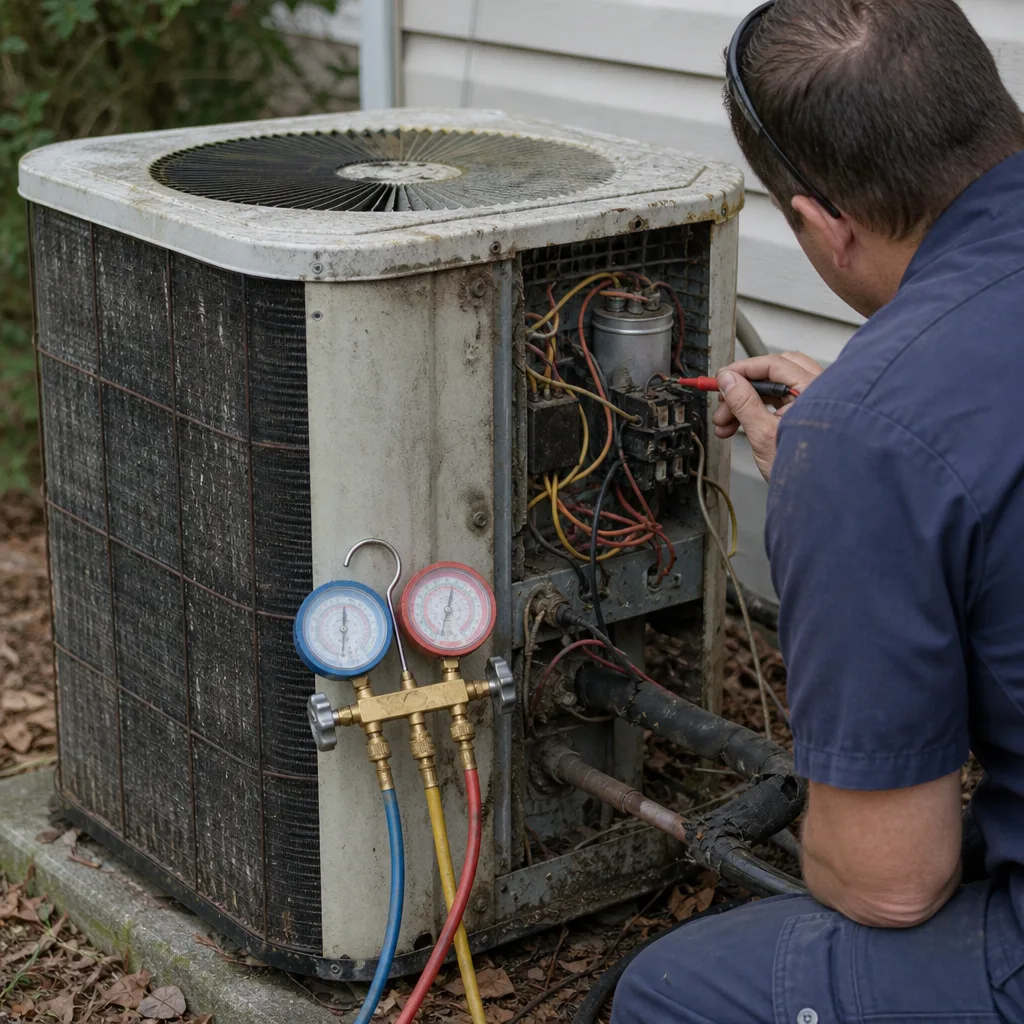 Before
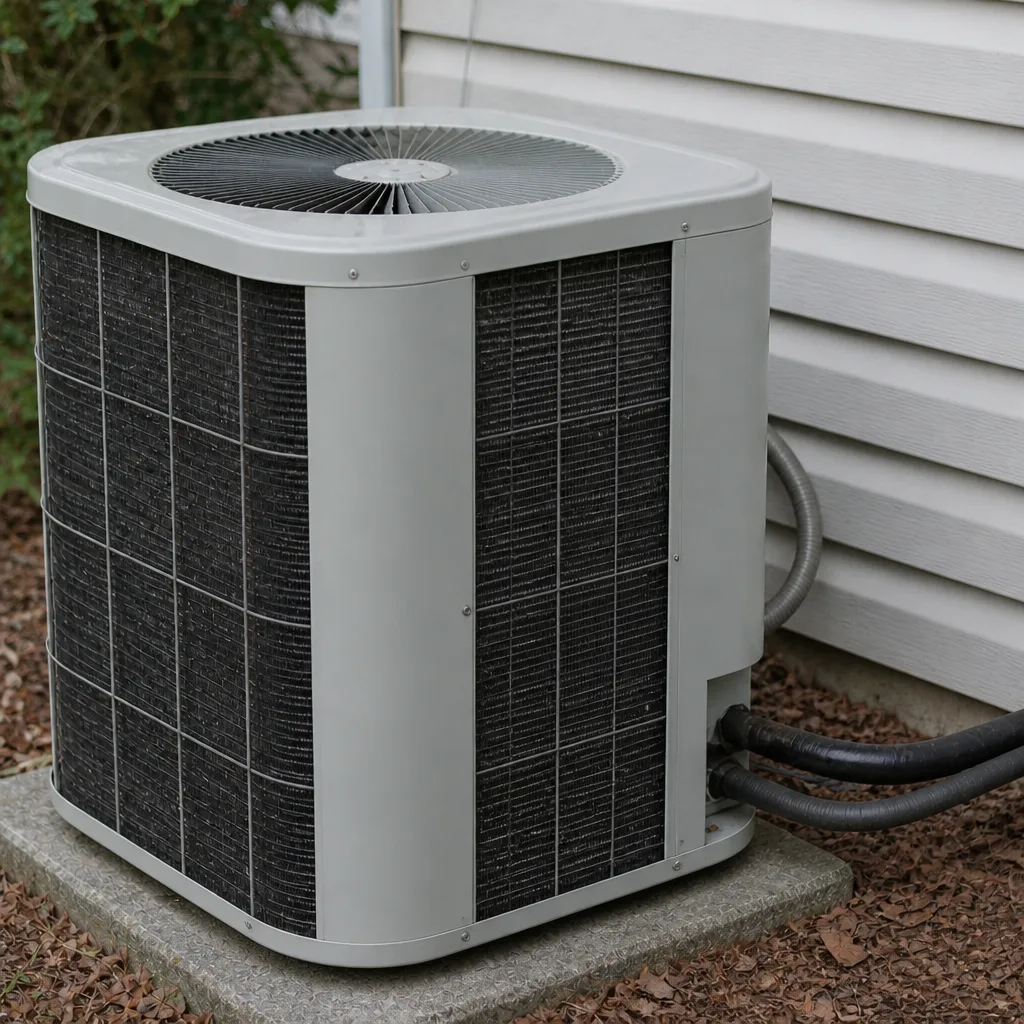 After
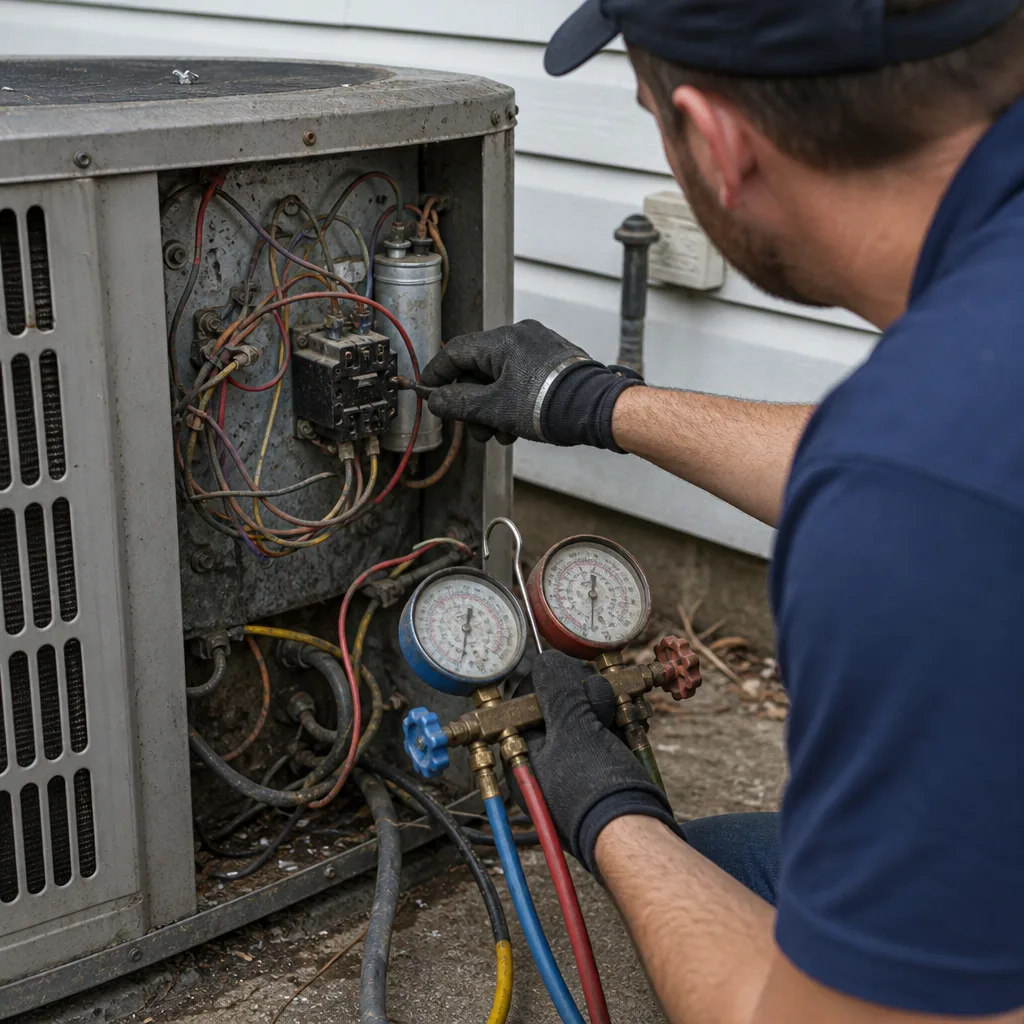 Before
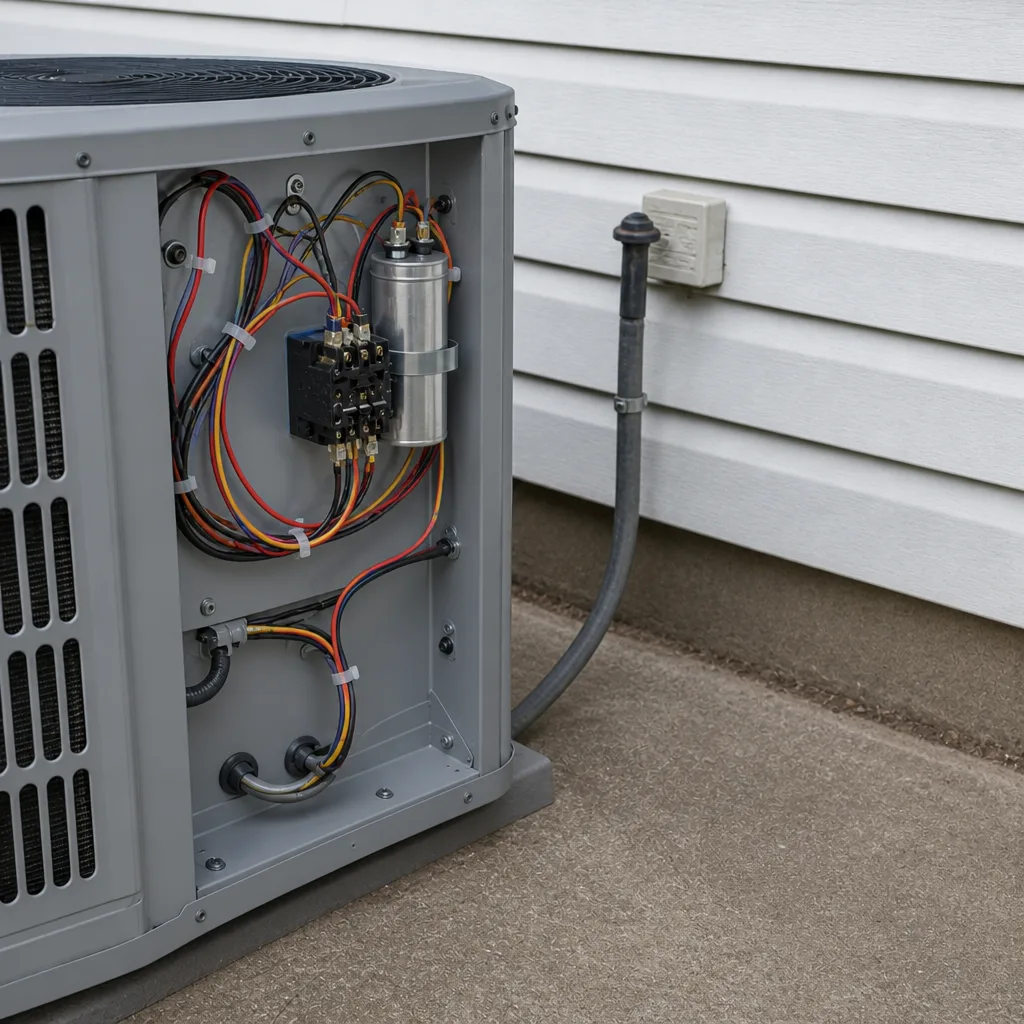 After
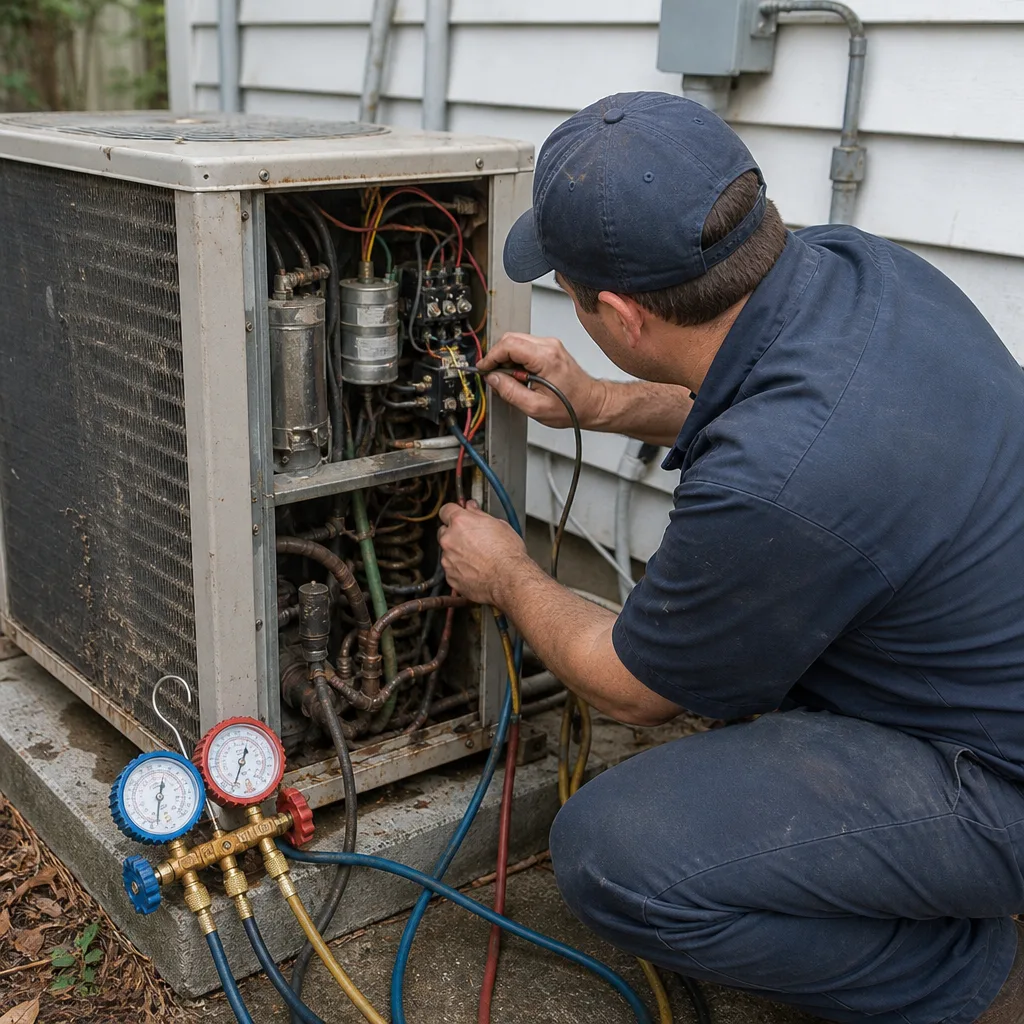 Before
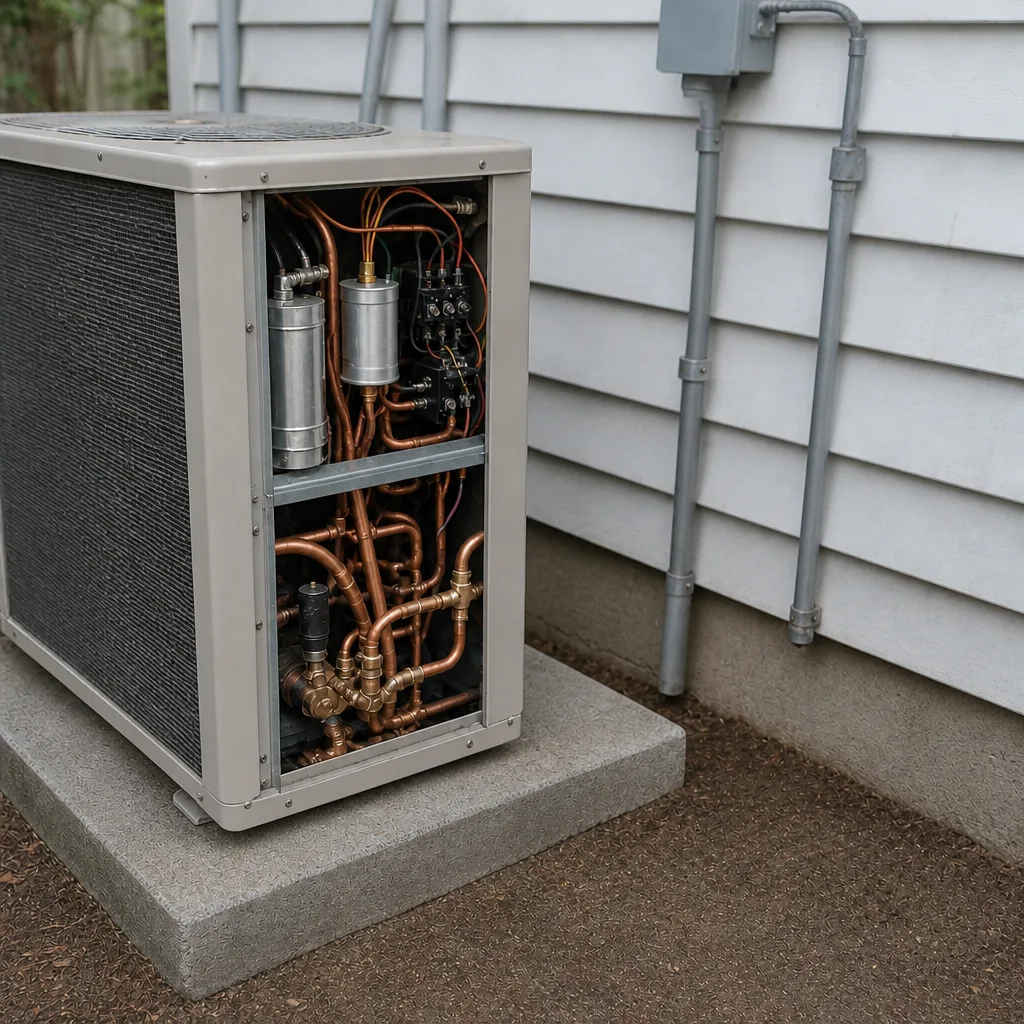 After
When to Call a Professional
Some tasks belong to a homeowner: filters, clearing debris, checking the drain, and watching for symptoms. Other situations call for a trained technician. Call us if your system won’t start, if it makes a new noise, if it trips a breaker, if the heat exchanger or gas connections are involved, or if you’ve had storm damage or standing water at the outdoor unit. Call if your energy bill climbs with no change in use, if rooms stop cooling or heating evenly, or if a repair has become a recurring pattern. Ridgeway AC Repair offers free estimates in Tallahassee. Call (844) 834-0157. We answer 24/7, and fast dispatch from 7am to 7pm, Sunday through Friday, gets a technician to you quickly.
Frequently Asked Questions
At least once a year for cooling and once for heating, timed to this city’s weather rather than the national calendar: an AC check in spring before the heavy cooling load, an outdoor-unit inspection in June ahead of storm season, and heating prep in late fall. Homes that see heavy use benefit from a late-summer check too, since September is when failures most often surface.
By September, the system has run almost continuously for months. Parts are worn, coils carry buildup, and the machine is tired, so a late-season heat wave pushes a weakened system over the edge. Clearing the coil, changing the filter, and booking a late-summer check in August give it the best chance of making it through.
Let the system run in cooling mode long enough to pull moisture out, and avoid running the fan continuously, which can push moisture back into the house. Keep filters clean and the condensate drain clear. If humidity stays high even when the AC runs, a technician can check whether the system is set up to remove moisture properly.
No. A heat pump needs clean outdoor airflow, a clear condensate drain, and a level base, plus a test run in heat mode on a mild day. A gas furnace needs filter changes and clear surroundings, and its fuel connections, heat exchanger, and venting should be checked by a trained technician, not a homeowner.
Clear the area of loose branches and items that could become projectiles, turn the system off at the thermostat, and don’t cover the unit in a way that traps water. After the storm, check the unit from a safe distance for damage, tilt, or standing water. If anything looks wrong or the system won’t start, leave the power off and call.
Repeated repairs on the same part, a repair bill approaching a meaningful fraction of a new system’s cost, or rising bills with no change in use point toward replacement. A single failed part on a healthy system is usually a repair. With no single-brand incentive, the recommendation is based on what fits your home and budget.
The Bottom Line
Tallahassee doesn’t follow the calendar, so its HVAC care shouldn’t either. Build your routine around the weather: spring cooling and humidity checks, a June storm-season inspection, an August tune-up that carries you through September, and late-fall heating prep that matches your equipment type. Keep filters and the outdoor coil clean all year, treat gas-side work and storm-damaged equipment as a professional job, and watch your bill and comfort for early warnings. Ridgeway AC Repair works on the system you already have, across nine brands and both seasons, so there’s one call for the whole year. Call (844) 834-0157 for a free estimate.
Written by the team at Ridgeway AC Repair.