
Last updated November 16, 2026
 AC repair
 Furnace & heating
 Heat pumps
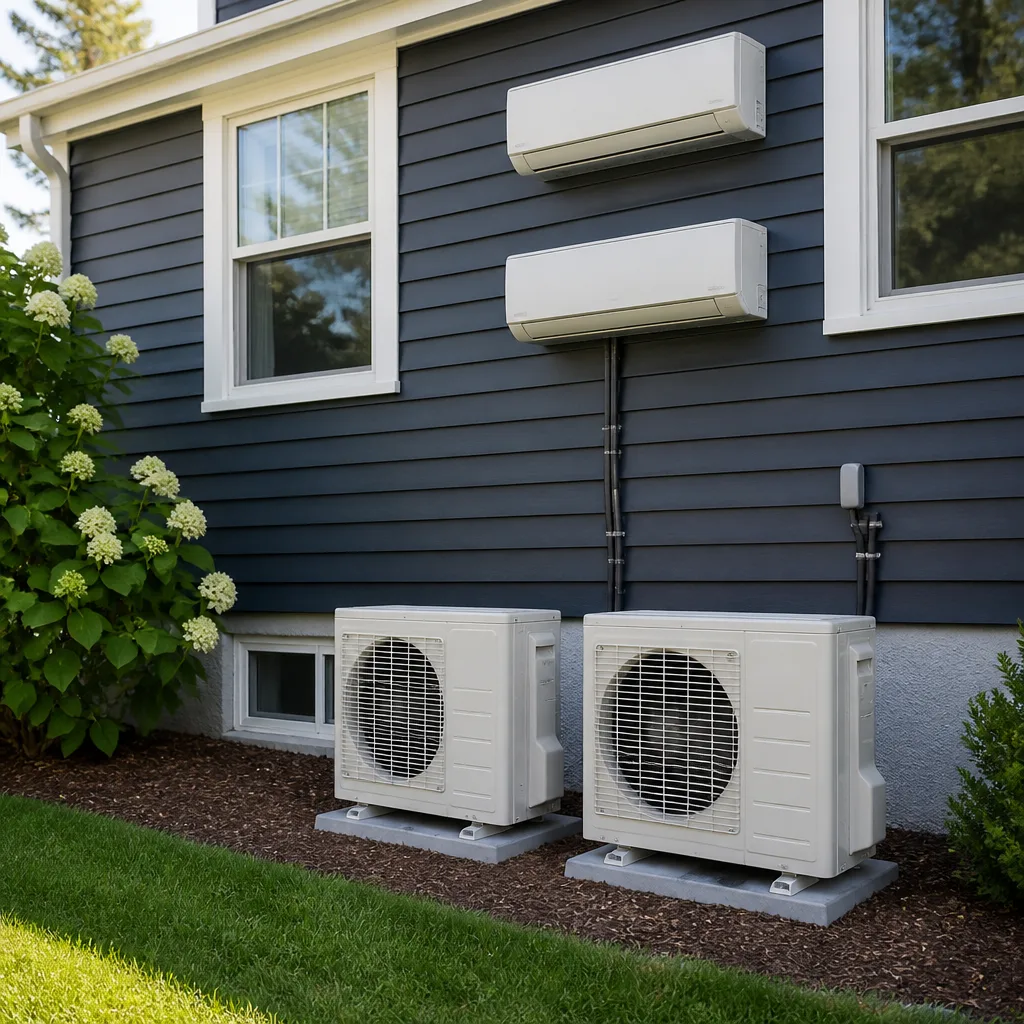 Ductless mini splits
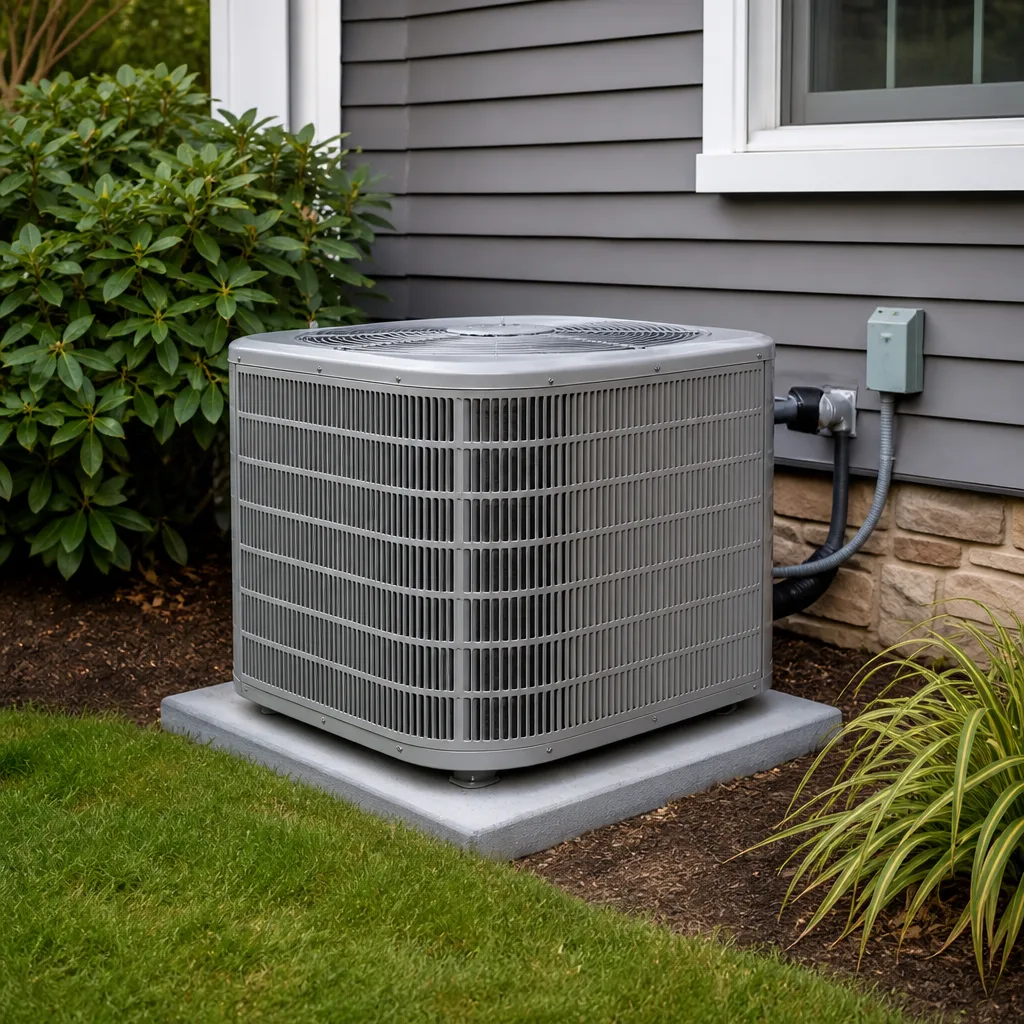 Carrier
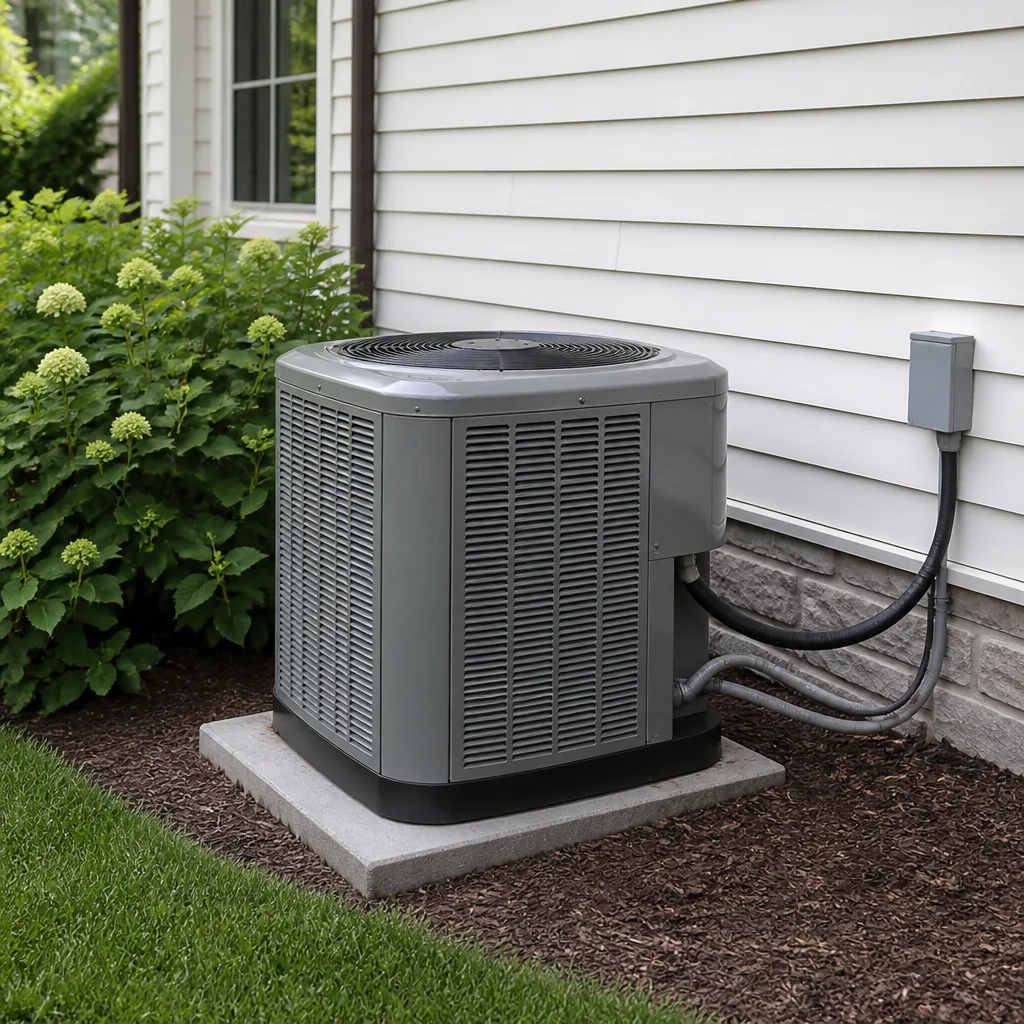 Trane
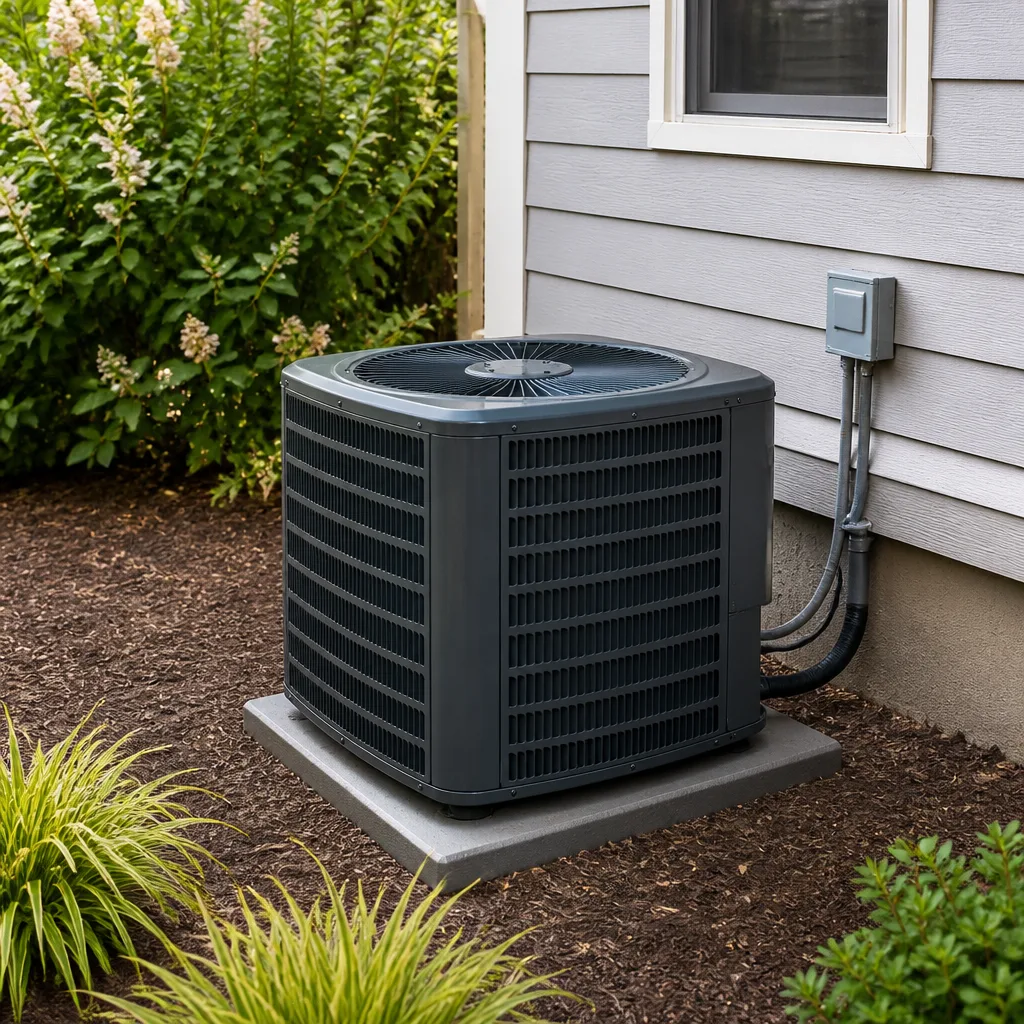 Goodman
Seasonal tune-up and full diagnostic on your Carrier, Trane, or Goodman system - readings shown to you before any repair is proposed
Diagnosis first, numbers second - you approve the repair price before a single part goes in.
Get your free estimateHow to Hire an HVAC Contractor in Tallahassee: A Step-by-Step Guide
Of the three quotes you collect, the lowest bidder is almost never the cheapest option over five years. That’s the uncomfortable part of hiring an HVAC contractor that the usual advice skips. Everyone tells you to get three quotes and check a license, which protects you from outright fraud but tells you nothing about whether the person standing in your hallway actually understands the system on your wall, the duct layout in your attic, or how a permit gets pulled in Leon County. This guide moves the conversation from price to competence. You’ll learn the diagnostic questions that separate a real technician from a salesperson, how to verify a Florida license in a few minutes, and why a load calculation matters more than any single quote. We’ll give it to you straight, Tallahassee, so you can pick a contractor with confidence instead of hope.
Quick Answer
To hire an HVAC contractor in Tallahassee, verify their Florida CAC-certified license through the state DBPR portal, ask five diagnostic questions about your specific system and duct layout, and require a Manual J load calculation before agreeing to a replacement. Compare contractors on how they answer, not just on the number at the bottom of the quote. A contractor who knows their work will welcome the questions; one who dodges them is telling you something.
Styles & brands we work with
- AC repair
- Furnace & heating
- Heat pumps
- Ductless mini splits
- Carrier
- Trane
- Goodman
Table of Contents
- The Five Diagnostic Questions Every Homeowner Should Ask
- How to Verify a Florida HVAC License (Not Just Take Their Word)
- Why the Manual J Load Calculation Is Non-Negotiable
- Brand-Specific vs. Brand-Agnostic: Which Contractor Do You Want?
- Red Flags Specific to the Tallahassee Market
- Repair or Replace? Reading the Contractor’s Assessment
- What a Good Estimate Visit Looks Like
- Cooling and Heating Under One Roof
The Five Diagnostic Questions Every Homeowner Should Ask
The fastest way to tell whether a contractor understands heating and cooling is to ask questions that have no single scripted answer. A knowledgeable technician will explain, sketch, or walk back out to look at your equipment. An underqualified one will dodge into talk about brands, prices, or “next steps.” These five questions are the ones we’d want asked if we were the homeowner, and they work whether you’re getting AC installation or a routine furnace repair.
- “What size system do you think my home needs, and how did you arrive at that number?” A confident answer names the load calculation, the square footage, window orientation, and insulation. A vague answer gives you a rule of thumb: “about a ton per 600 square feet.”
- “Can you describe my duct layout and where the weak spots probably are?” A contractor who has done real work in a Tallahassee attic knows where flex duct pinches, where returns are undersized, and how hot the unconditioned space gets in July.
- “What’s the age and condition of my current system, and what would you check first?” Good contractors inspect rather than assume. If they call a system by the wrong vintage or skip the inspection entirely, be wary.
- “If I don’t replace today, what does that decision look like over the next two years?” You want a contractor who will talk about running an aging system safely, not one who pushes replacement because you’re in their chair.
- “What’s the permit process in Leon County, and who pulls it?” A local contractor has a clear answer. A contractor from out of town will not.
Notice that none of these questions are about money. That’s the point. Price is a symptom of competence, not a substitute for it. Once you hear how a contractor answers, the numbers in the quote start to make sense.
How to Verify a Florida HVAC License (Not Just Take Their Word)
Florida licenses HVAC contractors at the state level, and the license you want to see is a CAC – Certified Air Conditioning Contractor – from the Department of Business and Professional Regulation (DBPR). A business card, a truck decal, or a website claim proves nothing. You can verify any CAC license yourself in a few minutes using the state’s licensee search portal.
- Go to the DBPR licensing portal (myfloridalicense.com) and open the licensee search.
- Search by the contractor’s license number, by business name, or by the responsible individual’s name if they’re listed.
- Confirm the license status shows Active, the license type shows Certified Air Conditioning Contractor, and the expiration date is current.
- Check that the license applies to the services you’re asking for – installation, repair, and replacement all fall under a proper HVAC license.
- Note any discipline history or complaint record. It’s public, it’s searchable, and a clean record is worth confirming.
While you’re on the state site, check insurance notifications. Florida requires HVAC contractors to carry general liability coverage, and the DBPR tracks whether the contractor has an active policy. If a contractor can’t tell you their license number without looking it up, that’s fine, but they should be able to produce it on request. If they get defensive about you checking, close the door.
In our experience, the contractors worth hiring are the ones who tell you exactly where to verify them before you ask. We won’t state a license number we haven’t supplied, but the license exists to be checked, and any contractor who works across Tallahassee and Leon County should expect the question.
Why the Manual J Load Calculation Is Non-Negotiable
A Manual J load calculation is a room-by-room heat load study that determines how much heating and cooling a home actually needs. It’s the industry standard behind a correct system size, and it should be a deliverable on any replacement quote you accept. If a contractor hands you a proposal without a Manual J, they are guessing, and guessing is how you end up with a system that runs short cycles in July and your home never quite cools.
Here’s what a proper load calculation looks at:
- Square footage of each room plus ceiling height
- Wall, floor, and ceiling insulation values
- Window area, orientation, and glass type
- East and west-facing exposure – a big deal in Tallahassee’s long, hot afternoons
- Duct location and how much of the run passes through attic space
- Air infiltration and how tightly the home is sealed
- Occupant count and appliance heat gain
Owning a home in Tallahassee means living with a lot of run time for the AC. Oversizing a system causes short-cycling, humidity problems, and premature wear; undersizing means the house never reaches setpoint on the hottest days. Both mistakes can happen with a contractor who sizes by habit rather than by calculation. Overtightening a home with new windows or added insulation also changes the load, so a contractor who skips the assessment entirely is working off stale numbers.
A few ways to spot a contractor skipping the Manual J:
- They quote square footage as the whole input (“we’ll size it to 1,800 square feet”).
- They email a proposal within an hour without opening a door or measuring a room.
- They recommend the same tonnage as your old system with no discussion of what’s changed.
- They use the phrase “that’s what the builder put in, so that’s what goes back.”
Ask to see the calculation. It doesn’t have to be a finished engineering document – a printout from load-calculation software is fine. What matters is that it exists, it was done for your home, and the contractor can walk you through the numbers.
Brand-Specific vs. Brand-Agnostic: Which Contractor Do You Want?
There’s a real split in the HVAC trade. Some contractors carry only one or two brands because a manufacturer gives them pricing incentives, and some work on whatever a homeowner already owns. Both have a place, but for a homeowner who isn’t planning to rip out the existing equipment, brand-agnostic service is often the more useful arrangement.
Here’s why. The moment a contractor’s recommendation is shaped by a single brand’s dealer program, the conversation tilts. You’re not comparing brands; you’re choosing between that brand and a major disruption to your home. A brand-agnostic contractor has more room to say “your Trane has years left in it” or “this particular Lennox model is worth repairing” without steering you away from a brand they don’t stock. They can also honestly weigh a Goodman system against a premium option without a quota hanging over the decision.
Our approach is a good illustration. We work on virtually any system a homeowner already has and are equipped to service Carrier, Trane, Lennox, Goodman, Rheem, York, Daikin, Bryant, and American Standard. Nine brands, zero guesswork – technicians arrive familiar with the quirks of the equipment already in the house, whether it’s a Trane or a Rheem. And because we’re not tied to one manufacturer, recommendations are driven by the home and the budget, not a dealership incentive.
When you’re interviewing contractors, ask this:
- “How many brands do you work on, and are you a dealer for any of them?”
- “If I want to stay with the brand I already have, is that a problem?”
- “If a different brand fits my situation better, will you say so?”
The answers tell you whether you’re getting an assessment or a sale.
Red Flags Specific to the Tallahassee Market
Tallahassee has a mix of housing stock – older homes in established neighborhoods around midtown and Betton Hills, newer construction out toward northeast Tallahassee, and plenty of homes where a system has been patched for years because it was already there when the last owner moved in. That mix creates some specific risks when you hire HVAC work. Watch for these.
- Out-of-town licensing. A contractor licensed elsewhere but pulling Leon County permits without local experience may know the license requirements but not the local installation realities – how attic heat affects equipment placement, how return duct sizing is commonly botched, or how permit inspections run in this county.
- No Leon County permit for a replacement. Replacements generally require a permit in Florida. A contractor who offers to “skip the permit to save you money” is shifting risk onto you.
- Pushy recommendations before looking at anything. Good contractors inspect first and recommend second. If the first sentence is a price and the last is a hard close, walk.
- Cash-only, no paper trail. Legitimate contractors issue written estimates and handle payment in traceable ways.
- Unwillingness to put anything in writing. You want the estimate, the scope, the equipment model, and any warranty terms on paper. Verbal promises evaporate.
- No mention of the permit inspection. A contractor who never mentions who will inspect the work after installation is telling you something about process.
None of these red flags require you to be an HVAC expert to spot. They’re all about process and paperwork, and they tell you most of what you need to know before a single tool comes out of the truck.
Repair or Replace? Reading the Contractor’s Assessment
Repair or replace is the single most consequential question you’ll face as a homeowner, and the honest answer depends on age, condition, efficiency, and how much life is realistically left in the equipment. A brand-agnostic contractor who works on nine brands and performs both furnace repair and furnace replacement has a natural advantage here: they can weigh the options without worrying about which brand they’ll be installing.
Here’s how a good assessment tends to go:
- Diagnose the actual failure. What broke, why, and is it isolated or part of a pattern?
- Estimate remaining useful life. Age relative to typical service life, past repairs, and current efficiency.
- Cost the repair. A written estimate that names the parts and the labor.
- Cost the replacement honestly. Including the Manual J, the equipment, the permit, and the disposal of the old system.
- Lay out the two-year picture. What does running the current system look like versus replacing now, and what triggers would force a replacement sooner?
Ask for the assessment in writing. It doesn’t need to be a formal report – a clean comparison is enough – and if the contractor resists, that’s a red flag. You’re looking for “the right fix, not the easiest upsell,” and the only way to judge that is on paper.
What a Good Estimate Visit Looks Like
A serious HVAC estimate in Tallahassee takes time. Expect the visit to run at least 45 minutes on a replacement quote, sometimes longer for older homes or homes with ductwork that needs a closer look. Anything much faster than that should make you ask what was skipped.
A solid estimate visit usually includes:
- A walk through the home, room by room, with measurements
- Inspection of the indoor unit, the outdoor condenser, and the thermostat location
- Duct inspection – accessible runs, return sizing, insulation, and where duct passes through unconditioned space
- Questions about comfort problems: hot rooms, humidity, noise, cycling
- A look at the electrical service and disconnect
- A discussion of the permit and the inspection
- A written estimate that ties every line item to something observed
Expect an in-person conversation about what you want out of the system, not just what it costs. And expect measurements. A contractor who never opens a tape measure is quoting from memory, which is a bad sign.
The best contractors will also tell you when a repair is the smarter choice. If you hear that sometimes in writing, you’re talking to someone who takes the recommendation seriously. Free estimates are standard, and they should be free – a written price with no strings. Call (844) 834-0157 to schedule one. We answer 24/7. Fast dispatch from 7am to 7pm, Sunday through Friday.
Cooling and Heating Under One Roof
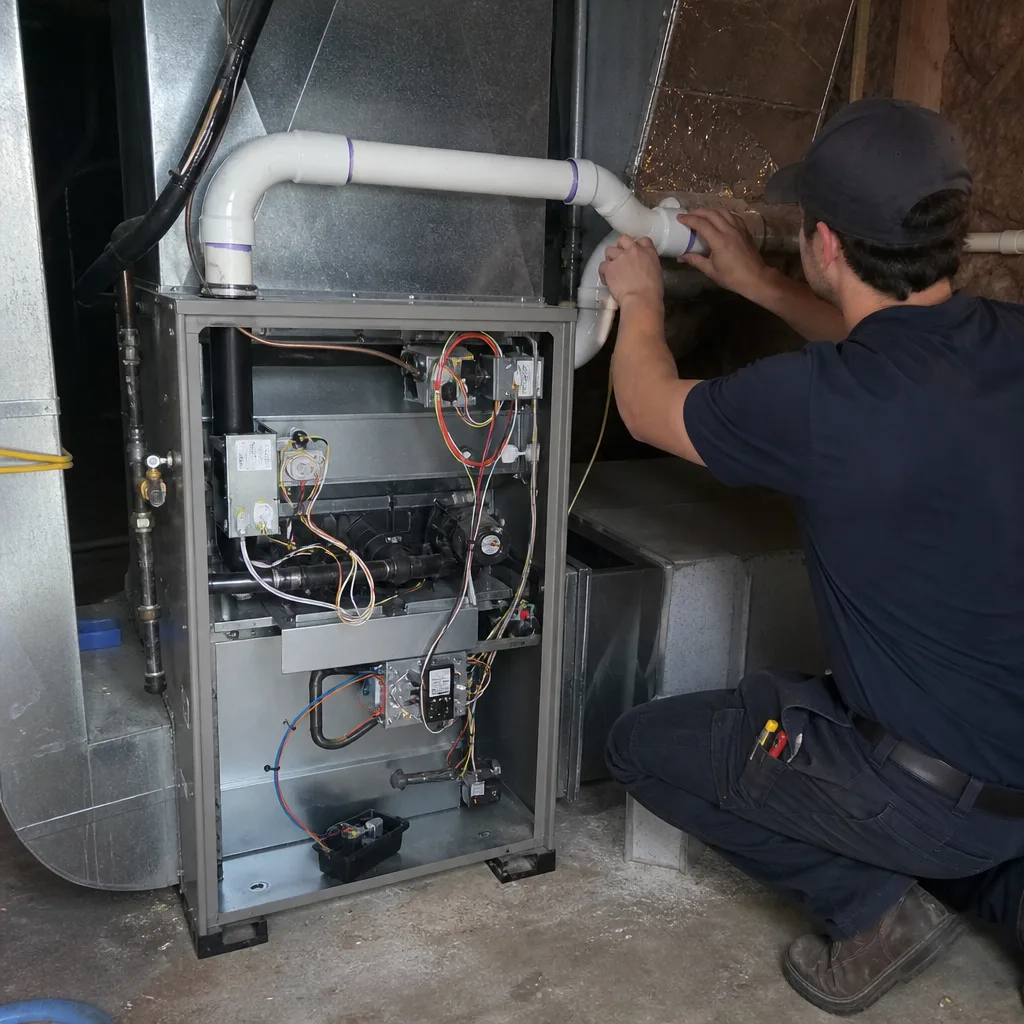
One of the practical questions in this market is whether the same contractor you trust for AC should also handle your heater. The answer is yes, and for reasons that go beyond convenience. A contractor who handles both cooling and heating knows the shared infrastructure – the air handler, the duct system, the thermostat wiring – and can catch problems during one season that would otherwise surface during the other.
Think about the pattern in Tallahassee. Summer puts most of the load on the AC system. Then in the cooler months, the same ducts and air handler that cooled the house are now feeding heat, and any leaks, undersized returns, or dirty coils affect both. A contractor who only sells AC tends to ignore the heating side until a repair call forces them to look. A contractor who handles both keeps the whole system in view.
Ask before you hire:
- “If I have a heating problem in the winter, are you the person I call?”
- “Do you handle furnace replacement, or would you subcontract it?”
- “Are the ducts and air handler part of your service, or would I need a different company?”
If the answer to any of these is “I’ll refer you,” you’re looking at two contractors to manage instead of one. Our services cover air conditioning installation, furnace repair, and furnace replacement – Tallahassee homeowners can call us for either season and get the same team. One call, both seasons.
Common Mistakes to Avoid
- Choosing the lowest bid. A low bid usually means shortcuts somewhere – skipped Manual J, cheap equipment, or a permit that doesn’t get pulled. Over five years the cheapest bid often costs the most.
- Not verifying the license. Taking a contractor’s word for their credentials takes five seconds; checking the DBPR portal takes five minutes. Do the five minutes.
- Skipping the load calculation. Accepting a replacement quote without a Manual J is how homes end up with sizing problems they never asked for. Insist on it.
- Letting a contractor talk you out of the permit. In Leon County, replacement work generally requires a permit. It protects you, and skipping it can complicate a future sale or insurance claim.
- Hiring an out-of-town contractor without local experience. A license from elsewhere doesn’t tell you whether they understand Tallahassee homes, attic heat, or how Leon County inspections run. Ask specifically about local work.
- Ignoring the heating side. Signing with an AC-only contractor means finding someone else when the furnace needs attention. Consider a contractor who handles both.
- Agreeing to work without a written estimate. Verbal quotes turn into verbal disputes. Get the scope, model numbers, and warranty terms on paper before anyone touches your equipment.
See the difference
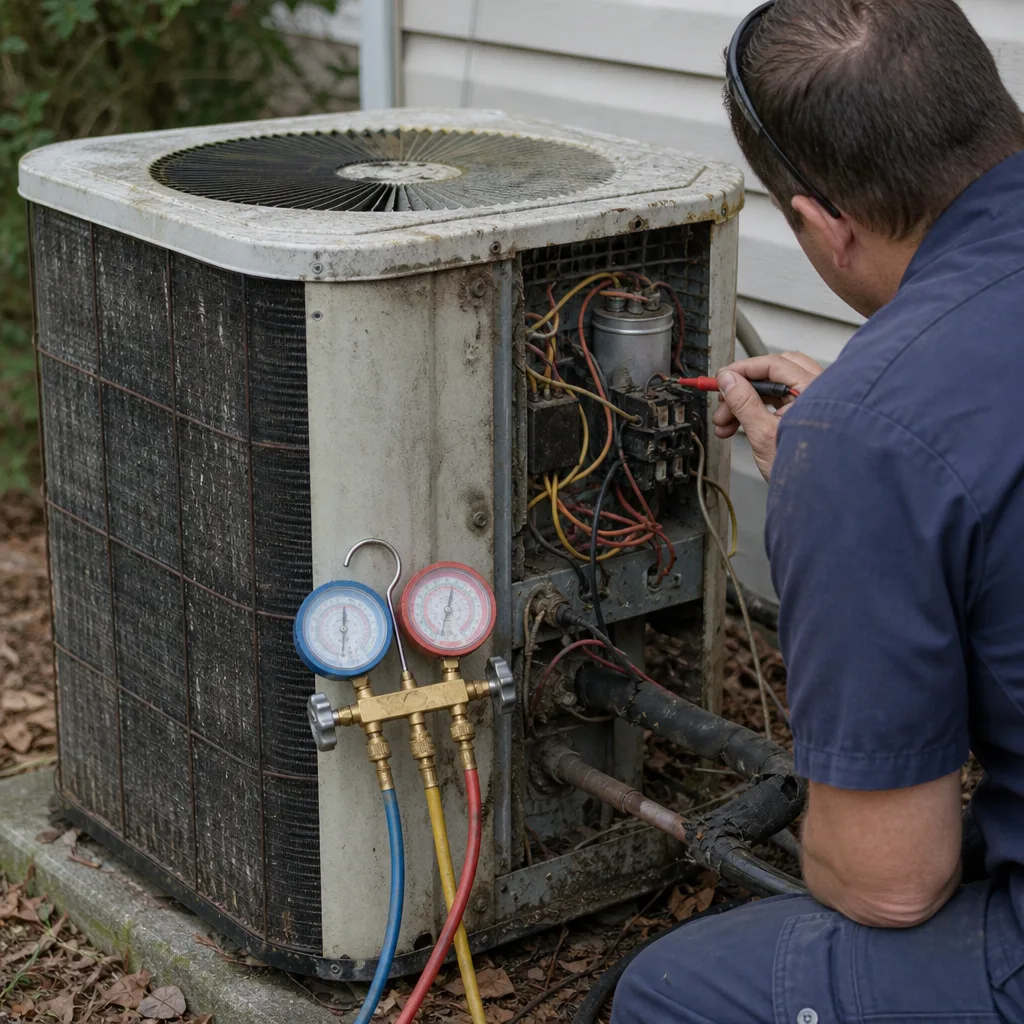 Before
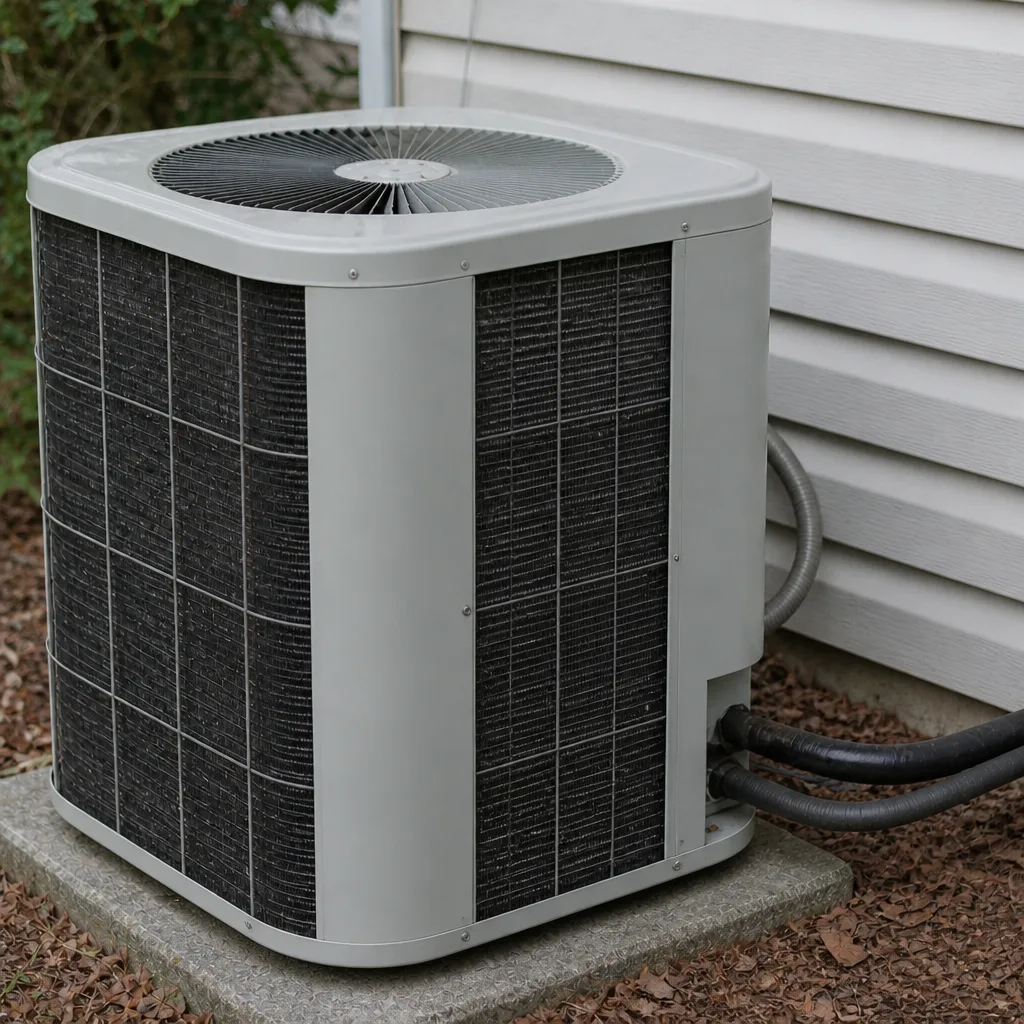 After
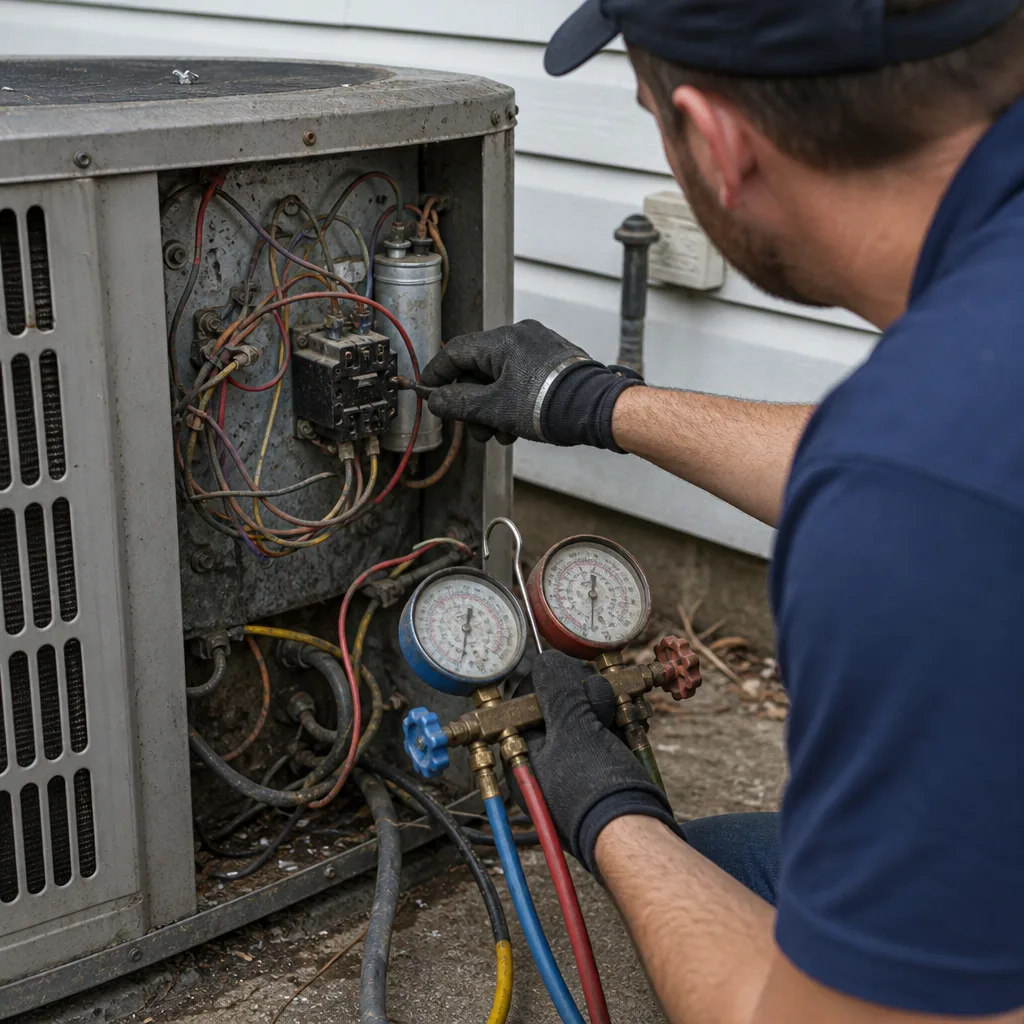 Before
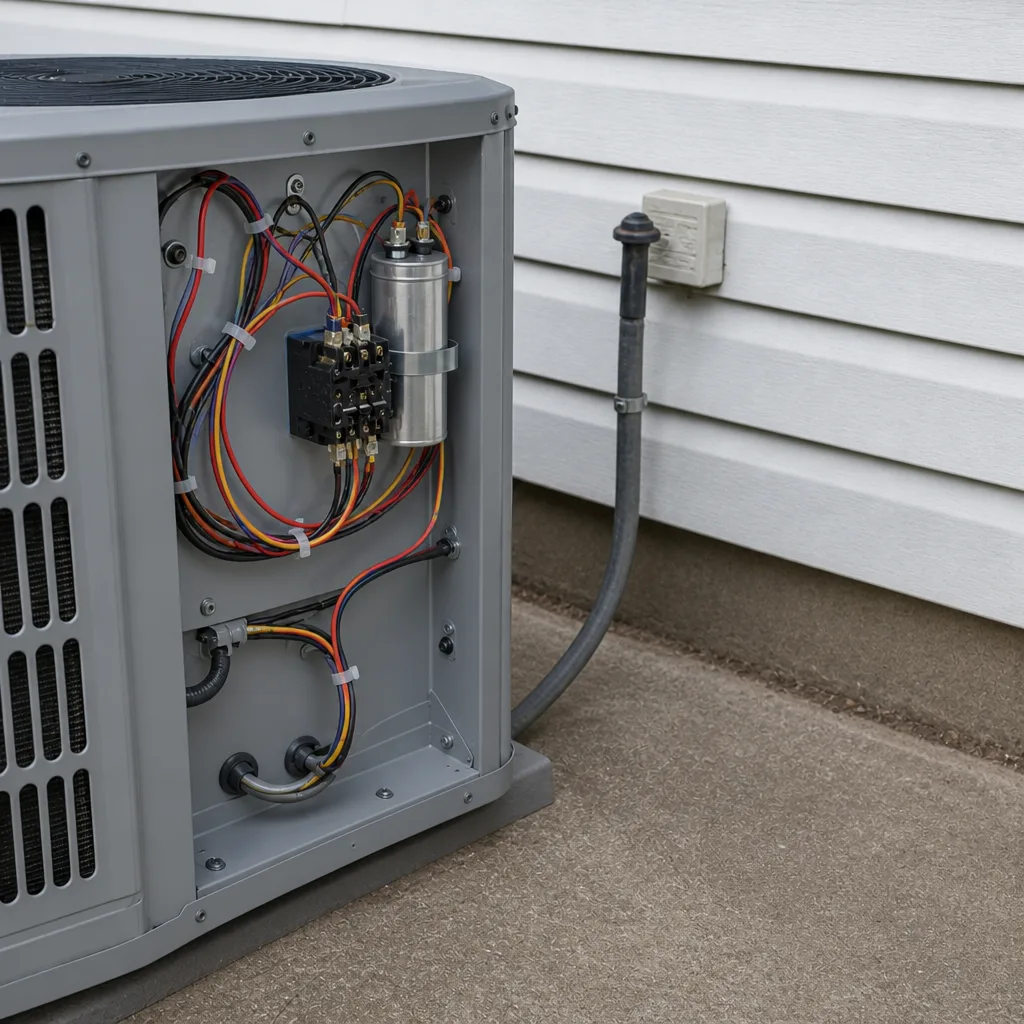 After
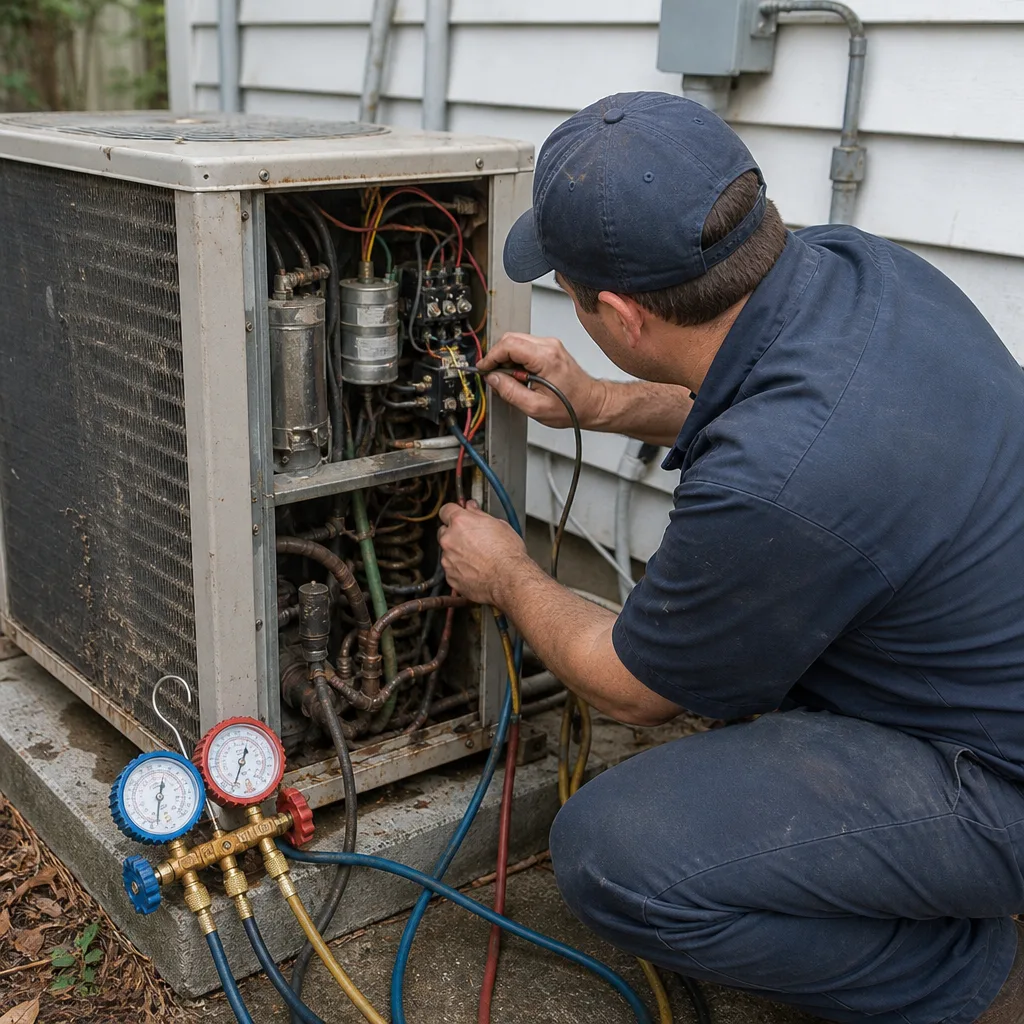 Before
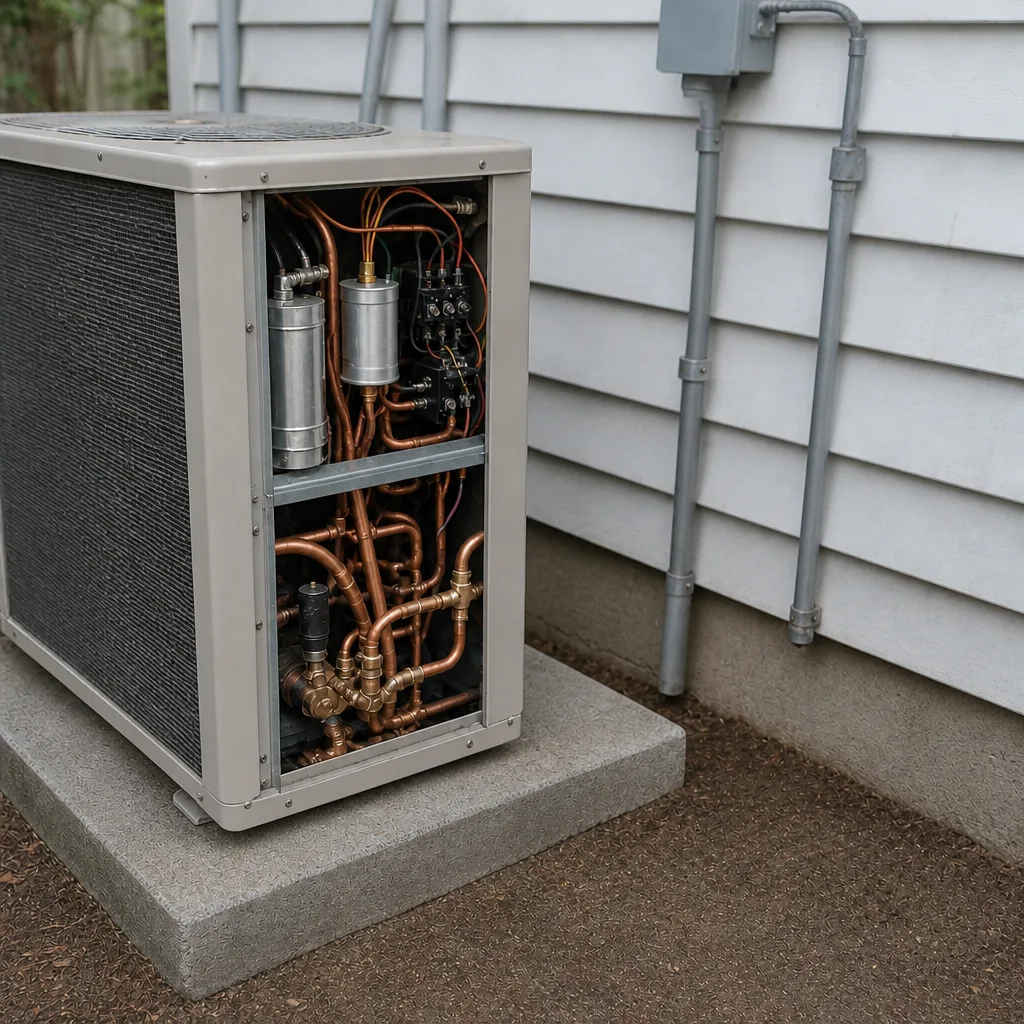 After
When to Call a Professional
Some HVAC problems are safety issues or signs of a larger failure, and they’re not things to postpone. Call a professional if your system isn’t heating or cooling the way it should after a thermostat adjustment, if you hear grinding, banging, or screeching from the outdoor unit or furnace, if you smell burning or gas, if ice is forming on the indoor coil, if the system runs constantly without keeping up, or if your energy bills have climbed with no change in usage. These signs usually point to issues that get more expensive the longer they sit. And if the system is elderly and repeatedly failing, call before the next heat wave rather than during one. Ridgeway AC Repair offers free estimates in Tallahassee – call (844) 834-0157. We answer 24/7. Fast dispatch from 7am to 7pm, Sunday through Friday.
Frequently Asked Questions
You verify a Florida HVAC license through the DBPR licensee search portal at myfloridalicense.com, looking for an active Certified Air Conditioning Contractor (CAC) license and an active insurance policy. The search takes a few minutes and covers license status, expiration, and discipline history. If a contractor hesitates to give you their license number, that’s a red flag. Call (844) 834-0157 for an exact quote – estimates are free.
Yes, you should require a Manual J for any replacement quote. It’s the standard calculation that determines the correct system size for your home, and skipping it is the most common cause of comfort and humidity problems after a new install. A contractor who won’t provide one is guessing. Call (844) 834-0157 for an exact quote – estimates are free.
The price of a new HVAC system in Tallahassee depends on the equipment, the home’s load calculation, any duct work needed, and the permit. Every job is different, so the written estimate is the only price that counts – we don’t publish a single number because a number that fits one home won’t fit yours. Call (844) 834-0157 for an exact quote – estimates are free.
A brand-agnostic contractor is generally the better fit for a homeowner staying with their existing system. Brand-specific contractors work within a manufacturer program that can tilt recommendations toward the brand they carry; a brand-agnostic specialist works on what you own and recommends what fits your home and budget. We work on Carrier, Trane, Lennox, Goodman, Rheem, York, Daikin, Bryant, and American Standard. Call (844) 834-0157 for an exact quote – estimates are free.
Not necessarily, but it’s a risk worth checking. A contractor licensed elsewhere can pull Leon County permits, but local experience matters – attic heat, duct sizing, and how county inspections run all affect the outcome. Ask specifically about the contractor’s Tallahassee and Leon County work history before signing. Call (844) 834-0157 for an exact quote – estimates are free.
Same-day service is often possible when you call and dispatch has availability, so it’s worth calling as soon as a problem appears. Call (844) 834-0157. We answer 24/7. Fast dispatch from 7am to 7pm, Sunday through Friday. A call outside dispatch hours is booked into the next opening, Sunday through Friday, 7am to 7pm.
The Bottom Line
Hiring an HVAC contractor in Tallahassee is a competence test, not a price comparison. Verify the Florida CAC license through the DBPR portal. Ask the five diagnostic questions and listen to how they’re answered. Require a Manual J before any replacement. Ask about the permit process in Leon County and who pulls it. Check whether the contractor handles both heating and cooling or will hand you off to a second company. And lean toward a brand-agnostic specialist who can work on what you already own – nine brands, zero guesswork – rather than one whose recommendation is fixed by a dealership program. The lowest bid is rarely the cheapest over time. The right contractor is the one who answers the questions before you sign.
Ready to Book an Estimate?
Ridgeway AC Repair works on virtually any system a homeowner already has, covering both cooling and heating under one roof. Our technicians have up to experience. If you’re ready to compare quotes on competence instead of price, call (844) 834-0157 for a free estimate. We answer 24/7. Fast dispatch from 7am to 7pm, Sunday through Friday. You can also learn more about our Ridgeway AC Repair approach to honest repair-and-replace guidance, review our AC installation and furnace repair services, or read up on what local homeowners should know about Tallahassee and the surrounding neighborhoods. One call, both seasons.
Written by the team at Ridgeway AC Repair.