
Last updated November 16, 2026
 AC repair
 Furnace & heating
 Heat pumps
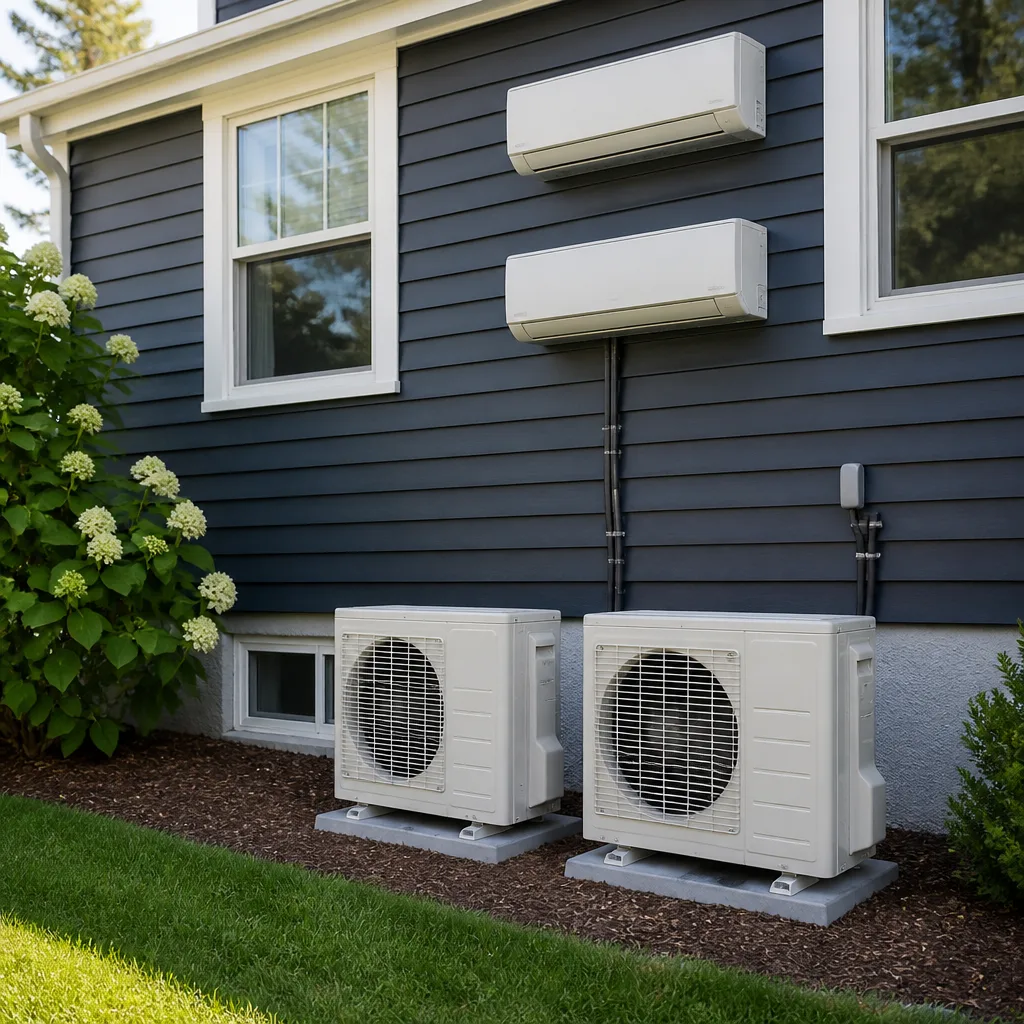 Ductless mini splits
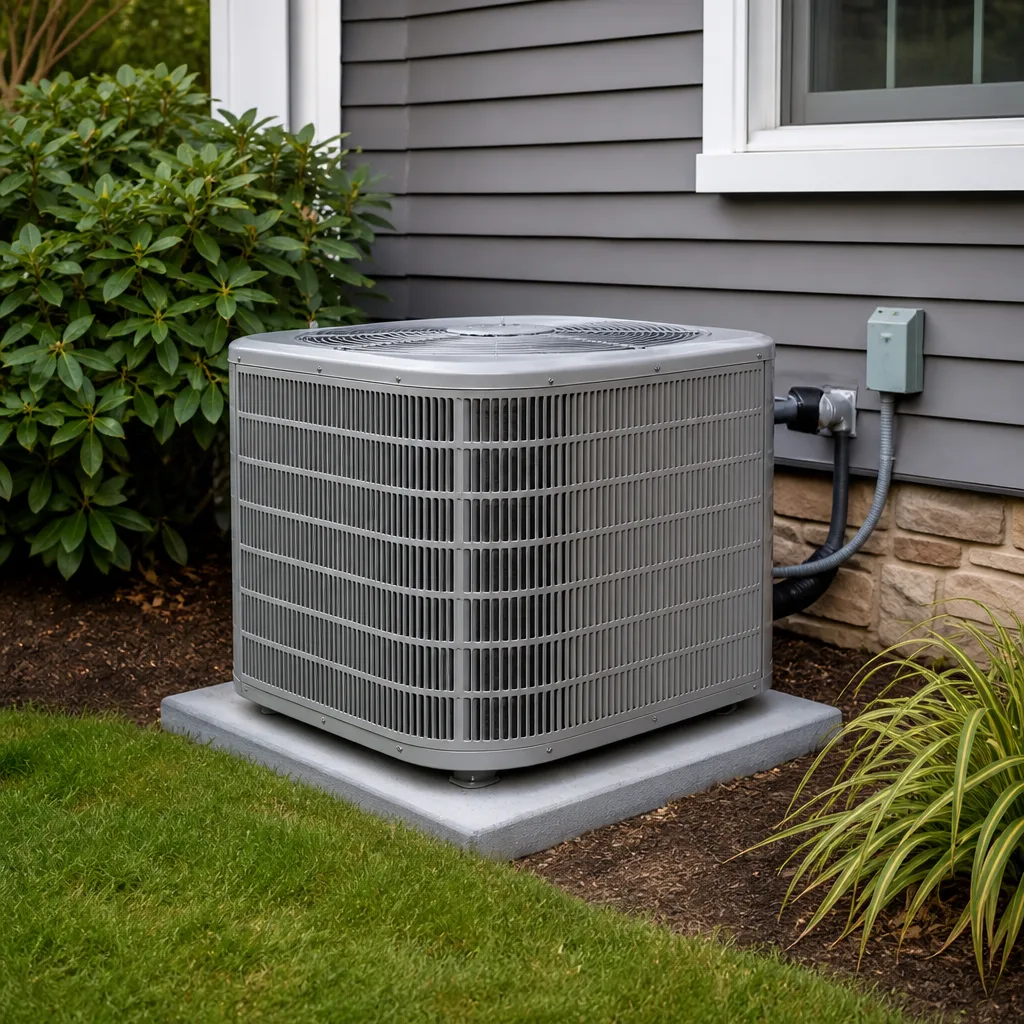 Carrier
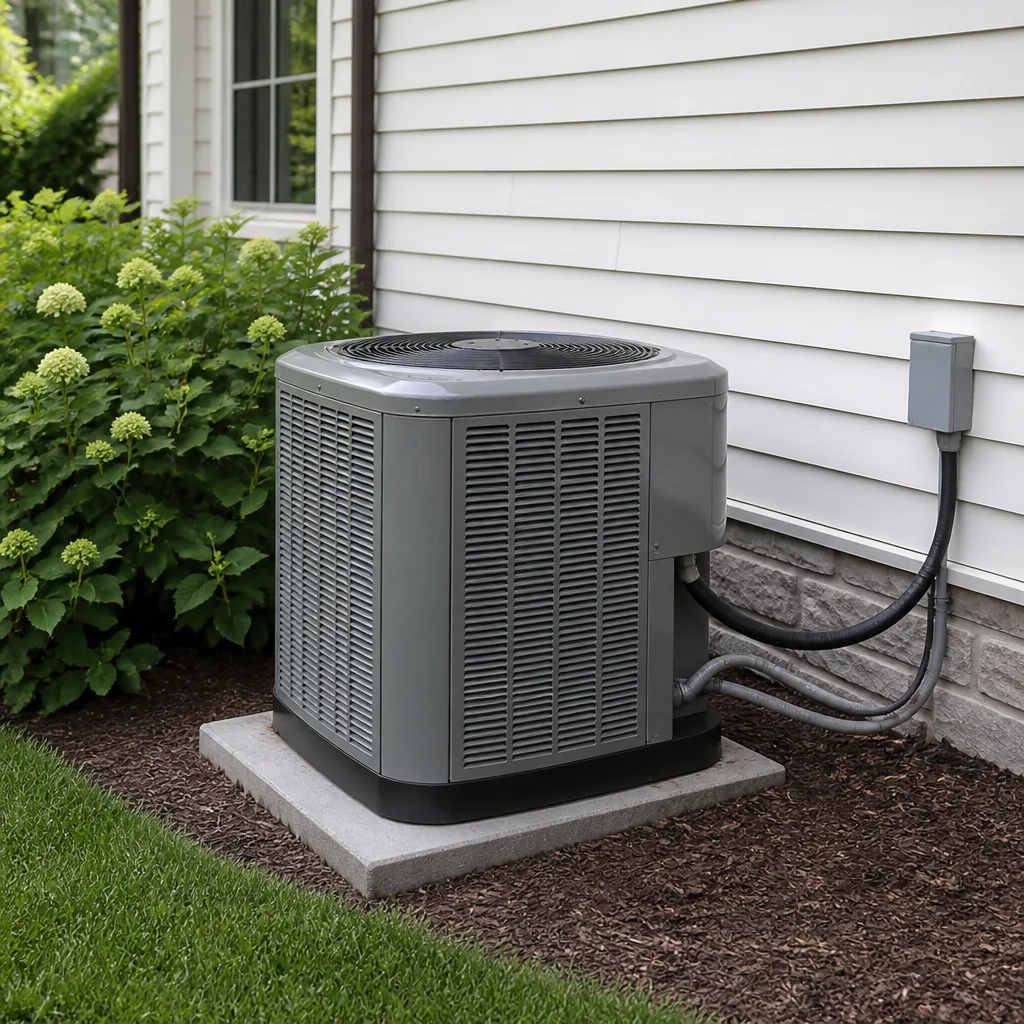 Trane
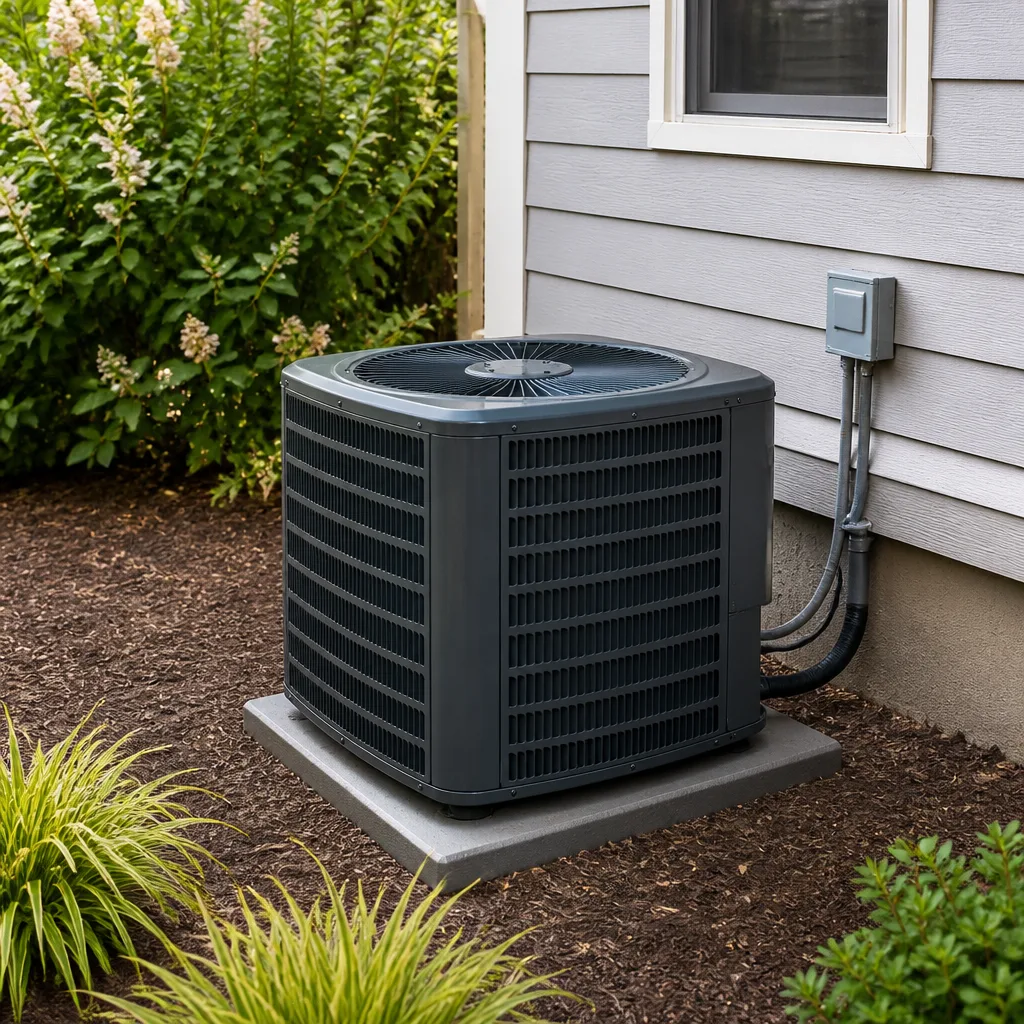 Goodman
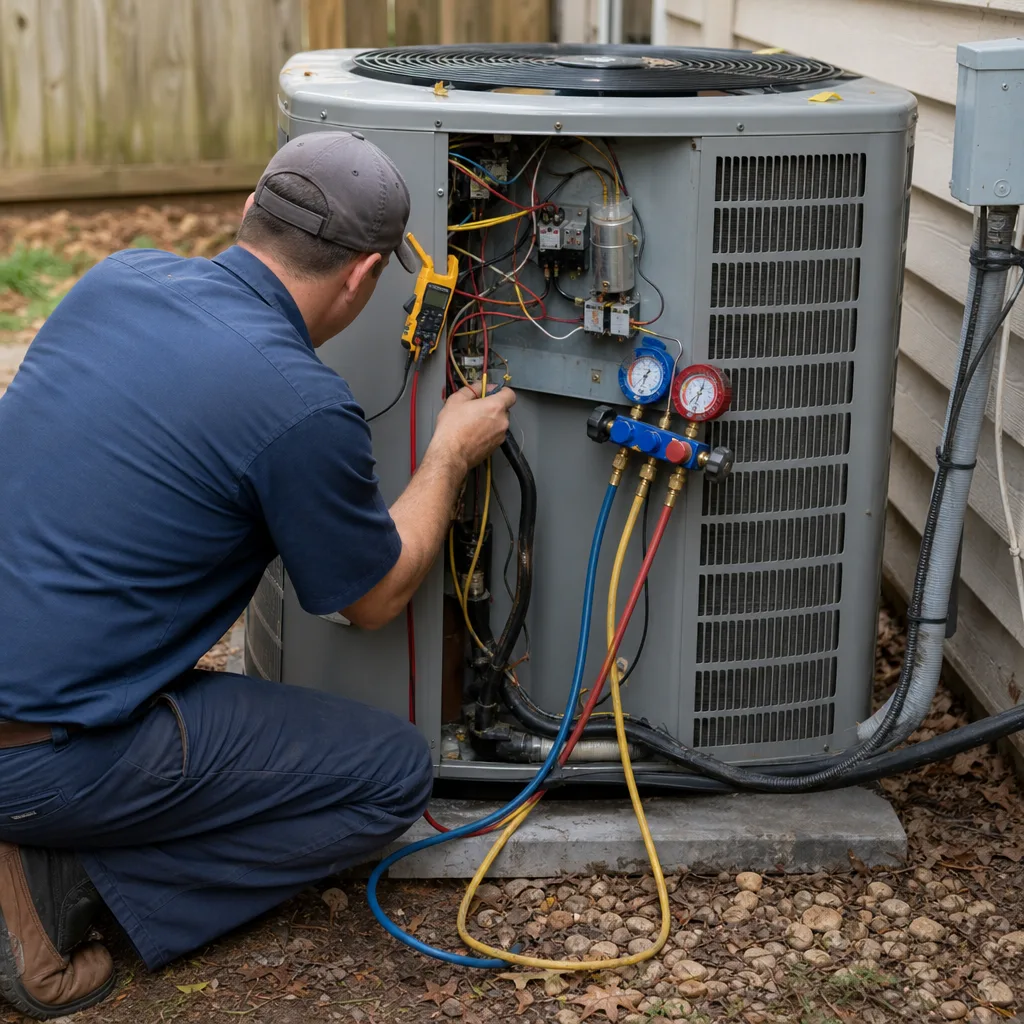
Seasonal tune-up and full diagnostic on your Carrier, Trane, or Goodman system - readings shown to you before any repair is proposed
Diagnosis first, numbers second - you approve the repair price before a single part goes in.
Get your free estimateHVAC Emergency Preparedness Guide for Tallahassee Homes
Most people treat an AC breakdown like a fire alarm: something you deal with once it happens. The trouble with that approach in Tallahassee is timing. Our worst heat arrives in a stretch, not a single afternoon, and when the whole city is calling at once, the wait for a technician gets longer than the wait for the weather to break. The homeowners who ride out a July breakdown without drama are rarely the ones with a newer system. They’re the ones who identified their coolest rooms in May, charged a portable unit before the stores sold out, and knew their model number when they called. This guide covers what to put in place before your system quits, what to do in the first half hour after it does, and how to decide whether a breakdown is a genuine emergency or a job you can schedule and manage safely.
Quick Answer
Preparing a Tallahassee home for an AC emergency means three things done in advance: a planned cool refuge in your house, a portable cooling backup with the right connection for your windows, and your system’s paperwork on hand so a technician can prepare before arriving. When the system fails in peak heat, close off the hot side of the house, get vulnerable household members into the refuge, and call (844) 834-0157. We answer 24/7, and fast dispatch runs from 7am to 7pm, Sunday through Friday.
Styles & brands we work with
- AC repair
- Furnace & heating
- Heat pumps
- Ductless mini splits
- Carrier
- Trane
- Goodman
Table of Contents
- Why Tallahassee Heat Turns a Breakdown Into an Emergency
- Find Your Coolest Rooms Before You Need Them
- The Portable Cooling Toolkit and Its Real Limits
- The First 30 Minutes After Your AC Fails
- Pre-Season Homework: What an Emergency Technician Needs From You
- Emergency Call or Managed Wait?
- Protecting Household Members Who Struggle in Heat
- When a Breakdown Signals Replacement
Why Tallahassee Heat Turns a Breakdown Into an Emergency
An AC failure in a mild climate is an inconvenience. In Tallahassee, it’s a timed problem. The heat index here regularly climbs past 105°F in July and August, and that number matters more than the air temperature alone because humidity slows the body’s ability to cool itself. A house that loses its AC in that kind of weather doesn’t just get warm. It gets humid, and humid heat is what turns a bad afternoon into a medical risk for older adults, young children, and anyone with a heart or breathing condition.
There’s a second factor that catches homeowners off guard: demand. When a heat event settles over Tallahassee, every failing system in the city calls at roughly the same hour. The call-to-service window stretches during peak season far beyond what people expect, and no amount of urgency on your end shortens it. That’s not a reason to panic. It’s a reason to prepare, because the gap between failure and repair is survivable with a plan and miserable without one.
The good news is that Tallahassee’s housing stock gives you options. Most homes here have at least one room that runs cooler than the rest, whether it’s over a crawl space, shaded by a live oak, or on the north side of the house. Knowing which room that is, and setting it up in April or May, is the single most useful thing you can do before the season peaks. It costs nothing and it works every year.
Find Your Coolest Rooms Before You Need Them
Every house has two or three rooms that hold temperature better than the rest. The trick is identifying them on a normal day, not at midnight with the system dead and the family cranky. We recommend a simple walkthrough in late spring, done on a hot afternoon when the sun is high.
- Walk the house with a room thermometer. A basic digital thermometer is enough. Take readings in each room at the same time, ideally around 3pm on a hot day when differences are widest.
- Note which rooms have north-facing windows or heavy shade. A room under a mature oak or on the shady side of the house will run cooler and hold its temperature longer after the AC quits.
- Check which rooms sit over a crawl space or have tile floors. Tile and concrete hold cool better than carpet and wood, and ground contact helps.
- Rule out rooms with west-facing windows and no shade. Those are the first to overheat and the last to recover.
- Pick one primary refuge and one backup. The primary should be able to hold a small family; the backup covers you if the primary gets uncomfortable.
Once you’ve identified them, set them up. That means blackout curtains or reflective blinds on the windows, a couple of box fans or a tower fan that works without the central system, and a plan for sleeping. Many Tallahassee families find that moving one mattress into the coolest room is more practical than trying to keep the whole house livable. That’s a good decision, not a failure of planning.
The reason this step matters in Tallahassee specifically is that our heat doesn’t break overnight. A Daytona-style afternoon thunderstorm might knock out power for an hour, but our summer heat holds for days, and a broken system during a heat event can leave a house uncomfortable for far longer than the repair wait itself. Setting up a refuge in advance converts that stretch from a crisis into an inconvenience. If you haven’t done this yet and your system is already failing, our Tallahassee team can talk you through the immediate steps when you call.
The Portable Cooling Toolkit and Its Real Limits
Portable cooling is where good intentions usually fall apart. People buy a window unit on impulse and discover it doesn’t fit a tilt-in window, or they buy a small evaporative cooler and learn that evaporative cooling does almost nothing in Tallahassee’s humidity. Knowing the limits of each option before you buy saves money and frustration.
Portable Air Conditioners
Portable AC units roll from room to room and need only a window to vent through. They’re the most flexible option for a modern Tallahassee home with tilt-in windows, because most come with a sliding window adapter and vent hose that doesn’t require removing the sash. The catch is capacity. A typical single-hose portable unit is rated for roughly one room, and its real cooling output is lower than the label because it pulls hot air back into the room through the same gap. Use one to keep a bedroom livable, not to cool a house.
Window Units
A window unit cools better than a portable for the same price, but it requires planning. Tilt-in windows, which are common in newer Tallahassee construction and in many remodels, don’t accept a standard window unit without a support bracket and some improvisation. Some units are designed for casement or vertical-slider windows; most aren’t. If your home has tilt-in vinyl windows, measure the window opening and the sash clearance before you buy anything, and check whether a bracket system will work. If it won’t, a portable unit is the safer plan.
What Doesn’t Work Here
Evaporative coolers, sometimes called swamp coolers, add moisture to the air rather than removing it. In a dry climate that’s fine. In Tallahassee’s summer humidity it makes a room feel worse. Skip them. Battery-powered fans and rechargeable personal fans help air movement and comfort but won’t lower room temperature. Box fans are genuinely useful for moving air from a cool room into a warm one, but they work best combined with closing off doors, not by themselves.
The Backup Power Question
Some portable units and fans draw enough power that a small battery backup won’t run them for long. If you’re depending on a portable AC during a breakdown, and your area is prone to storm outages, plan for how the unit will run if the grid goes down. A generator sized to the load is a bigger purchase than most people plan for, so decide ahead of time whether you’re relying on the outage not happening or on having backup.
The First 30 Minutes After Your AC Fails
What you do in the first half hour sets the tone for the whole wait. The goal isn’t to fix the system. It’s to slow how fast your house heats up and to get the people who are most at risk into the coolest spot you have. Here’s the order we’d recommend.
- Check the thermostat and breaker first. Before you assume the worst, confirm the thermostat is set to cool and calling for it, and check that the indoor and outdoor breakers haven’t tripped. A tripped breaker is a common cause of a “dead” system, and resetting it is safe to try once. If it trips again, stop and call us; a breaker that won’t hold is telling you something.
- Close every window and exterior door. Sounds obvious, but the instinct in a hot house is to open things up. In Tallahassee’s humidity, opening windows pulls in moisture you’ll spend hours trying to remove later. Keep the house closed and shaded.
- Pull blinds and curtains on every sunny window. Solar gain through glass is the biggest single driver of indoor heating. Shade everything you can, especially west-facing glass in the late afternoon.
- Move vulnerable household members into your pre-identified cool refuge. Get older adults, infants, and anyone with a health condition into the coolest room, add a fan, and keep them there. Don’t leave this step for later.
- Turn off heat-producing appliances. Skip the oven. Delay the laundry. Turn off the extra screens and lights. Small moves, but they add up over a long afternoon.
- Call and describe the failure plainly. Have your model number and what you’ve already tried ready. A technician who knows what’s happening before arrival can prepare parts and give you an honest expectation for timing.
- Set a check-in interval. Every 30 to 60 minutes, check the temperature in your refuge and check on anyone who’s more vulnerable. Hydrate. Keep a thermometer handy so you’re not guessing.
If you can’t reach the whole family or you’re worried about a specific person in the house, use the phone line as a resource. We answer 24/7, and even outside dispatch hours we can help you decide how serious the situation is and what to do until we can get to you.
Pre-Season Homework: What an Emergency Technician Needs From You
When your system quits on the hottest afternoon of the year, every minute the technician spends tracking down your model information is a minute they’re not working on your system. The homeowners who get the fastest service are the ones who hand over a small folder or a note on their phone with three things in it.
1. Model and Serial Number
The outdoor condenser and the indoor air handler each have a data plate. Photograph both. The model number tells a technician the unit’s capacity, its refrigerant type, and often its approximate vintage. Registering that information in advance isn’t just about emergencies. It’s the same data you’ll need if you decide a replacement is the right move, since comparable replacement advice depends on knowing whether your existing system is a 2-ton or a 3-ton unit, and whether you’re working with newer or older refrigerant.
2. Refrigerant Type
Most systems installed over the past fifteen years use one of two refrigerant types, and the difference matters during a repair. Older refrigerant blends have been phased out of new production, and a technician needs to know which one you’re on because the availability and cost of a top-up isn’t the same. If you don’t know, your data plate does. Write it down.
3. Service History
A simple log of past repairs, tune-ups, and any parts that have been replaced saves time and often reveals whether a new failure is part of a pattern. A system on its third blower motor isn’t the same situation as one that’s never had a problem. That history shapes the honest repair-versus-replace conversation you’ll have. If you have a system that carries one of the widely installed brands we work on, it also helps to know that our technicians arrive already familiar with the common failure points of that line.
4. A One-Page Summary
Keep a single sheet with the above plus your thermostat model, the age of the system (from the install date on the data plate), and any brands or contractors who’ve serviced it. Update it once a year. That’s the entire pre-season homework for a system you don’t want to become an expert on.
Emergency Call or Managed Wait?
Not every mid-summer breakdown is a true emergency, and the decision gets easier when you split it into two questions: is anyone in danger, and how manageable is the wait? If anyone in the home is at medical risk from heat, or if the indoor temperature is climbing past what your refuge can handle, that’s an emergency and you should call now. If everyone is fine, and your refuge is working, you have real options.
Signs the breakdown is a genuine emergency
- Anyone in the home is 65 or older, an infant, or has a heart, lung, or other condition worsened by heat.
- The indoor temperature has climbed past what the cool refuge can hold, even with fans running.
- You can smell burning, hear unusual sounds from the equipment, or see water pooling near the indoor unit.
- The system tripped a breaker and won’t stay on when reset.
Signs it’s a workable wait
- The house is uncomfortable but not dangerous, and the refuge is holding.
- You have a portable unit or a fan setup that keeps the most vulnerable rooms tolerable.
- You can reach the same system later in the week without upsetting anyone’s health or job.
We won’t pretend the pricing structure of same-day work versus scheduled work is the same everywhere, because policies vary by company. What we can tell you plainly is our own: we estimate every job in person, we set the price per job in a written estimate, and the price you’re quoted is the price the estimate reflects. If you can wait a day to avoid an urgent call, you get more flexibility. If you can’t, call us. We answer 24/7, and a call outside dispatch hours is booked into the next opening, Sunday through Friday, 7am to 7pm.
Protecting Household Members Who Struggle in Heat
A plan that works for a healthy adult doesn’t necessarily work for a toddler or a grandparent, and the difference shows up fast during a Tallahassee heat event. Heat risk climbs much faster in bodies that regulate temperature less efficiently, and the symptoms can be easy to miss.
The people who need the most attention are older adults, infants and young children, anyone with a heart or lung condition, anyone on medications that affect sweating or blood pressure, and anyone who lives alone. If someone in your household fits that list, they should be the first person moved into your cool refuge, and they should be checked on at a set interval. Fans help, but a fan blowing warm air doesn’t lower body temperature on its own. Cooling comes from a cooler room, air movement, and hydration.
Also make sure your plan covers the case where the vulnerable person isn’t in the same house. A relative a few blocks away with a failing system has the same risk as one in your home, and a phone check-in isn’t the same as a plan. Have a named alternative place for them to go if their home gets uncomfortable, ideally with working AC, and make the arrangement in advance so nobody is scrambling when the time comes. If a family member’s system fails, our repair team can help with the same-day response when you call.
Aim for a cool refuge that holds under 80°F during the peak of the day. That’s warmer than most people keep a house, but it’s a real margin against heat illness for a vulnerable person with a fan, water, and light clothing.
When a Breakdown Signals Replacement
Some breakdowns are a repair. Some are a system that’s telling you the long-run math has changed. The trick is to consider this before you’re in an emergency, when you have time to think about it clearly.
Three signals tend to tip the decision toward replacement: a system nearing the end of its expected life that has already needed a major repair in the past year, a failure that requires a part no longer made for that model, or a system that’s consistently run up energy bills through two or more summers relative to what you’d expect. None of those is a hard rule, and honest replacement guidance comes from looking at your system, its history, and your budget, not from a rule of thumb.
Because we work on the system you already have, and because we install and repair across nine of the industry’s most widely installed brands, our recommendation isn’t tied to one manufacturer. Whether your existing equipment is a Daikin, a Bryant, a York, an American Standard, or another common brand, the conversation is about what fits the house, not a factory quota. If the honest answer is repair, we’ll say so. If it’s replacement, we’ll help you understand the options and get a stated install date set up, since replacement work is scheduled rather than done on the turn of a wrench.
When the time comes to compare options, our AC installation guidance covers how sizing and load calculation shape a good replacement, and our furnace repair team handles the heating side of the same story when winter comes. One call, both seasons.
Common Mistakes to Avoid
- Opening the windows to “air the house out.” In Tallahassee’s humidity, opening windows during an AC failure pulls in moisture that makes the house feel worse and takes longer to dry out once the system is back. Keep the house closed and shaded.
- Buying a window unit without measuring the window. Tilt-in windows, common in Tallahassee’s newer construction, don’t take a standard unit without a bracket system. Measure before you buy, and check the sash clearance.
- Buying an evaporative cooler for a Tallahassee summer. Swamp coolers add humidity rather than remove it. In a climate where the heat index is already high, that makes things worse.
- Resetting a tripped breaker more than once. A breaker that won’t hold is telling you there’s a fault. Reset once, and if it trips again, call a technician. Don’t keep pushing it.
- Waiting too long to move vulnerable family members. The cool refuge only helps if people get into it early. Move them at the first sign of discomfort, not after a headache or nausea starts.
- Calling without your model number. Photographing the data plate in spring means the technician can prepare before arrival. Without it, they spend the first visit chasing it down.
- Assuming the first available company is the fastest. During a peak-season heat event, the important thing is calling a company that answers, gives you an honest expectation for timing, and quotes a written price per job. Ask about both before you book.
See the difference
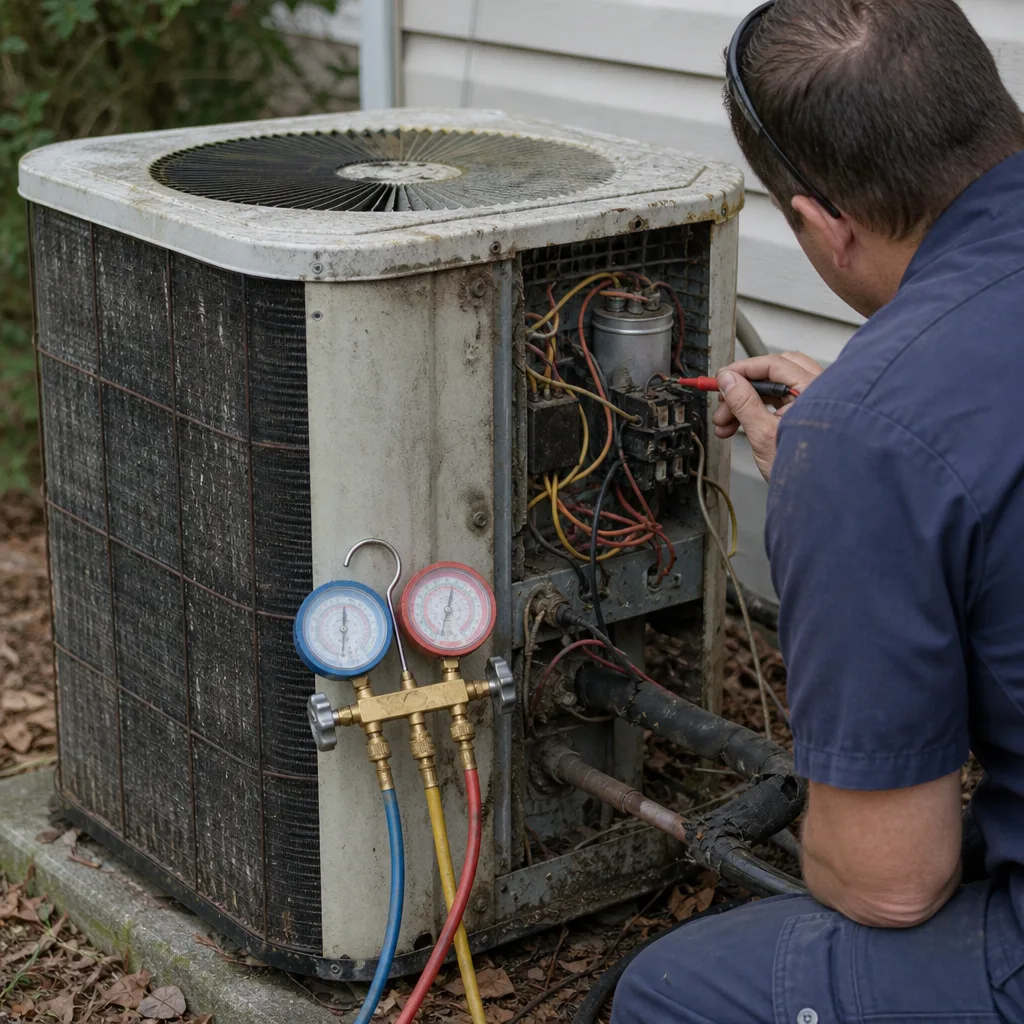 Before
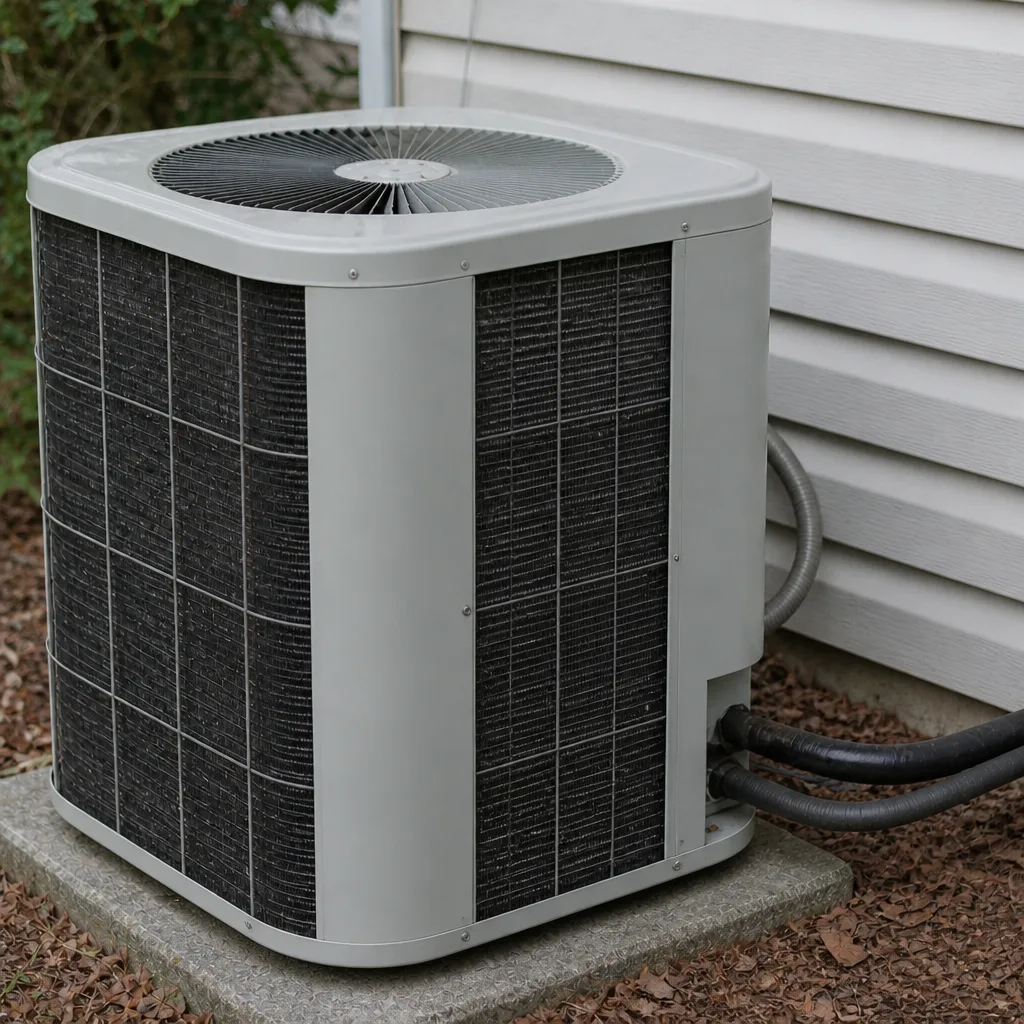 After
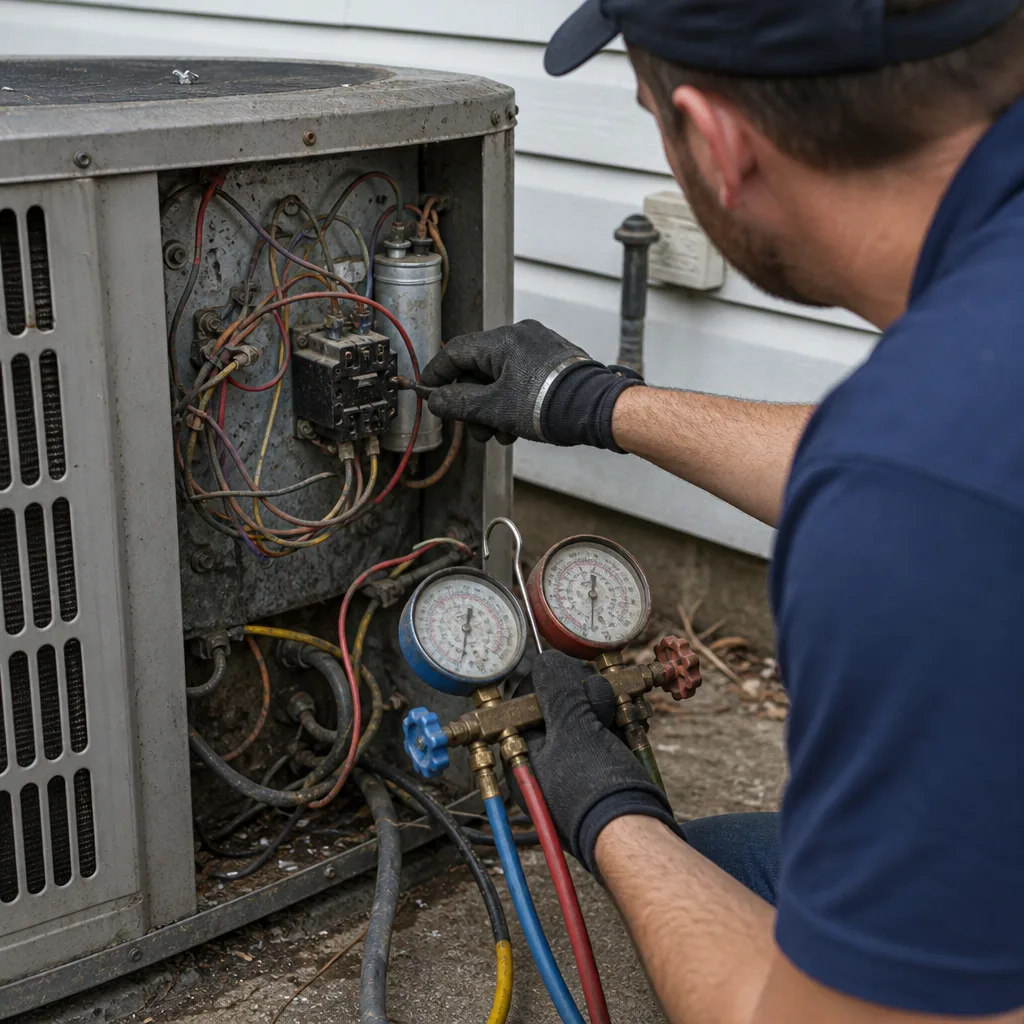 Before
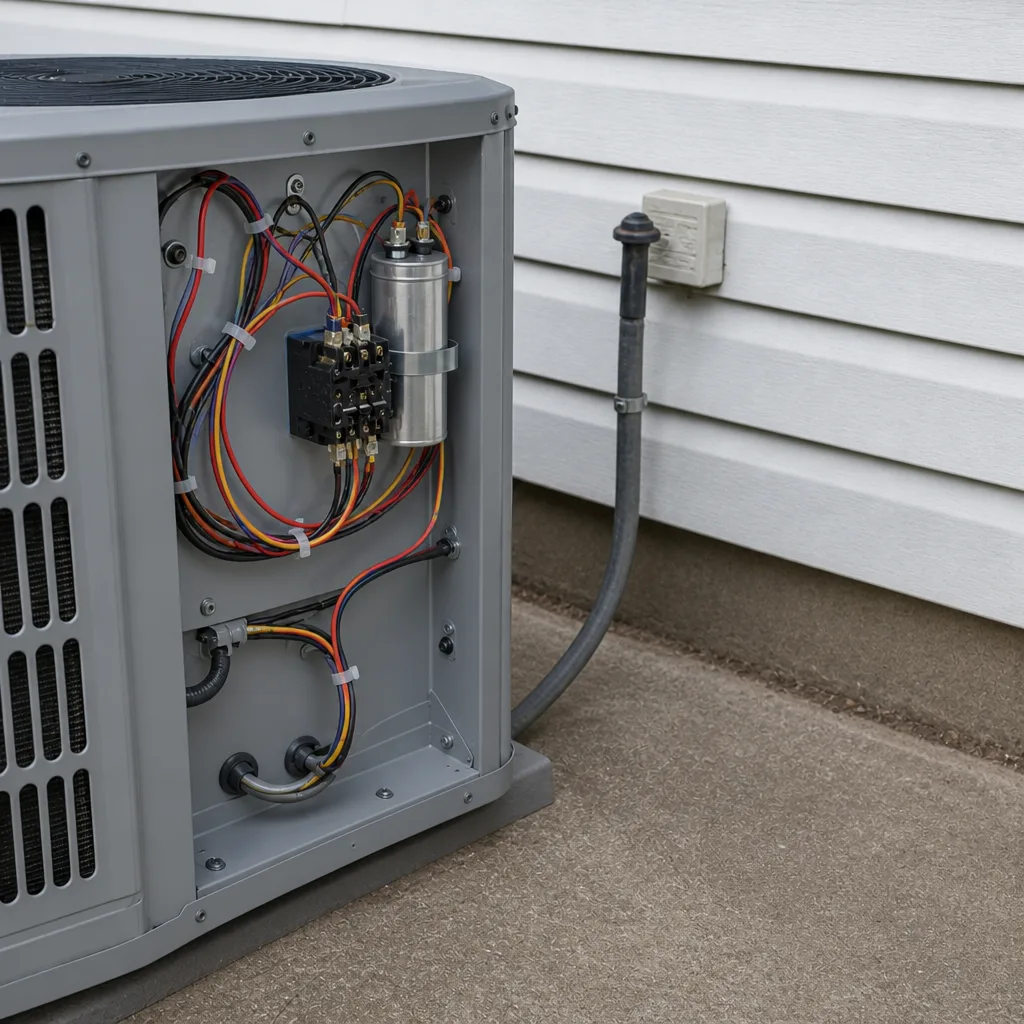 After
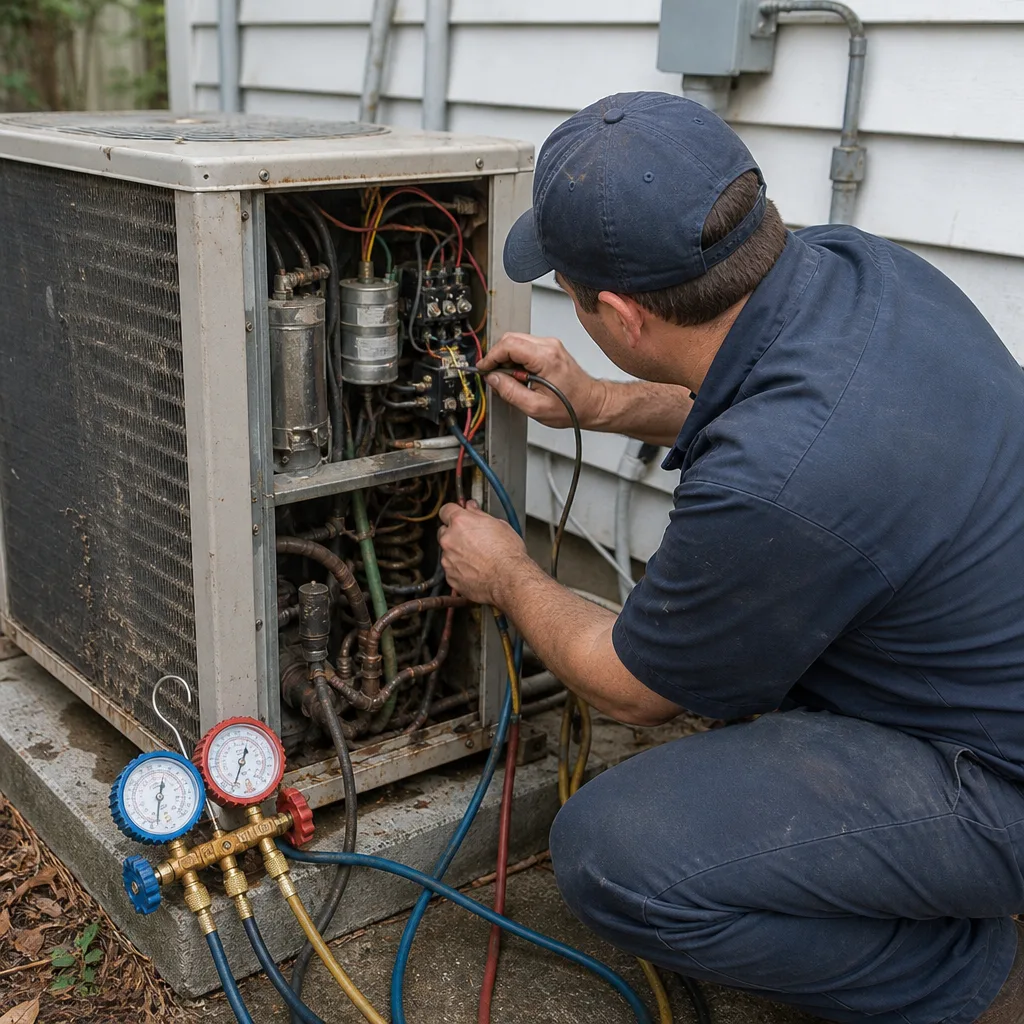 Before
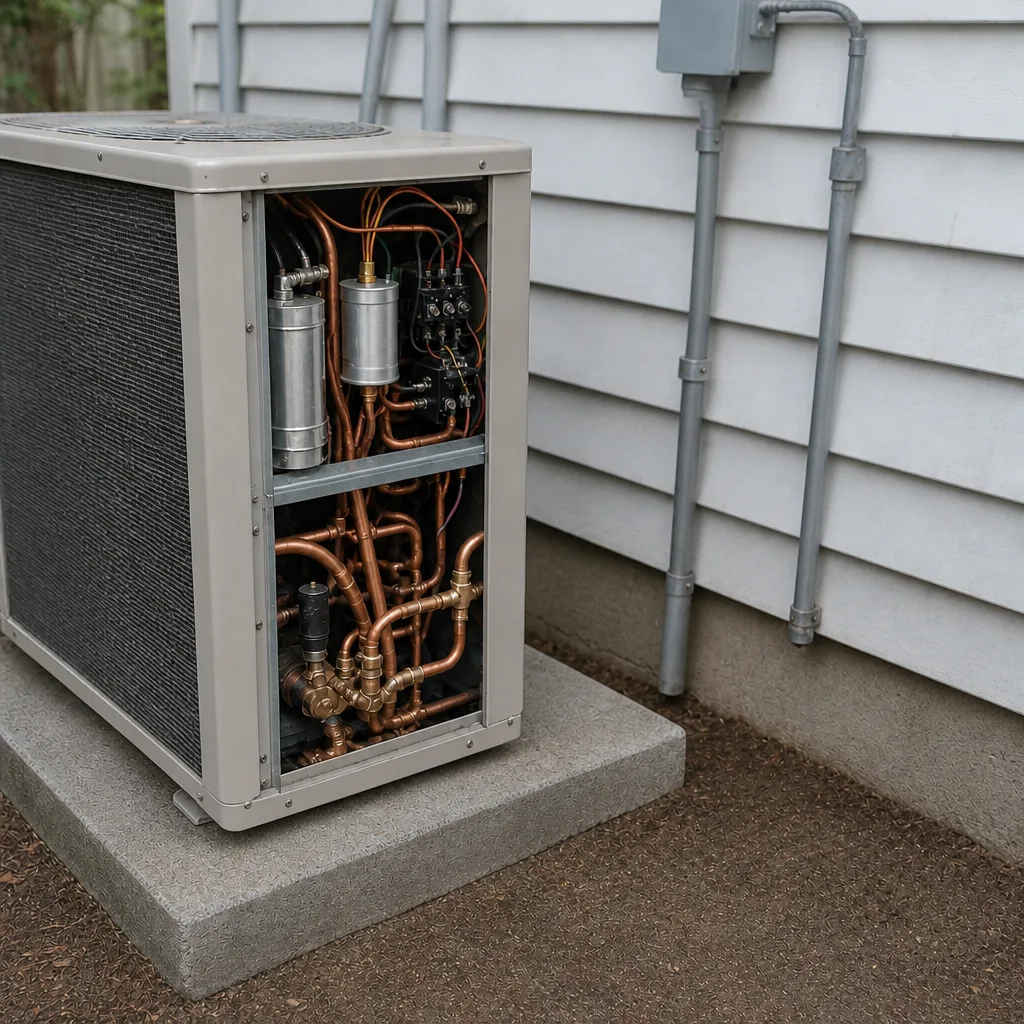 After
When to Call a Professional
Call a professional when the system won’t restart after a single breaker reset, when there’s any smell of burning or unusual sound from the equipment, when water is pooling near the indoor unit, or when the indoor temperature is climbing and anyone in the home is vulnerable. Call immediately if the system trips a breaker repeatedly – that’s a sign of a fault that needs a trained technician, not a homeowner with a screwdriver. Ridgeway AC Repair offers free estimates in Tallahassee, and our technicians have up to experience across nine of the most widely installed brands. Call (844) 834-0157. We answer 24/7. Fast dispatch from 7am to 7pm, Sunday through Friday.
Frequently Asked Questions
Pick your two coolest rooms in late spring, set them up with shade and a working fan, and charge or buy a portable cooling unit before prices and stock tighten. Photograph the data plates on both your indoor and outdoor units so you have the model and refrigerant information on hand. Do these three things once, before the season, and a breakdown becomes manageable.
Check the thermostat and try resetting the indoor and outdoor breakers once, then keep the house closed and shaded and move vulnerable household members into your cool refuge. Call (844) 834-0157 with your model number ready. We answer 24/7, and a call outside dispatch hours is booked into the next opening, Sunday through Friday, 7am to 7pm.
A portable AC will keep one room livable, not a house. Single-hose units deliver less cooling than their label suggests because they pull warm air back through the room, so plan to cool a bedroom or a refuge, not to cool the whole home. In Tallahassee’s humidity, evaporative coolers don’t help at all.
During a heat event, the wait for any company stretches because demand spikes across the city at the same time. That’s why we suggest having your system’s information ready and your refuge set up before you call – the timing depends on the season and the day, but the preparation doesn’t. Call (844) 834-0157 and we’ll give you an honest expectation.
One reset is fine. If it trips again, stop – a breaker that won’t hold points to a fault that needs a technician, and repeated resets add risk without fixing anything. Call us and describe what happened. Estimates are free, and the price is set per job in a written estimate.
We install and repair systems from Carrier, Trane, Lennox, Goodman, Rheem, York, Daikin, Bryant, and American Standard. Because we work across nine competing manufacturers, our repair-versus-replace advice follows what fits your home and budget rather than a single-brand incentive. Call (844) 834-0157 for a free estimate.
The Bottom Line
AC emergency preparedness in Tallahassee comes down to three things done before the heat peaks: a cool refuge you’ve actually set up, a portable unit that fits your windows, and your system’s paperwork on hand. When the system fails, close the house, shade the glass, move vulnerable family into the refuge, check the breakers once, and call with your model number ready. If anyone is at risk, treat it as an emergency. If not, a managed wait with a working refuge is often the smarter path. Our technicians have up to experience with the nine brands most Tallahassee homes carry, and we can help whether the day calls for a repair, a full replacement, or just a plain answer about which one you need. For the full picture of what we handle, see Ridgeway AC Repair.
If your system is struggling or already down, call Ridgeway AC Repair at (844) 834-0157 for a free estimate. We answer 24/7. Fast dispatch from 7am to 7pm, Sunday through Friday. We work on the system you already have, and we’ll tell you honestly whether it needs a repair or a replacement.
Written by the team at Ridgeway AC Repair.