
Last updated November 16, 2026
 AC repair
 Furnace & heating
 Heat pumps
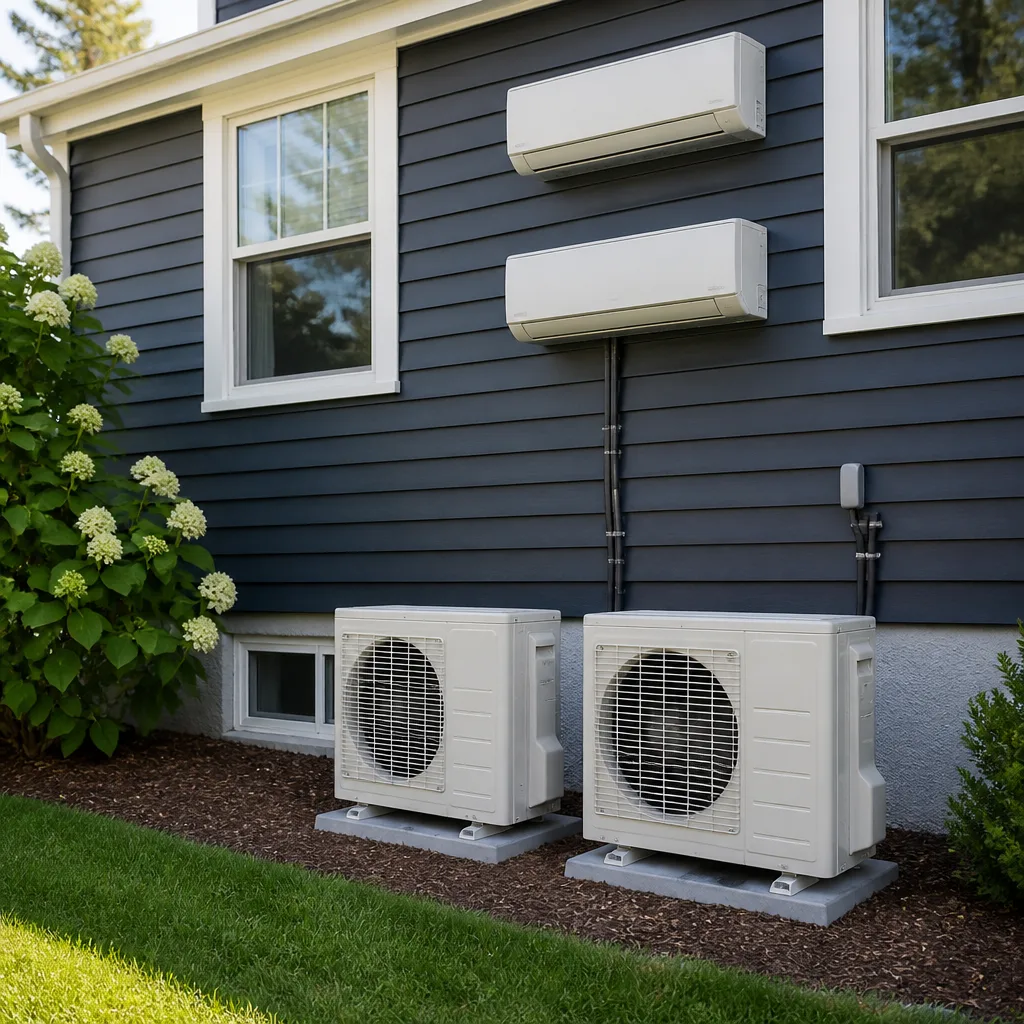 Ductless mini splits
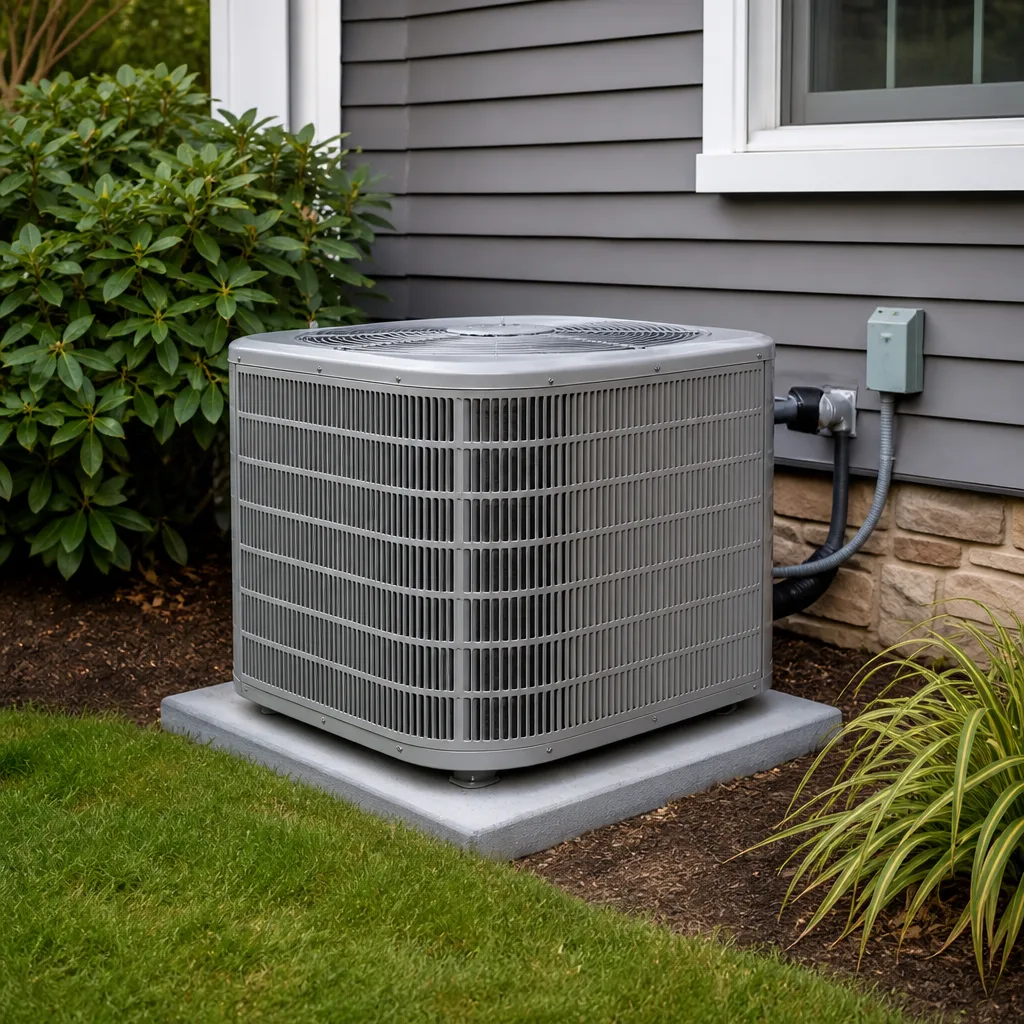 Carrier
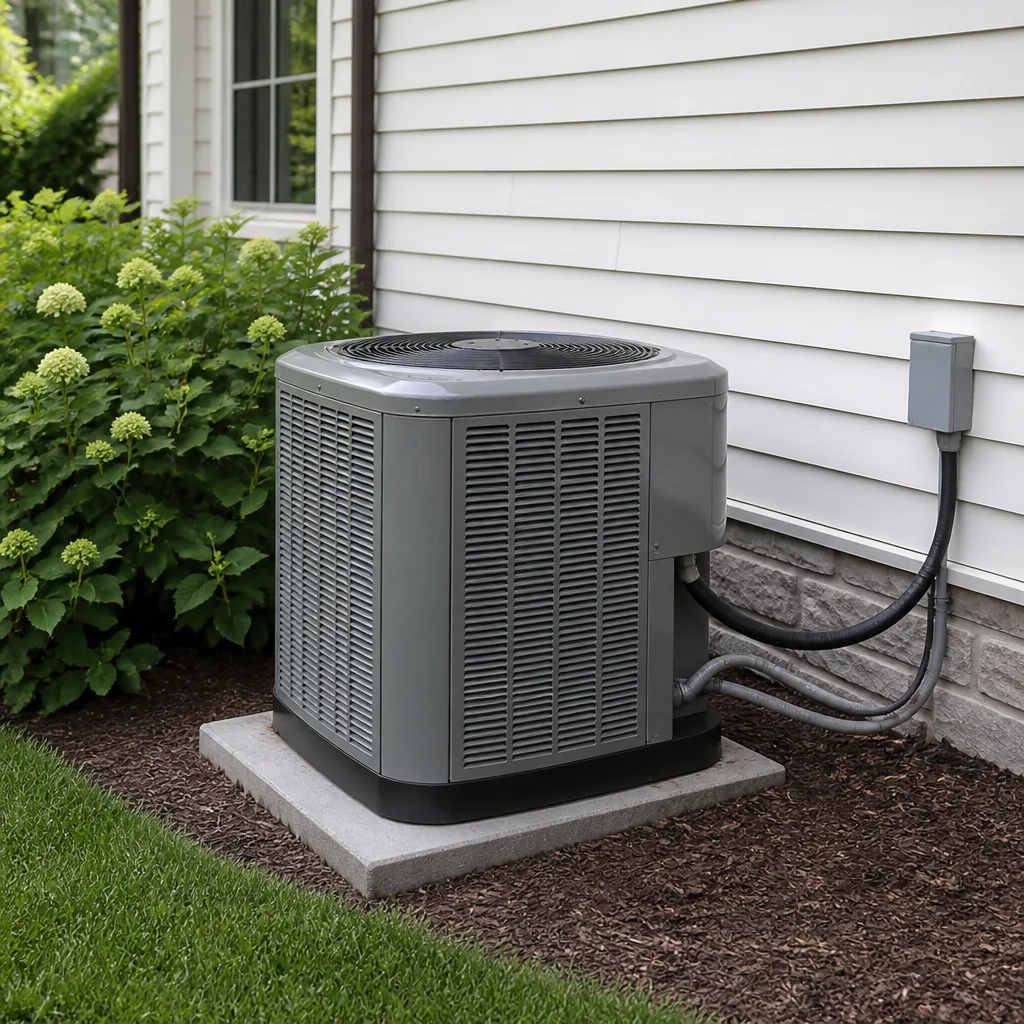 Trane
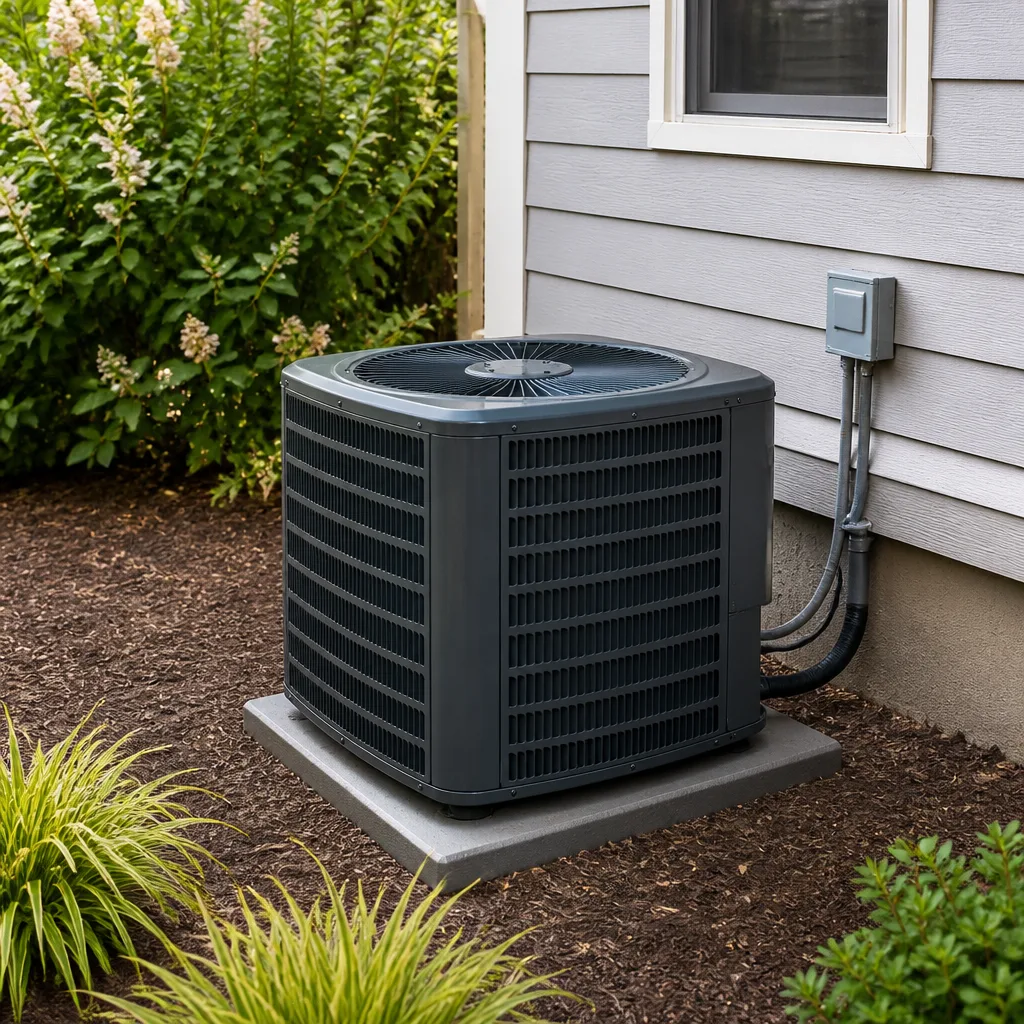 Goodman
Seasonal tune-up and full diagnostic on your Carrier, Trane, or Goodman system - readings shown to you before any repair is proposed
Diagnosis first, numbers second - you approve the repair price before a single part goes in.
Get your free estimateHVAC Warning Signs: A Tallahassee Homeowner’s Reference Guide
A system that short-cycles every eight minutes on a humid Tallahassee afternoon isn’t necessarily broken. The same behavior on a mild, dry day usually means something else entirely: the unit is oversized for the house, and no filter change or tune-up will correct it. That gap between “this looks alarming” and “this actually is alarming” is where most homeowners get stuck. They either ignore a genuine failure in the making or panic over a machine doing exactly what it was designed to do. What follows maps the warning signs we see across Tallahassee to their likely causes, their real urgency, and the local conditions that make some of them common here and others rare. You’ll finish with a triage framework you can use the moment something sounds wrong.
Quick Answer
HVAC warning signs fall into three urgency tiers: monitor it (minor noises, small temperature swings), schedule service this week (ice on the coil, musty smell, weak airflow, frequent short cycling), and shut it off and call now (burning smell, repeated breaker trips, flickering lights when the system starts, or water pooling from the indoor unit). In Tallahassee’s long humid season, musty odors and condensate problems show up more often than in drier climates, while frozen coils usually trace back to airflow or refrigerant issues rather than cold weather.
Styles & brands we work with
- AC repair
- Furnace & heating
- Heat pumps
- Ductless mini splits
- Carrier
- Trane
- Goodman
Table of Contents
- The Three-Tier Triage Framework
- Strange Noises and What Each One Means
- Ice on the Coil: A Symptom, Not a Diagnosis
- Musty Odors After a Wet Spring
- Normal Defrost Cycle vs. a Real Mechanical Problem
- The Electrical Warning Signs
- Short Cycling and the Oversizing Question
- Weak Airflow, Uneven Rooms, and What They Tell You
- Common Mistakes to Avoid
- When to Call a Professional
- Frequently Asked Questions
The Three-Tier Triage Framework
Every warning sign needs one of three responses, and getting the tier right saves you both money and worry. Here’s how we sort them in our experience, without any single-tier advice that assumes the worst.
Tier 1: Monitor it. These are signs worth writing down and watching for a week or two, not scheduling a visit over. A faint hum you only notice at night. A single room that runs two or three degrees warmer than the rest. One momentary rattle when the system kicks on. The rule: if the symptom is intermittent, happens only at startup or shutdown, and doesn’t change the comfort inside the house, log it and check back.
Tier 2: Schedule service this week. These signs mean something is degrading and will get worse. Ice forming on the indoor coil. A musty smell that won’t clear. Airflow that’s noticeably weaker than last month. Short cycling that’s getting more frequent. A single breaker trip. None of these require shutting the system down, but all of them should get a technician out before the problem compounds. In Tallahassee, where the cooling season runs long, a Tier 2 issue that lingers through August often becomes a Tier 3 by September.
Tier 3: Shut it off and call now. These are the signs where continued operation risks real damage or safety. A burning or hot-plastic smell. A breaker that trips more than once. Lights that flicker across the whole house when the compressor starts. Water pooling around the indoor air handler. Any of these means turn the system off at the thermostat or the breaker, then call. We answer 24/7 at (844) 834-0157, and fast dispatch from 7am to 7pm gets a technician to you the same day in most cases.
The most useful thing you can do is know the tier before you call, because that shapes how soon you get help and what you can safely do in the meantime. Some of these signs are covered in more depth on our Tallahassee service page and our guides to furnace repair. Our technicians have up to experience sorting normal behavior from real failure, and most of that skill is just knowing which tier a symptom belongs to.
Strange Noises and What Each One Means
Noise is the most common reason Tallahassee homeowners call us, and the noisiest systems aren’t always the sickest. Here’s how to decode the sounds you’re hearing.
- A low, steady hum: Usually the compressor running normally. Nothing to do unless it grows louder or the pitch changes.
- A sharp click at startup and shutdown: Normal contactor and relay operation. Ignore it.
- A rhythmic rattle or clank when the fan starts: Loose panel screws, a fan blade with debris on it, or a bearing starting to wear. Tier 1 to 2 depending on how loud it gets.
- A high-pitched squeal that builds with the fan speed: A worn blower bearing or belt. Tier 2. Left alone, it becomes a seized motor.
- A grinding or scraping sound: Metal-on-metal contact inside the air handler or condenser. Tier 3. Shut it off.
- A bubbling or hissing from the refrigerant lines: Refrigerant pressure issue, or a leak. Tier 2 at minimum. Refrigerant work is not a homeowner job.
- A buzzing from the outdoor unit that doesn’t stop when the system is off: Electrical fault in the contactor or capacitor circuit. Tier 3.
What makes this tricky in Tallahassee is the housing stock. Older homes with metal ductwork amplify and carry sound from the air handler into rooms where the noise shouldn’t be. A rattle you hear in the hallway may be coming from a fan blade three rooms away. Pay attention to where the sound originates, not just where you hear it.
If you’re hearing a squeal or grind and can’t tell which unit it’s coming from, the fastest test is to walk outside and listen at the condenser, then come back in and listen at the air handler. That single comparison tells you whether you’re dealing with a fan issue outdoors (usually easier) or a blower issue indoors (usually more involved).
Ice on the Coil: A Symptom, Not a Diagnosis
Ice on the indoor coil or the outdoor refrigerant lines is one of the most misunderstood warning signs we see. It is not a diagnosis. It’s the visible result of three completely different problems, and knowing which one you’re looking at saves a wasted visit.
Before you look for the cause, turn the system off. Ice on the coil blocks airflow, which makes the system work harder, which makes more ice. Running it while iced up risks damage to the compressor. Once it’s off, let it thaw, then look at the rest.
The three causes, in the order we check them:
- Restricted airflow. The most common cause by far. A clogged air filter, a closed supply register, a collapsed flex duct, or a dirty coil all reduce airflow over the evaporator, which drops the coil temperature below freezing and lets moisture condense into ice. Check the filter first. If it’s gray and packed, replace it, run the system and watch. If ice returns within a day, the restriction is somewhere else.
- Low refrigerant charge. A leak or a system that was never properly charged lets the coil run too cold even with good airflow. This one requires a technician with gauges. There’s no homeowner test for it, and adding refrigerant without finding the leak just postpones the problem.
- A metering device failure. The expansion valve or fixed orifice that controls refrigerant flow has failed or clogged. Less common than the first two, but the most expensive to misdiagnose as one of them.
How to tell them apart before calling us: if the filter is visibly dirty and the ice stops forming after a filter change, you had airflow. If the filter is clean but only some rooms have weak airflow, you likely have a duct problem, still airflow. If airflow feels normal everywhere and ice still forms, you’re into refrigerant or metering territory, and that’s a technician call.
In Tallahassee, one local twist: the shoulder months of October and March, when days are warm and nights are cool, cause more iced coils than mid-summer does, because the system runs short cycles and doesn’t always run long enough to stabilize the coil. If you see ice only in the spring or fall, the pattern itself is a clue.
Musty Odors After a Wet Spring
A musty smell from the vents after a wet Tallahassee spring is more common here than in most of the country, and the source is almost always moisture where moisture shouldn’t stay. The two candidates are a wet evaporator coil inside the air handler, or a dry condensate trap that has stopped holding a water seal.
Here’s the distinction that tells you which, before anyone comes out:
- Musty smell that’s strongest right when the system starts, then fades: The condensate trap. When it dries out (common when a system sits unused for a few weeks), sewer gas can back up through the drain line and into the airstream. Once the system runs and the trap refills, the smell clears. This is a trap issue, not a mold issue.
- Musty smell that’s constant and gets stronger the longer the system runs: Wet coil or wet duct lining. Condensate is pooling somewhere it shouldn’t, and mold or mildew is growing. This is a service call.
- Musty smell only in one part of the house: Often a duct issue or a wet section of insulation. Worth checked separately from the air handler.
After a wet spring, the indoor humidity in Tallahassee stays high enough that the coil stays wet between cycles. That’s why the “run the fan on low continuously” trick doesn’t work as well here as it does in drier climates: it just spreads the moisture around. If the smell persists after the trap issue is ruled out, it’s a coil or duct cleaning problem that needs a technician.
Mold-based musty odors are a tier 2 sign. Don’t ignore them for weeks. The longer a wet coil runs, the more of the ductwork the spores reach, and the more involved the fix gets. If the smell turned up right after a stretch of heavy rain and it’s now been a month, call today.
Normal Defrost Cycle vs. a Real Mechanical Problem
If you have a heat pump, some of what alarms you is the system doing exactly what it’s supposed to. A heat pump in heating mode periodically runs a defrost cycle to melt frost that builds up on the outdoor coil, and the sounds and steam that go with it look dramatic if you’ve never seen them.
Here’s what a normal defrost cycle looks like:
- Lasts a few minutes, usually between thirty seconds and ten minutes.
- You may hear a whoosh or hiss as the reversing valve switches.
- You may see steam rising from the outdoor unit. That’s melted frost boiling off, not smoke.
- The indoor blower may stop or slow during the cycle.
- The system returns to heating when it’s done.
What a real mechanical problem looks like, by contrast:
- A grinding or scraping sound during defrost, not a whoosh.
- The system that gets stuck in defrost and blows cold air indoors for twenty minutes or more.
- Visible frost that doesn’t melt after two or three cycles.
- Repeated defrosts every few minutes, over and over, on a mild day.
- Water pooling around the outdoor unit after defrost.
Tallahassee’s winters are mild, which changes the picture. Heat pumps here often defrost less often than in colder climates because the outdoor coil doesn’t get as cold and frost builds up slowly. If your system is defrosting every fifteen minutes in January, that’s not “normal for this climate.” It’s a sign the defrost board or sensor is misbehaving, or the system is low on refrigerant. That’s a tier 2 call.
If you’re unsure whether what you’re hearing is normal, record it. A ten-second phone video of the outdoor unit in action during a defrost clears up the ambiguity faster than anything you can describe over the phone.
The Electrical Warning Signs
Electrical warning signs deserve their own tier because each one points to a different problem and each one needs a different response. Don’t treat them as a group.
- A breaker that trips once, then holds. Usually a one-off surge or a marginal breaker. Reset it, watch. If it holds, monitor. If it trips again within a week, stop resetting it and call. A breaker tripping repeatedly under load is doing its job, protecting the circuit from a fault that won’t fix itself.
- Flickering lights throughout the house when the system starts. This is a voltage drop on startup. Sometimes it’s just the compressor’s normal inrush current on a circuit that’s already close to capacity. Sometimes it signals a failing contactor, capacitor, or a loose connection. Tier 2 to 3 depending on how pronounced the flicker is. If lights across the whole house dim for a full second, that’s tier 3.
- A burning or hot-plastic smell near the air handler or thermostat. Tier 3, no exceptions. Turn the system off at the breaker and call. This can indicate an overheated blower motor, a failing capacitor, or a wiring issue. Don’t run it to “see if it clears.”
- A buzzing from the outdoor unit with the system off at the thermostat. The contactor is stuck. Tier 3. The compressor may still be running even though you told the system to stop.
- A scorch mark or discoloration on a breaker panel. This is an electrical panel issue, not an HVAC issue, and it needs a licensed electrician. Don’t open the panel yourself.
A word of caution on the electrical side: the components inside an air handler and condenser hold capacitors that stay charged after power is removed. Even with the breaker off, a capacitor can deliver a serious shock. This is not a component to test or replace yourself. Every one of these signs is a sign to call a technician, not to open a panel.
If you’re seeing multiple electrical signs at once, call now rather than waiting. A failing capacitor and a failing contactor together can cause a compressor to cycle on and off in quick succession, which shortens its life fast. We can work with your specific brand, whether that’s a Carrier, a Trane, or something else, so there’s no guesswork when we arrive.
Short Cycling and the Oversizing Question
Short cycling is when the system turns on, runs for a few minutes, turns off, and repeats. It’s one of the most useful diagnostic signs there is, because how often it happens and when tells you almost as much as a full inspection would.
The opening question for any short cycling complaint: is it cycling every eight to twelve minutes on a hot, humid Tallahassee afternoon, or the same way on a mild, dry day?
If it only short-cycles on hot days, the system may be running normally and reaching the setpoint, then cycling off before it can fully dehumidify. That’s a thermostat placement or setpoint issue, or a system that’s slightly oversized. If it short-cycles on mild days with the same frequency, the system is almost certainly oversized for the house. An oversized unit cools the air fast but never runs long enough to pull moisture out, so the house gets cool and clammy. That’s a design problem, not a maintenance one. No filter, tune-up or refrigerant top-off will fix it. The honest answer in most cases is a load calculation and, if the oversizing is real, a right-sized replacement.
Other causes of short cycling that are fixable:
- A thermostat in direct sunlight or near a heat source, reading the wrong temperature.
- A clogged filter causing the system to trip on high-pressure limit.
- Low refrigerant charge causing a low-pressure cutoff.
- A failing capacitor or contactor causing intermittent compressor operation.
- A flame sensor or igniter issue on the heating side (in winter).
Here’s where the honest repair-vs-replace conversation matters. If we find an oversized system, we tell you it’s oversized, and we talk through both paths: a right-sized AC installation with a proper load calculation, or continued maintenance on what you have. Because we work on nine manufacturer brands, we’re not steering you toward one replacement because of a dealership incentive. The recommendation follows the house.
Weak Airflow, Uneven Rooms, and What They Tell You
Weak airflow and uneven room temperatures are the quietest warning signs, and the ones most often blamed on the wrong thing. Before you assume the system is failing, the question to answer is whether the problem is the system or the ducts.
A quick test: put your hand in front of every supply register in the house and note which ones feel strong and which feel weak. If most are strong and one or two are weak, the problem is in the ducts serving those rooms. If all of them are weak, the problem is at the air handler or the filter.
Here’s the airflow troubleshooting order we use:
- Check the filter. If it hasn’t been changed in three months, change it and recheck in an hour. In Tallahassee, where the system runs almost year-round, filters load up faster than the label suggests.
- Check every supply and return register. A closed register in a spare bedroom that hasn’t been opened in two years will pressurize the ducts and reduce flow everywhere else.
- Look at the flex duct in the attic. Flex duct can collapse, kink, or disconnect at a fitting. A disconnected duct blowing into the attic is one of the most common causes of weak airflow we find.
- Check the air handler for a dirty evaporator coil. A coil packed with dust blocks airflow the same way a clogged filter does. This requires a technician.
Uneven room temperatures follow a similar pattern. A room that’s always five degrees warmer than the rest of the house is usually a duct design issue, not a system issue. A room that used to be comfortable and is now consistently warm is usually a duct failure or a damper issue.
If your airflow dropped suddenly rather than gradually, that points to something mechanical: a disconnected duct, a failed blower motor, or a coil that’s iced over. If it dropped slowly over months, it’s more likely a filter or a dirty coil. Either way, schedule service this week. Long-running airflow problems strain the compressor, and the compressor is the most expensive part of the system to replace.
Common Mistakes to Avoid
- Resetting a tripping breaker more than once. A breaker that trips twice in a month is telling you something. Resetting it a third time and hoping is how electrical components get damaged. Call a technician.
- Running the system with ice on the coil. Chipping at the ice or running the system to “see if it clears” risks the compressor. Turn it off, let it thaw, find the airflow cause first.
- Assuming a musty smell is mold before checking the condensate trap. In a Tallahassee spring, the trap dries out constantly. A trap that’s dry lets sewer gas back into the airstream and smells like mold. It’s a simple fix and often the whole answer.
- Treating a single defrost cycle as a failure. Heat pumps in heating mode defrost on purpose. If you’ve never seen it before, the steam and whooshing look alarming. Watch for the signs of an actual problem in the next cycle before calling.
- Replacing the system to fix short cycling without a load calculation. If the system is oversized, a like-for-like replacement replicates the problem. The right fix starts with a load calculation, not a like-for-like swap.
- Adding refrigerant without finding the leak. Topping off a system that’s low on refrigerant just delays the same call for another season and adds wear to the compressor. Find the leak or don’t touch the charge.
- Ignoring weak airflow in one room. A single disconnected flex duct in the attic is doing nothing for the room and strain on the rest of the system. It’s usually a quick repair once it’s found.
When to Call a Professional
Call us when you’re seeing any Tier 3 sign (burning smell, repeated breaker trips, house-wide light flicker at startup, water pooling from the indoor unit, grinding from the air handler), when a Tier 2 sign has been present for more than a few days, or when you can’t tell which tier you’re in and want a straight answer. Safety comes first: if the situation involves a burning smell, an electrical panel, or a system you can’t safely shut down, turn it off at the thermostat or breaker before you call.
Ridgeway AC Repair offers free estimates in Tallahassee – call (844) 834-0157. We answer 24/7, and fast dispatch from 7am to 7pm gets a technician out the same day in most cases. Estimates are free, and the written estimate sets the price before work starts. If you’re ready to talk about a replacement, our Ridgeway AC Repair team can help you sort out whether repair or replacement is the smarter long-term spend.
Frequently Asked Questions
No, but it always needs attention. Ice on the coil means restricted airflow, low refrigerant, or a metering device failure, and the airflow cause is the most common and the easiest to fix. Turn the system off, let it thaw, check the filter, and if ice returns after a clean filter change, call a technician. The earlier you catch it, the cheaper the fix.
A musty smell in Tallahassee humidity usually means one of two things: a dry condensate trap letting sewer gas into the airstream, or a wet coil or duct growing mildew. A smell that’s strongest at startup and then fades points to the trap. A constant smell that gets worse as the system runs points to a wet coil or duct. If the smell persists after a trap check, call us to look at the coil.
Yes, that’s normal. Heat pumps in heating mode periodically run a defrost cycle to melt frost from the outdoor coil, which produces whooshing sounds and visible steam. It becomes a problem when the cycle lasts more than ten minutes, happens every few minutes in mild weather, or the system gets stuck in defrost and blows cold air indoors. When in doubt, record a short video and we can tell you over the phone.
Reset it once. If it trips again within a week, stop and call a technician. A breaker that trips repeatedly is protecting the circuit from a fault, and continuing to reset it risks damage to the compressor and to the wiring. We answer 24/7 at (844) 834-0157, and can get a technician out same-day in most cases.
Short cycling on hot humid afternoons can be normal behavior as the system reaches its setpoint, or a sign the system is oversized. The test is whether the same short cycling happens on mild, dry days. If it does, the system is likely oversized, which is a design problem no maintenance will fix. A proper load calculation is the right next step before deciding between repair and AC installation of a right-sized unit.
Schedule service this week for signs that are worsening: ice on the coil, a persistent musty smell, weak airflow, a single breaker trip, frequent short cycling. Call now and shut the system off for a burning smell, repeated breaker trips, house-wide light flicker at startup, water pooling from the indoor unit, or grinding from the air handler. When in doubt between the two, call us. We’ll tell you whether it can wait. Estimates are free.
The Bottom Line
Most HVAC warning signs aren’t an emergency, but nearly all of them are worth acting on. The framework matters more than any single symptom: tier 1 is monitor, tier 2 is schedule service this week, tier 3 is shut it off and call now. In Tallahassee, the local patterns to know are the spring musty smell that’s usually a dry condensate trap, the defrost cycle that looks worse than it is on a heat pump, and the short cycling that signals oversizing if it happens on mild days. Our technicians have up to experience sorting real problems from normal behavior. If something on your system is sounding off, we can tell you exactly which tier it’s in.
Call (844) 834-0157 for a free estimate. We answer 24/7, with fast dispatch from 7am to 7pm. Whether you need a quick repair diagnosis or an honest conversation about repair versus replacement, we’ll give you the answer the house needs. We work on the system you already have, across Carrier, Trane, Lennox, American Standard, and five more manufacturer brands, so there’s one call for both seasons.
Written by the team at Ridgeway AC Repair.
See the difference
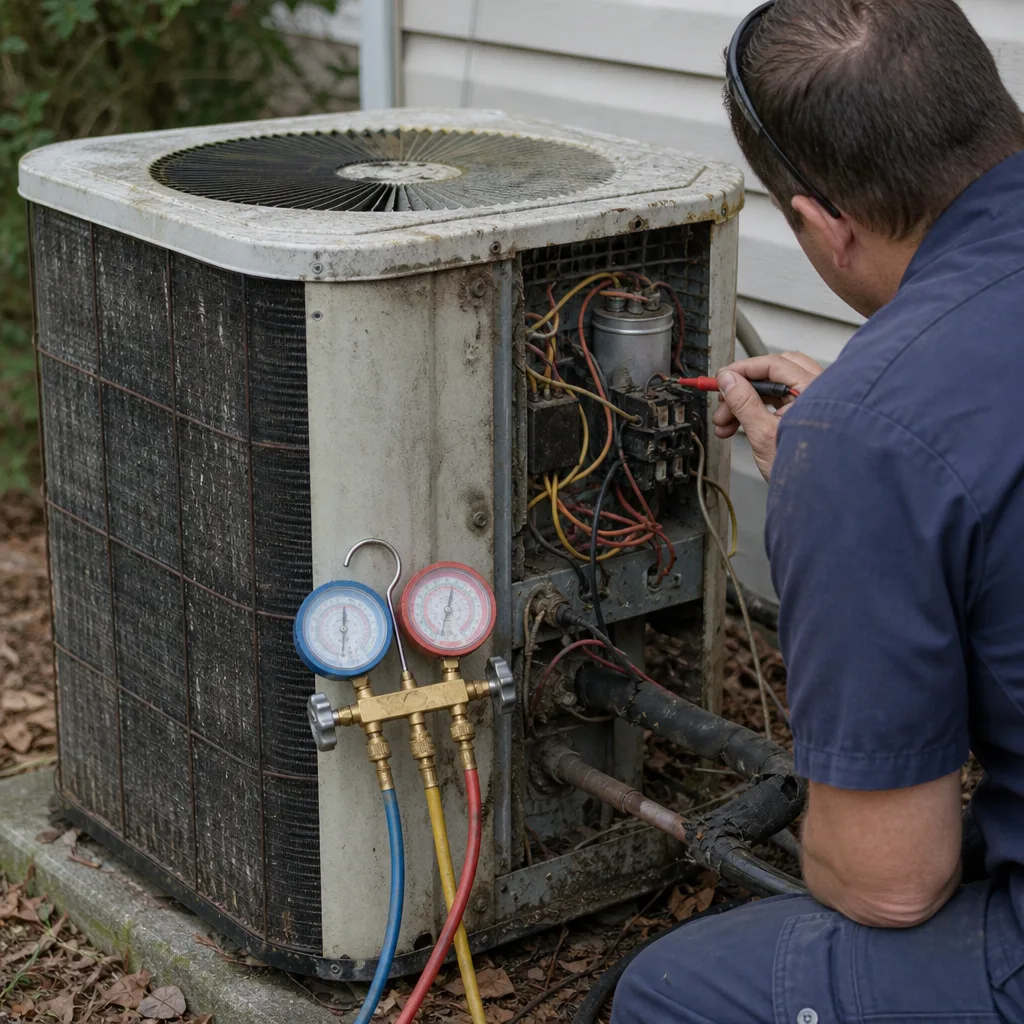 Before
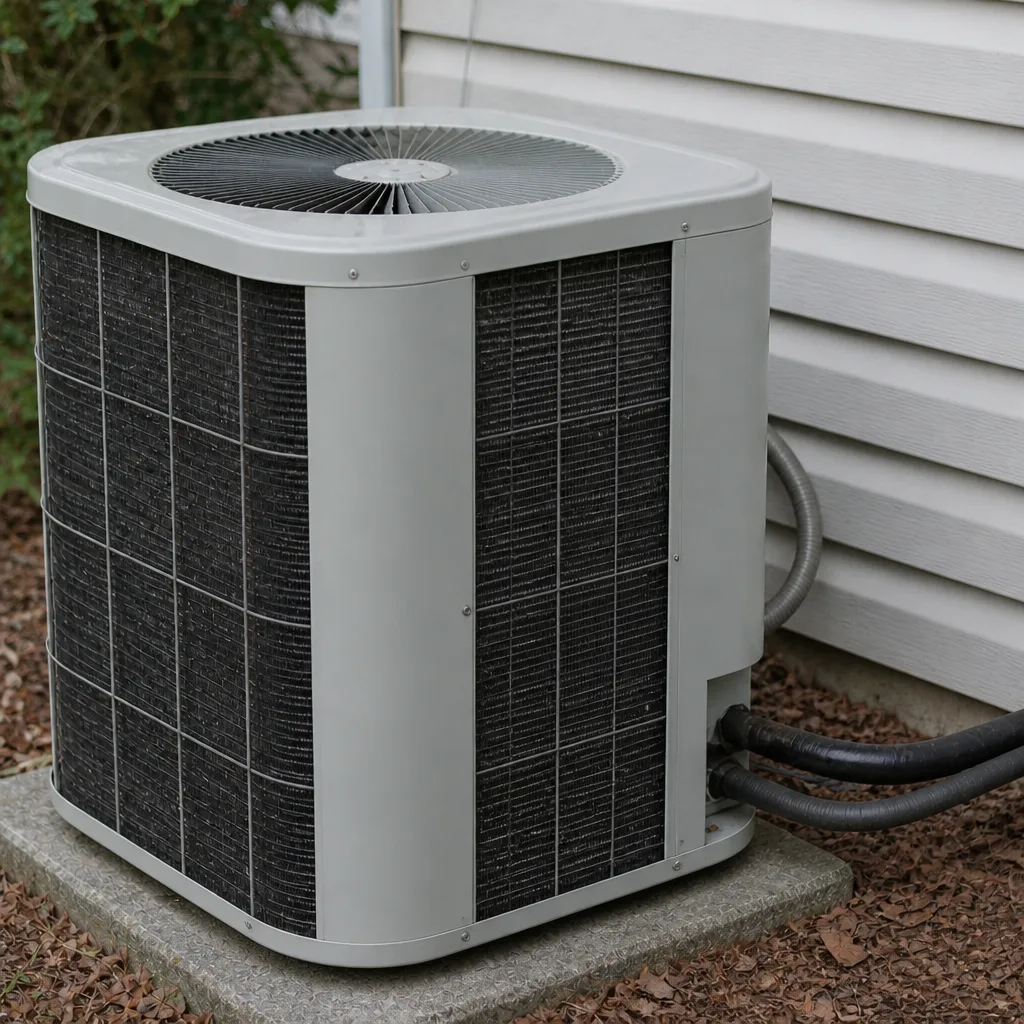 After
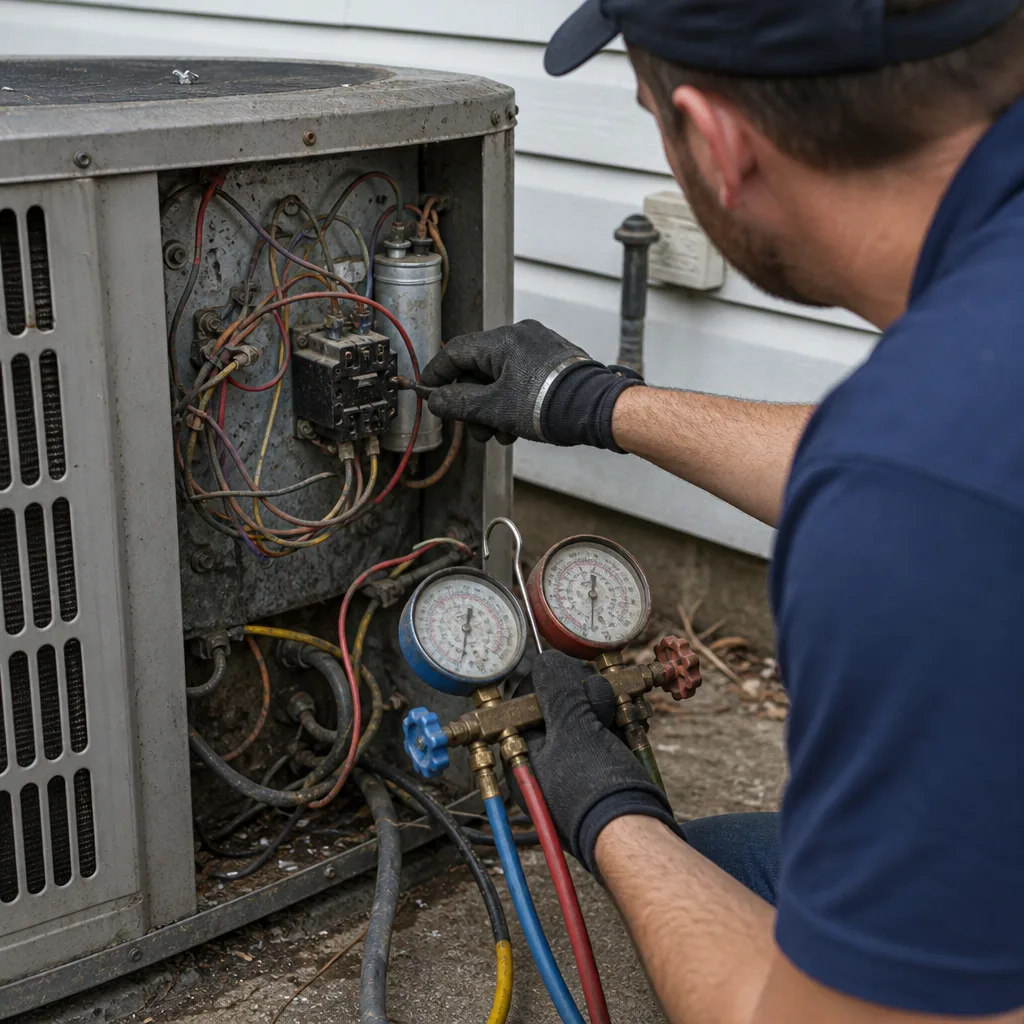 Before
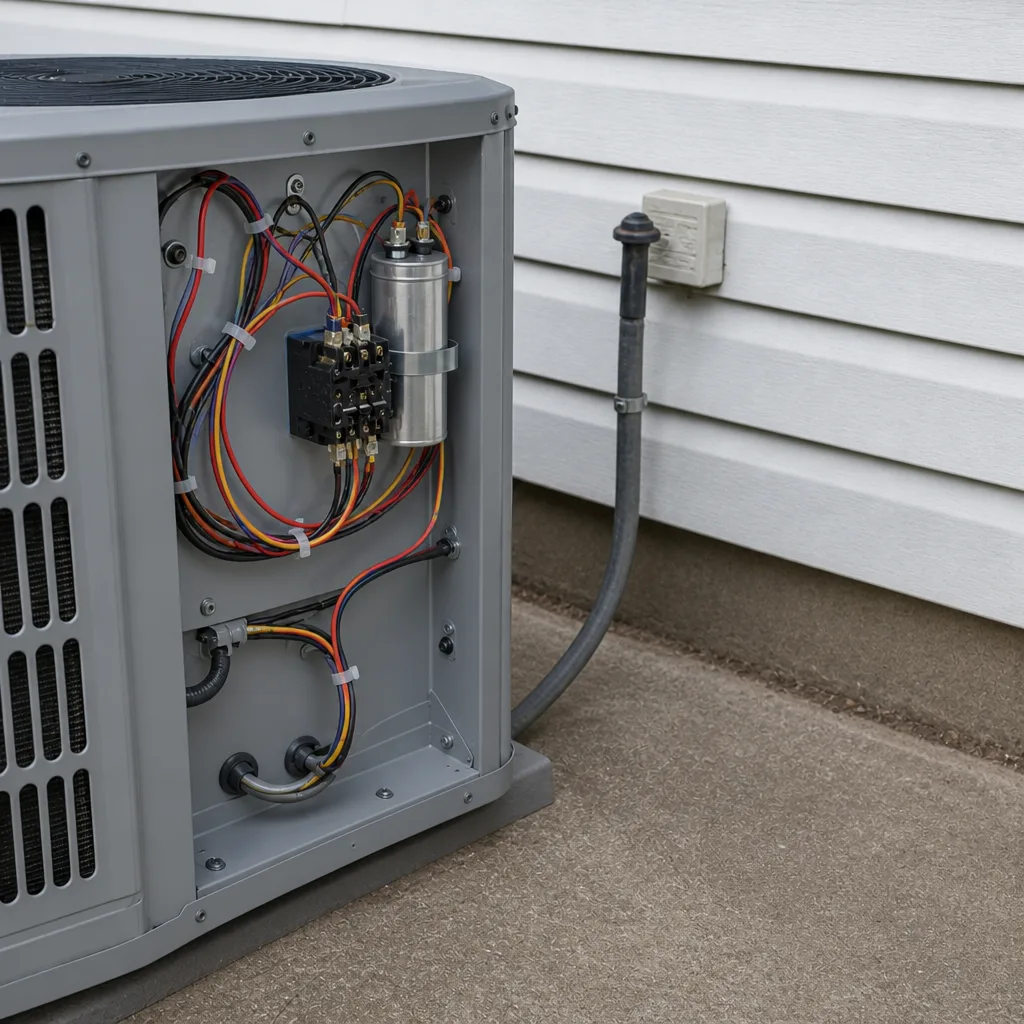 After
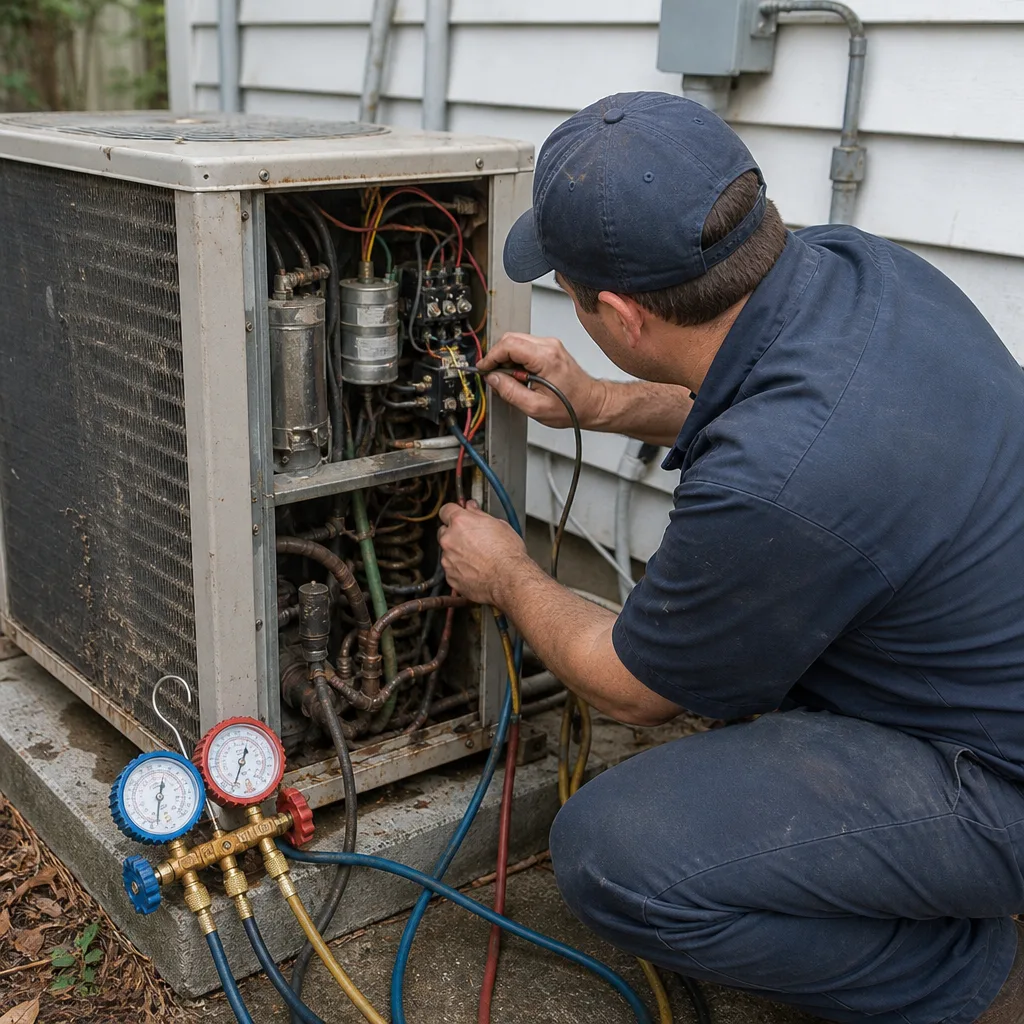 Before
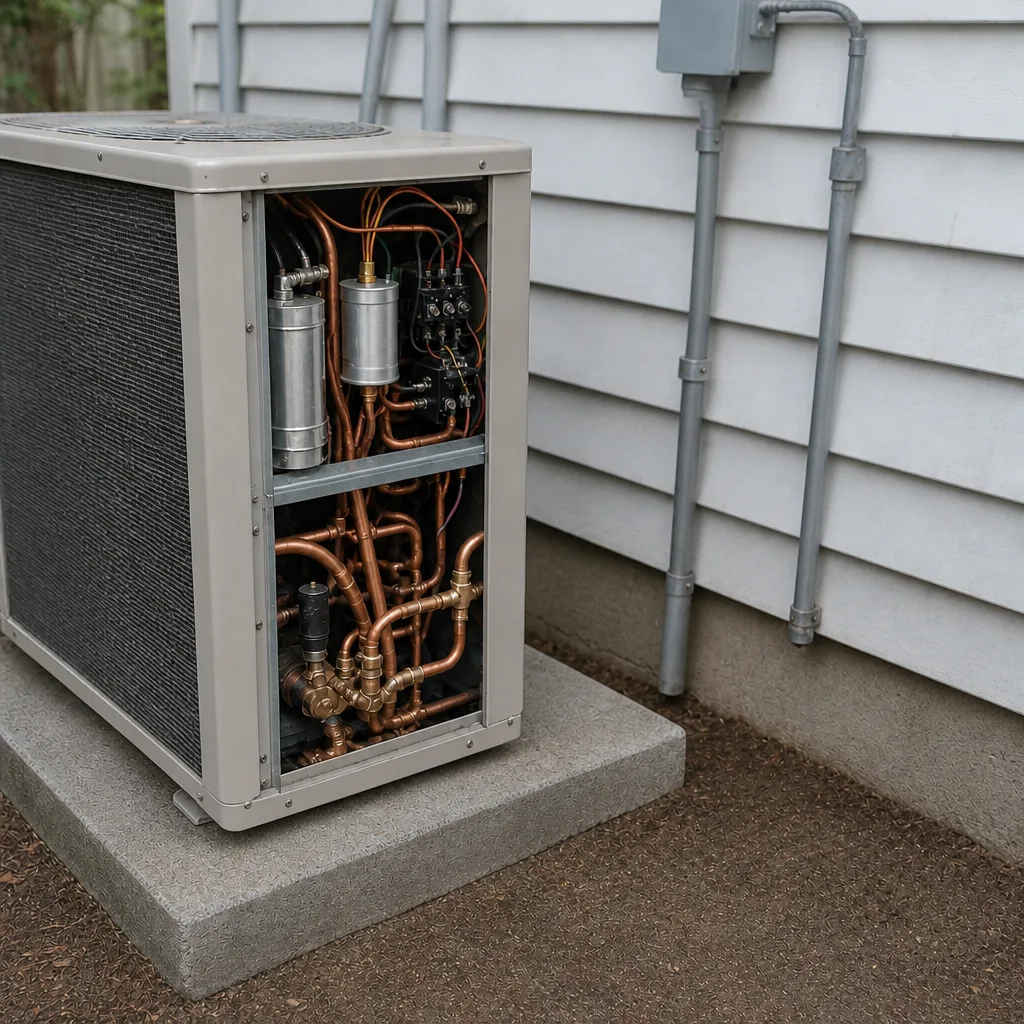 After